
MANILA — In the gauzy pre-dawn light at the Makati Central Business District, I hop, skip and jump over uneven terrain of tree roots bisecting cement, and traverse informal pedestrian crossings across 6-lane throughways before encountering the abrupt end of what I’d thought was a sidewalk. It’s a low-stakes reminder that living in the Philippines will keep you on your toes.
At 6 a.m., a few hours before the commuter-heavy part of the city wakes up, I take the opportunity to leisurely jaywalk across the city’s busiest avenues free of their usual droves of motorbike drivers, anonymized by their almost identical black armor-like helmets as they inch forward in steady rows, immediately filling any available space.
A megalopolis that’s one of the most densely populated areas in the world, Manila consists of 16 highly urbanized cities, each with its own unique character. Most of the architecture dates to the mid-to-late 20th century, constructed while the capital was recovering from some of the heaviest bombardments in World War II. In the tradition of Walt Whitman, Manila contains multitudes.
But the motorbike is universal. As a mode of transport, it’s almost unavoidable in a car-centric urban area whose peak traffic hours include almost the entire evening. Whether meeting a friend for coffee or heading to the office to start the workday, the most feasible plan for getting where you need to go is to call an Uber for motorbikes named Move It, pop on a helmet and ride in tandem behind a complete stranger.
“Riding in tandem” is also shorthand for a mode of killing during the country’s recent “war on drugs” launched by the former president, Rodrigo Roa Duterte. At its height in 2019, deaths attributed to unidentified gunmen, many of whom rode on the backs of motorbikes, numbered almost 23,000, according to the national police. The final number is disputed, as the government stopped releasing statistics about this category of homicides, and drug-related killings have reportedly continued into the current presidency of Ferdinand Marcos, Jr. Even before Duterte came to office in 2016, crimes by motorbike riders and their passengers had become so ubiquitous, the City Council passed an ordinance outright banning riding in tandem for all passengers unrelated to their drivers. It was summarily challenged and struck down by the Court of Appeals and tandem riders ride on.
Duterte, who stepped down in 2022, is currently incarcerated in The Hague, the seat of the International Criminal Court (ICC). He’s been charged with crimes against humanity for his propagation of anti-drug operations carried out by national and local police. Human rights organizations have called their shootings extrajudicial killings, remarkable for their lack of due process or oversight.
His case is why I’m here in the Philippines, a country 6,000 miles away from where its former head of state awaits trial. Immersed in the social and political context of the country, I want to explore how abstract legal concepts like crimes against humanity, accountability and international criminal justice are reflected in the lives of the victims central to the proceedings.
Over the course of my fellowship, I’ll be travelling between the Philippines and The Hague, covering the developments in the ICC investigation and how they’re experienced by the communities most affected by the drug war. I’m hoping to figure out what exactly makes international criminal justice meaningful, and whether it really achieves its lofty aims of truth and justice. In an environment rife with disinformation and domestic political turmoil, the prosecution of Duterte offers an opportunity for victims to see some kind of resolution after almost a decade, even if it is simply the chance for their stories to be told in an international court of law.
* * *
The ICC prosecution’s legal theory maps patterns in killings perpetrated by both police officers and vigilante gunmen affiliated with the police, to show the planned, organized nature of the deaths and general violence wrought by Duterte’s tough-guy approach to policing low-level drug trade and use.
Tandem-related killings by gunmen in plain clothes may be hard to prove as part of the crimes against humanity charged in relation to Duterte’s policymaking role in the drug war, for reasons I’ll explore as I cover the developments of his trial and evidence presented before the ICC. But another pattern of killing more easily fits: the so-called nanlaban script.
Nanlaban in Tagalog—one of the country’s main regional languages that’s the basis for Filipino—translates most closely to “fought back.” Tagalog verbs, unlike English verbs, change based on the focus of the action: the actor herself or the object acted upon. For nanlaban, an actor verb, the focus is on the person who fought back.
Police have used it in official reports to describe a classic scenario: Officers would knock on the door of someone selected from one of the centralized “watchlists” tracking drug users and sellers across the Philippines’ municipalities. They would report that after announcing their intentions, they were met with resistance, resulting in a shootout. The police would usually emerge from such encounters with less than a scratch. The suspects would typically be dead.

That script was often replicated word-for-word in official records across thousands of deaths allegedly resulting from the anti-drug campaign.
Raymund Narag, a professor of criminology at Southern Illinois University who often travels to the Philippines to research policing and incarceration spoke with me virtually about the use of nanlaban as a form of “noble cause corruption”—using unlawful means for the greater societal good—in the drug war’s approach. He described it as a “crafty way to justify” police use of force against civilians, creating a violent shortcut in the pursuit of public safety.
Nanlaban stories are widely known to be false narratives, he added, enabling the government to use the police as “an instrument to discipline the people.” “Seldom do you see suspects fighting back,” he said. ”Once you are identified by the police and arrested, you simply go through the motions,” understanding that a historically corrupt and unaccountable police force has no qualms about killing those who resist.
* * *
For victims of the drug war, family members of slain individuals, the police reports describing their loved ones’ deaths often rely on the fictitious nanlaban.
Alma and Olivia met me at a local coffee shop, a trusted space for discussing sensitive topics. Their names are pseudonymous for security reasons; we conversed in Taglish (English and Tagalog) with the help of a translator.
The space seemed incongruous with the subject of our planned conversation. The atmosphere was jovial and communal, with college-age kids sharing chismis (gossip), couples taking selfies and a pair of friends joking with exuberant giggles. Meanwhile, we murmured hesitant greetings with an undercurrent of caution as we assembled at a table in a corner.
Just weeks earlier, the ICC had scheduled the latest phase of hearings in Duterte’s prosecution after a months-long hiatus to confirm his fitness for proceedings. News headlines renewed widespread attention toward victims and advocacy groups, raising concerns about reprisals from pro-Duterte supporters and other threats.
Alma and Olivia both lost family members to police killings. Alma, in particular, lost her partner in an encounter later labeled “nanlaban.”
Now Olivia’s family is concerned for her safety and Alma says the possibility Duterte’s daughter, the current Vice President Sara Duterte, might run for president in 2028 is raising worries she may retaliate against victims involved in ICC proceedings.
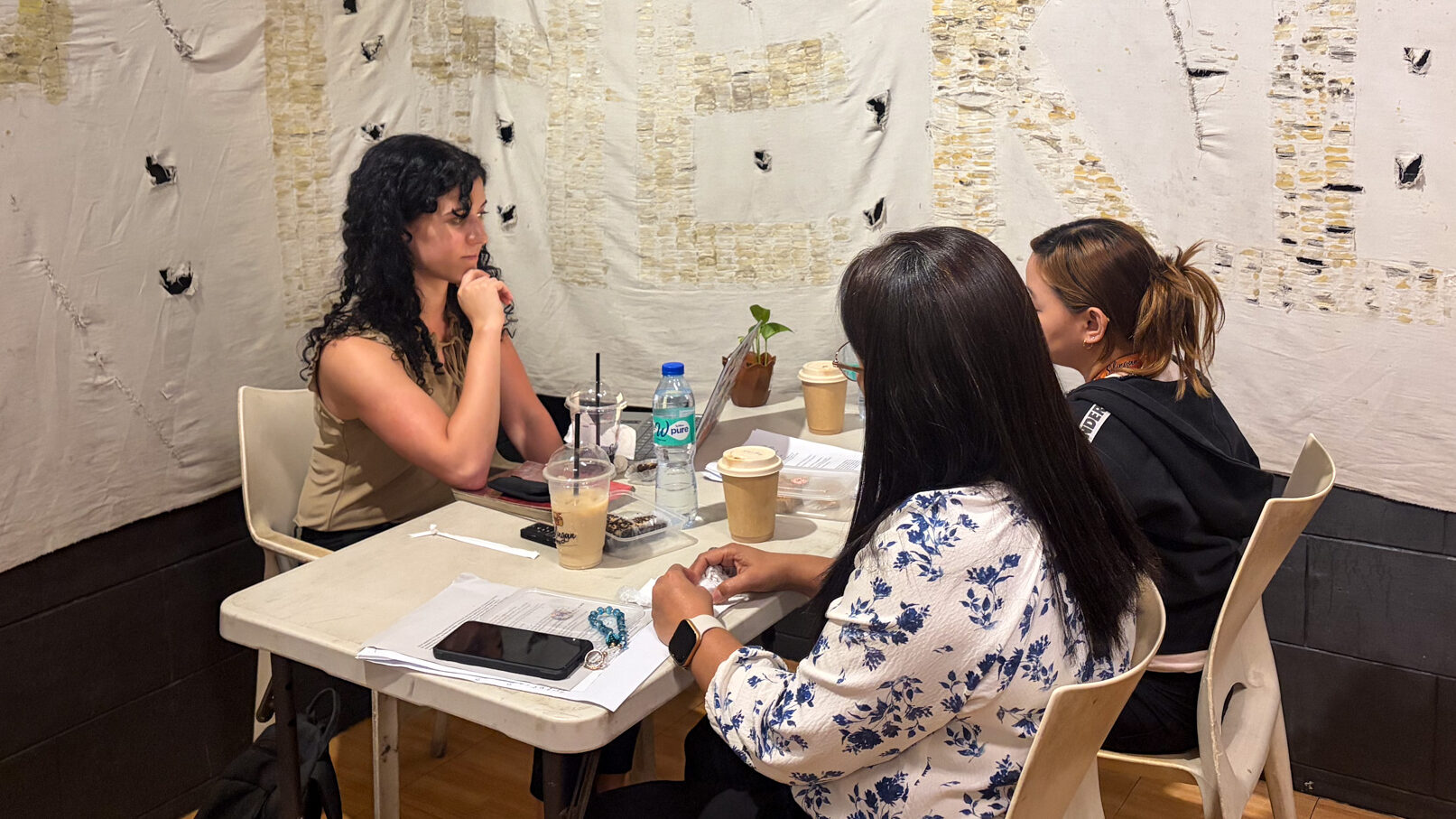
But, for the moment, my worries about bridging the serious nature of our conversation with the casual environment dissipated as Alma teasingly praised Olivia for training her at her new job at a coffee shop and Olivia joked with me about speaking in Japanese over our shared appreciation for anime.
Besides political reprisal, the most visible threat to victims’ family members are the police. Many of those who perpetrated the drug war killings still roam free, indistinguishable in uniform from others among the roughly 232,000 national police in the country. “Not all policemen are evil,” Alma said. Her son recently told her he wants to become a police officer. “I just don’t want him to kill sinless people.”
Filipinos have a highly contextual communication style. There was a heavy implication in her statement about killing the sinless, and I understood her as referring to individuals labeled with the stigma-laden terms “addicts” and “users.” She said Duterte’s administration had promised that those who admitted to drug use would be sent to rehabilitation centers by the police officers knocking on their doors, not killed.
Angry tears welled in her eyes as she recounted her own case. Her partner was killed when seven police entered the yard he was staying in, restrained him and his friends, accused them of being involved in the drug trade and summarily shot them as they were handcuffed and kneeling. Police reports later claimed the victims were encountered while using drugs, and that they rebuffed the police’s commands to surrender, opening fire on the officers, leading to the use of lethal force.
“If nanlaban [he fought back], where is the gun?” Alma said. She had previously believed reports that other drug war killings had been in self-defense. “If the truth is nanlaban, they would have video that the victims are fighting the policemen,” she said, adding that the authorities produced no physical evidence of a shootout and an eyewitness saw her partner begging police officers for his life. No one came to the house after the killing to investigate or question any of the witnesses despite the fact that every police shooting requires fact-finding by the Scene of the Crime Operatives (SOCO). Instead, nanlaban provided an evocative narrative reinforced by the widespread belief that drug addicts and criminals are the main source of social ills, a more appealing scenario than the uglier, dirtier truth.

Nanlaban continues even now a decade later, Olivia told me. “I admit I used to be judgmental too, quick to condemn people on social media,” she said. “Whenever I saw news about nanlaban cases, I would say ‘They wouldn’t be killed if they weren’t guilty.’” In a quiet but resolute voice, she added, “Maybe God let it happen to teach me, so I would realize not everything I hear is true.”
Her reflection sobered me. Olivia’s official written narrative, called salaysay, describes the killing of her younger brother in a case of mistaken identity. While he was walking to grab a drink with his friends, he was targeted for his resemblance to a suspected drug user. Various witnesses reported men on motorbikes driving around their neighborhood searching for someone, and one individual overheard her brother’s exchange with the men, telling them he wasn’t whom they were looking for. Shots followed. During his autopsy, the coroner found 26 bullet wounds, double the number initially reported by the police.
Religion is never far away in the Philippines, one of the most predominantly Catholic countries in the world. Any topic—even the brutality of the drug war—is fair game for discussion of divine influence on worldly events. But it’s hard to find any kind of justification in Olivia’s story, and my mind can only conjure the god in Genesis, asking Abraham to lead an unsuspecting Isaac to slaughter.
Having widely condemned the killings, many in the clergy faced Duterte’s wrath, as well as death threats and even murder. Journalists covering his policies were targeted, too, although some human rights organizations have criticized the media’s role perpetuating the general attitudes toward suspected drug users that helped obscure their killings.
When I asked the women if they found news coverage during the drug war to be fair, their shared answer was an unequivocal “no.” Olivia told me she couldn’t bring herself to watch the news report about her brother’s case. Alma lamented that her partner’s name was never cleared. On the record, he remains an addict, a user, a potential gang member or rapist shot before he could do more damage to society.
* * *
Resistance to authority may seem antithetical to an overarching and abiding Filipino value: the principle of pakikisama, or “getting along.” Still, the country is no stranger to popular unrest. After the People Power Revolution in 1986—when the future President Corazon Aquino, the country’s first female leader, toppled the longtime dictator Ferdinand Marcos, who had ruled under martial law since 1972—the country went through a massive wave of democratization, producing its modern-day constitution.
People Power and the avenue where its protests were focused, Epifanio de los Santos (EDSA), Manila’s main thoroughfare, are so lauded by Filipinos that the next mass protest against executive corruption was branded its sequel “EDSA II,” followed by a less successful EDSA III. (EDSA II in January 2001 unseated the government of Joseph Estrada. Just months later, EDSA III failed to remove then-President Gloria Macapagal-Arroyo from power.)
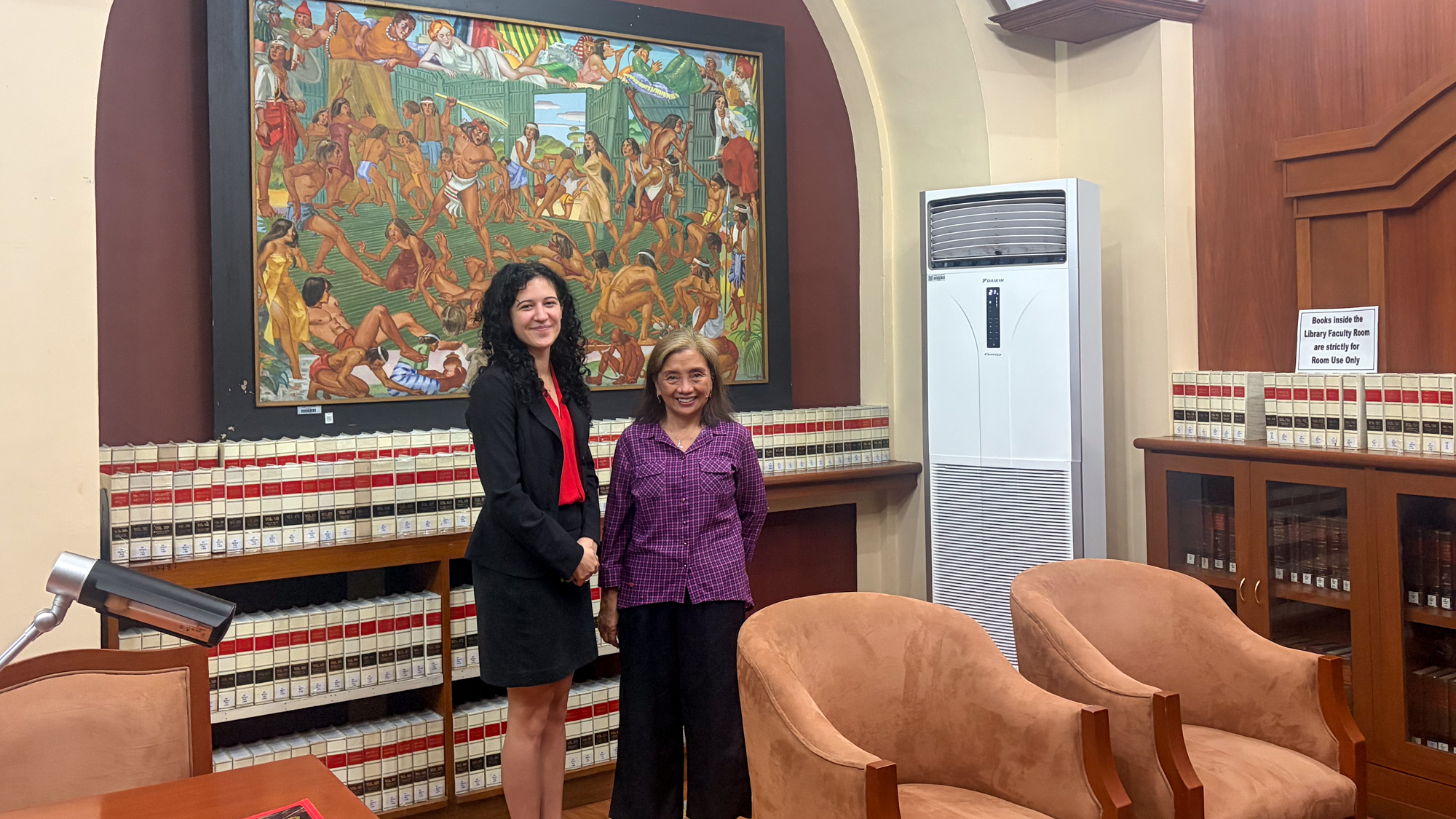
Marcos’s martial law played a significant role in the country’s development. I spoke with Glenda Litong, professor at the University of the Philippines College of Law and a former member of the reparations commission that investigated human rights abuses under his years of rule. We met on the university’s beautifully sun-dappled and forested Diliman campus, where students had thrown Molotov cocktails at the first soldiers enforcing martial law almost 50 years before. The university retains a distinctly political character, including walls with graffiti criticizing everything from imperialism to Ferdinand Marcos, Jr.—the current president and son of the deposed dictator—and widespread corruption recently uncovered within flood-control infrastructure projects. Protest has remained part of the culture since the 1970s.
The martial law period interrupted a larger trend in Philippine politics toward strengthening democratic institutions, Litong said as we chatted in the law school’s faculty library. Before Marcos Sr.’s term, anti-corruption laws were passed that are still on the books today, while he himself signed into law the modern election code, which regulates the behavior of political candidates and public officers. But his 14-year dictatorship was otherwise marked by widespread human rights violations and rampant corruption. In the years after People Power effected regime change and Marcos Sr. fled to the United States, societal and political efforts to address the atrocities during his rule have remained inadequate.
“There was no effort for the military and police to really reckon with what they did during martial law,” Litong said. The same is true for Duterte’s war on drugs, she added. “The mentality of the police is that they can oversee themselves.” Without institutional reform, “the police will continue to think that they did not do anything wrong, and they will not realize their role in our democracy.”
Litong is leading human rights research on the topic of Philippine progress toward “transitional justice,” a framework to address large-scale human rights abuses through a combination of prosecution, institutional reform, truth-telling and reparations. The hope is that addressing societal processes and cultural norms that contribute to rights violations will stop them from taking place again.
Litong’s research shows that the efforts to address the damage under martial law have failed largely due to the attempted imposition of reforms on the military and police that were never internally adopted, and a “forgive and forget” approach to the security sector aimed at keeping People Power’s fragile peace during the Aquino administration. The status quo has also been reinforced by widespread corruption in government that has compromised police integrity and helped lay the groundwork for the authoritarian Duterte’s war on drugs.
Without effective transitional justice measures, Litong said, the “specter” of martial law’s legacy enabled Duterte to argue the violence of his anti-drug war was lawful and positioned police to follow his directives. Decades later, the failure to enact transitional justice measures following the war on drugs is setting the country up for more human rights abuses. Despite the ICC’s prosecution of Duterte, Litong said, adequate efforts have not been made to create an official record of what actually happened to his victims.
Toward the end of our conversation, Litong reflected about the future for accountability: “If we do not address the police’s involvement in the war, they can be utilized again by Sara Duterte in the next round of the war on drugs.” Weeks later, I woke up to the news that she had announced her intention to run for president in 2028.
* * *
In a little pocket of endlessly expansive Manila, dusk settles with a hum caused by ever-present traffic and an air of dynamic denouement. Workers commuting home stop to share meals at jollijeeps (diner-like kiosks), and informal vendors set up parasol-covered grills along residential roads and beside long queues at unmarked bus stops. A leisurely stroll past those carts earns me a couple of skewered inihaw—barbecue, pork belly, chicken intestines—sizzling away in neat little gleaming rows.
Despite the rush and dangers of peak traffic, it’s my favorite time of day. With the number of people around, eating, chatting, living, it feels less lonely than the 6 a.m. version of the business district. The ambiance is ripe for forgetting who you are, one person in a city of 14 million people, heading back to wherever you came from. But even as I slip anonymously into the evening crowd, feeling light on my feet, the stories of violence I’ve heard still follow me home.
Top photo: Motorcycle in Manila (Adrian Biblanias, Wikimedia Commons)