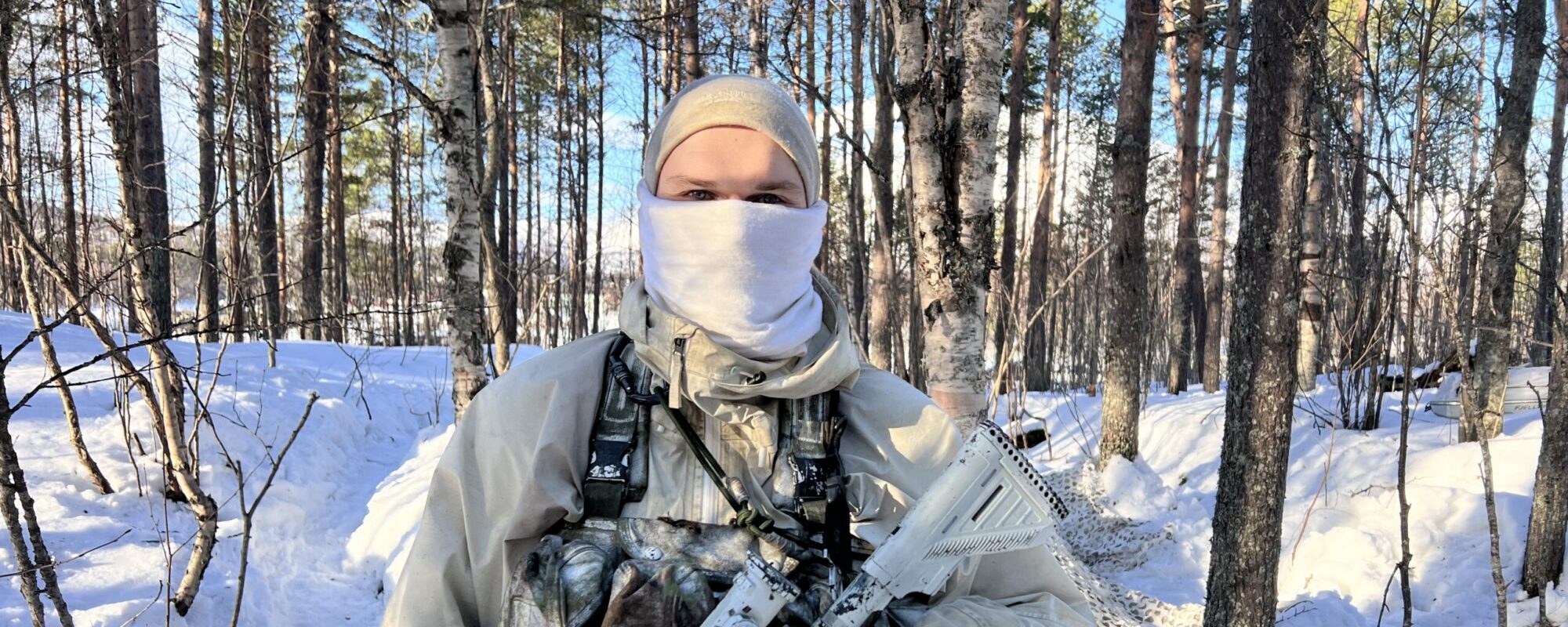
SETERMOEN, Norway — Under a dense canopy of pine boughs, a young Norwegian soldier in white fatigues stood alert outside his snow cave hideout, a white-painted rifle held close to his chest. For months, this member of an army reconnaissance brigade had been camping across Norway’s frozen tundra, sleeping in self-dug caves and speaking to few beyond the unit to which he reported.
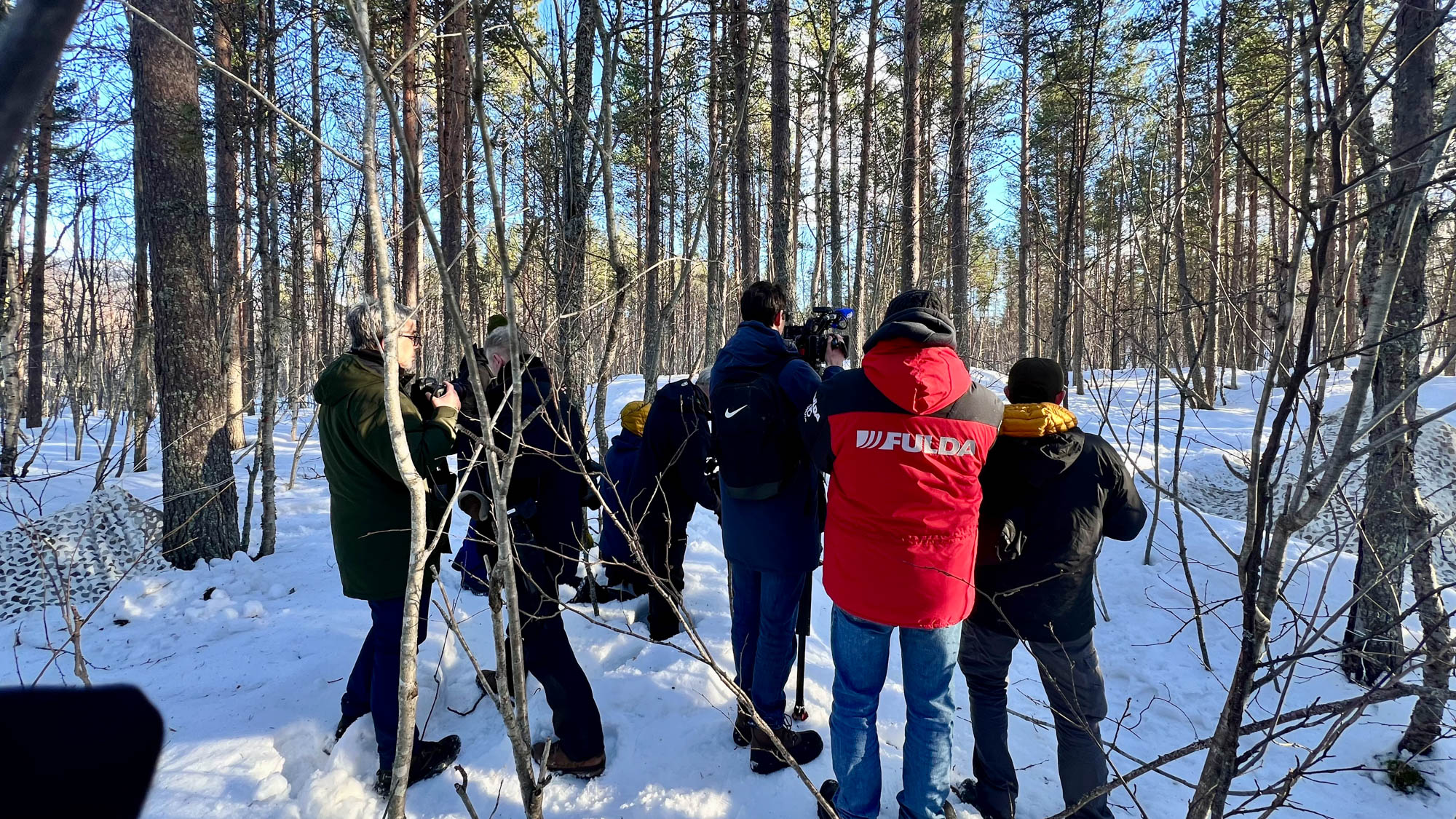
On this bright March morning, however, he had plenty of company. Crowded around him, soggy-kneed from the short tramp from a parking lot, a dozen members of the international press jostled their cameras and microphones, clambering to capture the stark drama of his pose. Later, in breathless coverage by outlets from NPR to Germany’s Deutsche Welle to Norway’s High North News, this soldier’s story would be reported like a dispatch from the front lines. But this scene—like the imagined front line—had been carefully orchestrated. It was just one stop along the “NATO press tour,” a several-day junket designed to capture Arctic allied power performed at massive scale.
From March 9 to 19, Norway hosted “Cold Response 26,” bringing 32,500 troops from 14 allied nations to northern Norway and Finland. The idea isn’t new: Every two years for the past 20 years, Norway has led a Cold Response, coordinating land, air, sea and cyber responses to simulated attacks. But this year, after President Donald Trump sparked a NATO crisis by threatening to invade Greenland, allied Arctic mobilization took on new significance.
In February, NATO announced the brand-new Arctic Sentry “enhanced capabilities scheme,” centralizing northern defense in a Norfolk, Virginia-based Joint Force Command that includes Denmark, Norway, Sweden, Finland, Iceland and the United Kingdom. (In a news conference, NATO General Secretary Mark Butte rejected the premise that it was designed to appease Trump’s unfounded claims of Chinese and Russian Arctic threats.) Then, just two weeks later, the United States and Israel attacked Iran. Over subsequent weeks, as the US Air Force redirected its fighter jets from the Arctic to the Middle East, the lines between rehearsal and reality began to blur.
Paradoxically, however, the media production behind the simulation in Norway seemed to give new meaning to the concept of military “theater.” This wasn’t my first high north NATO exercise. Last March, I traveled to Sondakylä, Finland, to immerse myself in NATO’s smaller Arctic Forge 25, during which Finnish and Norwegian militaries taught the United States and Canada cold weather combat. In Finland, I had been one of only a handful of journalists, and we jumped into the back of armored vehicles, were told to stay out of the way, and often ignored as ground combat simulations played out.
The contrast in Norway this year was striking. It seemed to me that the orchestration of this year’s press operation spilled into the baldly propagandistic. Part of the show might have been designed to shield the more serious or sensitive operations from a potential media frenzy. But NATO itself had its own press team, soldiers whose mission seemed to be to capture the perfect image of icy valor. From tricked-out snowmobiles spinning aimless curlicues, to boy-band-reminiscent poses in front of missile-loaded vehicles, to low-flying helicopters circling loops for the camera, such openly staged performances of military might took me aback. And in light of America’s ongoing, hugely unpopular war in Iran, I wondered how much help NATO really needed to message another warmaking moment.
So I found myself wondering: What, exactly, is the point of a military exercise? In an era where “security” is the new buzzword to justify many encroachments on civil society, it’s no wonder NATO must carefully manage its coverage. Reading the Norwegian government’s messaging around Cold Response, I found them to be extremely clear: The exercise was designed to reassure civilians and deter adversaries just as much as it was about strengthening defense.
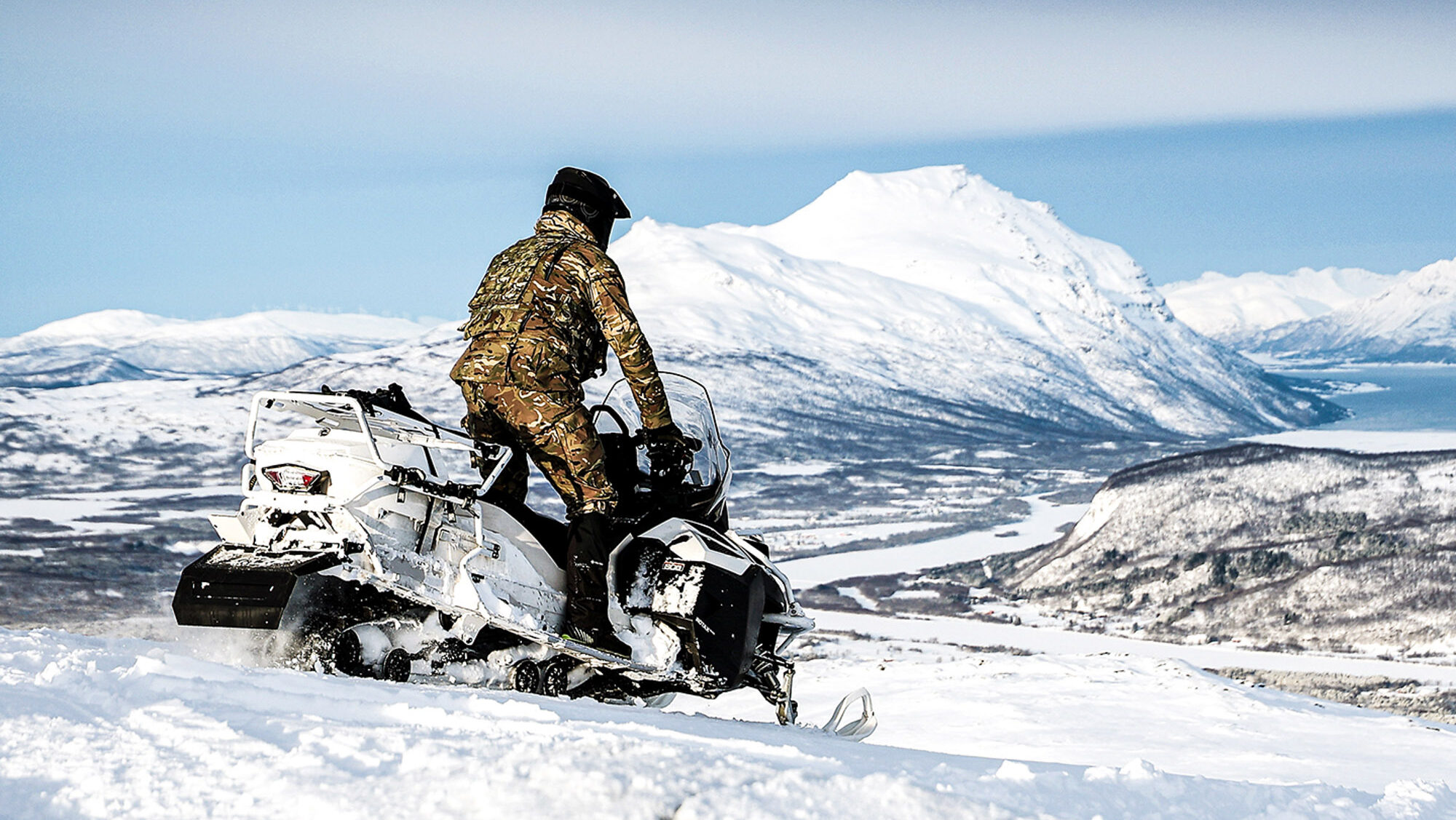
But in a region warming four times faster than the rest of the planet, there’s another kind of “security” to consider: environmental. As much as Cold Response can be called a mere simulation, it involves real war machines and takes place on real, highly sensitive landscapes. And this year, it simply wasn’t cold enough. Following a week of bizarre and relentless rain, the frozen ground had turned to mud and slush.
Already, the world’s militaries contribute 5.5 percent of greenhouse gas emissions and the US Defense Department is the world’s largest institutional consumer of oil. This exercise, which brought ships and aircraft, weapons and equipment and AI-powered drones from around the world, undoubtedly came at a breathtaking carbon cost.
Over the slushy days, I couldn’t escape the question: How much of it was practice for potential escalation, how much performance for adversaries and how much sheer propaganda—with significant and avoidable environmental costs to one of the planet’s most fragile ecosystems?
* * *
Bardufoss, a military base town that doubled as Cold Response headquarters, lies just two and a half hours south of Tromsø, the city that’s my base in northern Norway. So early on the morning of the main press day, I decided to take the regional bus. As I climbed aboard, I was surprised by a familiar face: Norwegian Polar Institute sea ice researcher Morven Muilwijk (whom I quoted at length in this dispatch). He told me he was headed several hours south for a long weekend of hiking and fishing. I was headed for Cold Response, I told him.
He smiled ruefully. “Of course you are,” he said.
Cold Response was common knowledge by then. For weeks in advance, the Norwegian government had been preparing the country’s northern populace for the region to temporarily transform into a military theater. From road signs to social media and YouTube ads, Forsvaret (“Defense”) asked folks to drive carefully, share the road and even—in many cases—be gracious if soldiers showed up at your doorstep or asked to hide in your barn.
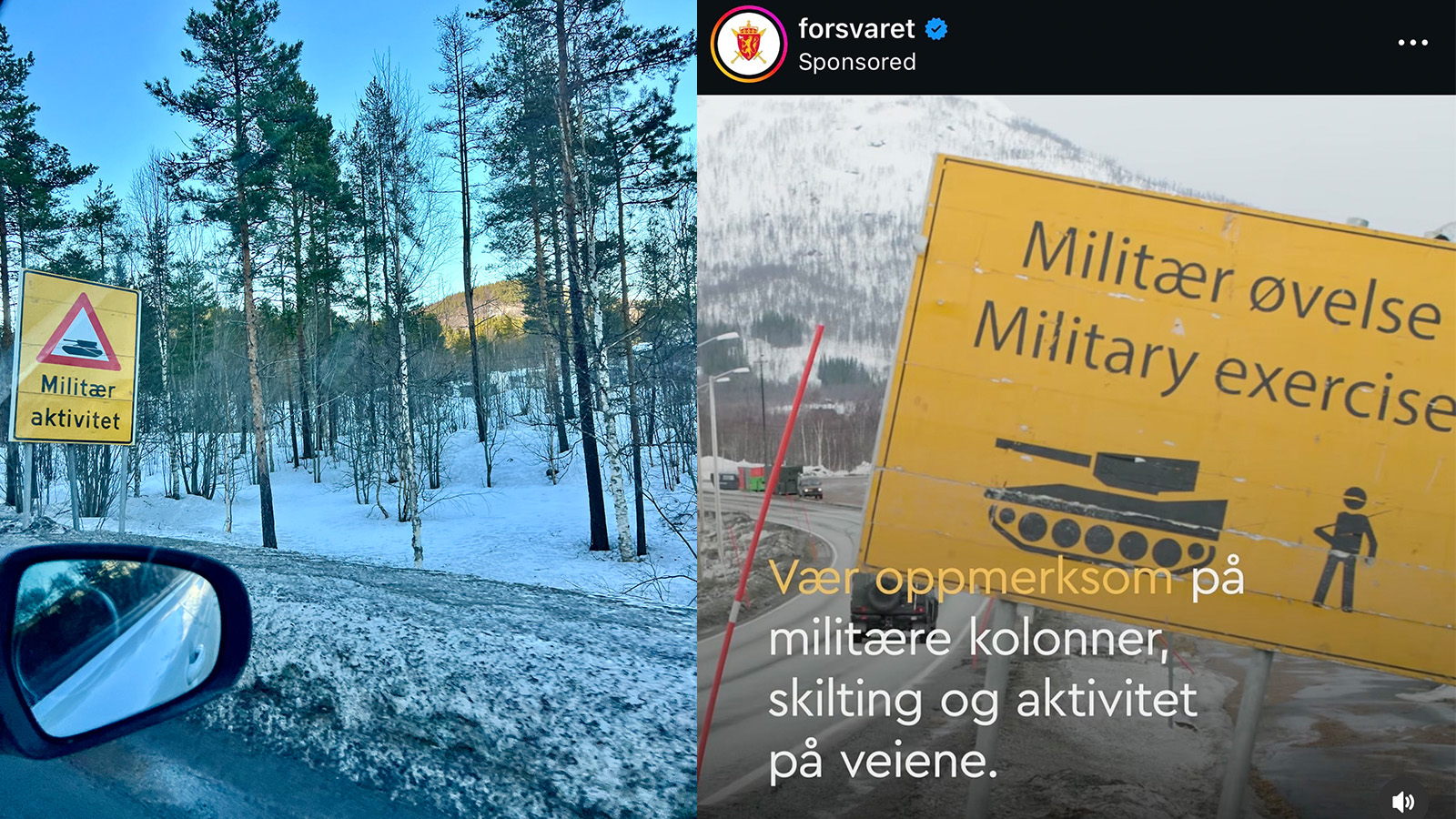
“The exercise in Norway will largely take place on civilian, privately owned land and often in close proximity to local communities. This is an established practice in Norway,” the Cold Response website read. “The Norwegian Armed Forces greatly appreciate the understanding and support traditionally shown by local communities on such occasions, and encourage the public to extend a warm welcome to both Norwegian and allied forces during Cold Response 2026.”
For most Americans, the sight of tanks rolling through one’s backyard would probably cause serious alarm. But in Norway, a tiny country where military service is compulsory, it’s routine. The spirit of “total defense”—which involves civil society in preparation for the possibility of invasion—is a deep national ethos. In the north especially, which the Nazis burned to the ground shortly before liberation in 1945, occupation feels like a recent memory with still-fresh scars. So, too, is liberation—and the appearance of allies, in particular, is a reassuring sight for many.
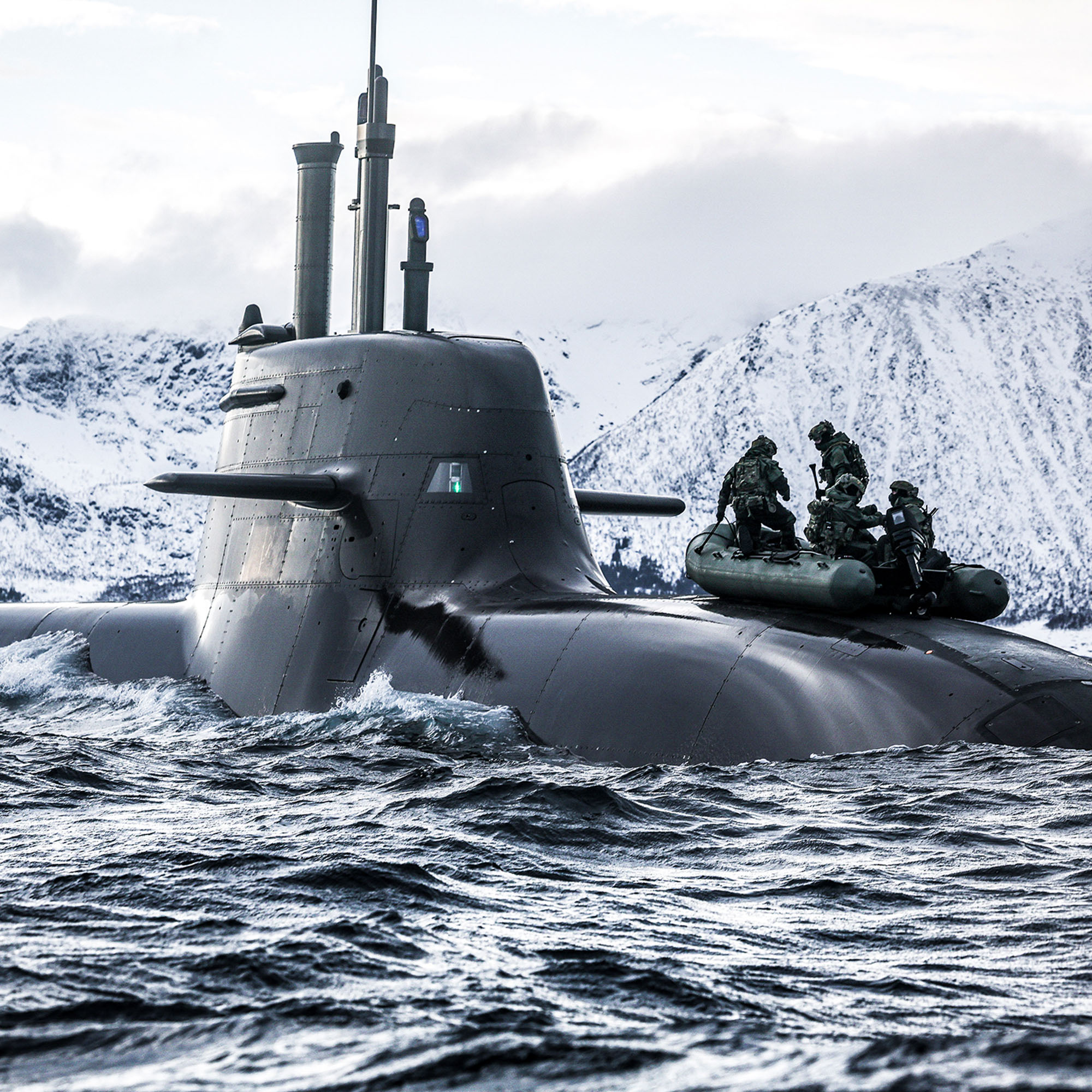
As our bus traced the sheer rocky faces of sliced mountainside, Muilwijk and I swapped stories from recent weeks. He told me that he lives in the north of Tromsø island, and his bedroom has views of the sea. Sometimes he and his wife spot whales. Earlier that week, however, they awoke to a different dark shape bobbing above the surface: the distinct nozzle-like eye of a submarine periscope. About an hour into our journey south, as sharp mountains softened to rolling forested slopes, Muilwijk tapped me on the shoulder and pointed. On a slushy shoulder just ahead of us, a tank stood parked near a roaring river.
“It’s amazing how much has melted in the past week,” he said. “I wonder how they’re handling it.”
Integral to the concept of “total defense” is a love of homeland. In Norway, that’s inseparable from its magnificent nature—so the planners were also careful to minimize damage. The military has a special “environmental unit” tasked to protect these areas. For about six months leading to the exercises and throughout, it worked closely with operational logistics, providing maps of critical water supplies, cultural heritage sites, and critical fishing and fish farm areas. The exercise was specifically planned for the deep-winter weeks of early March, when frozen ground should act as a natural shield protecting the vegetation and soil below from the tracks of heavy vehicles.
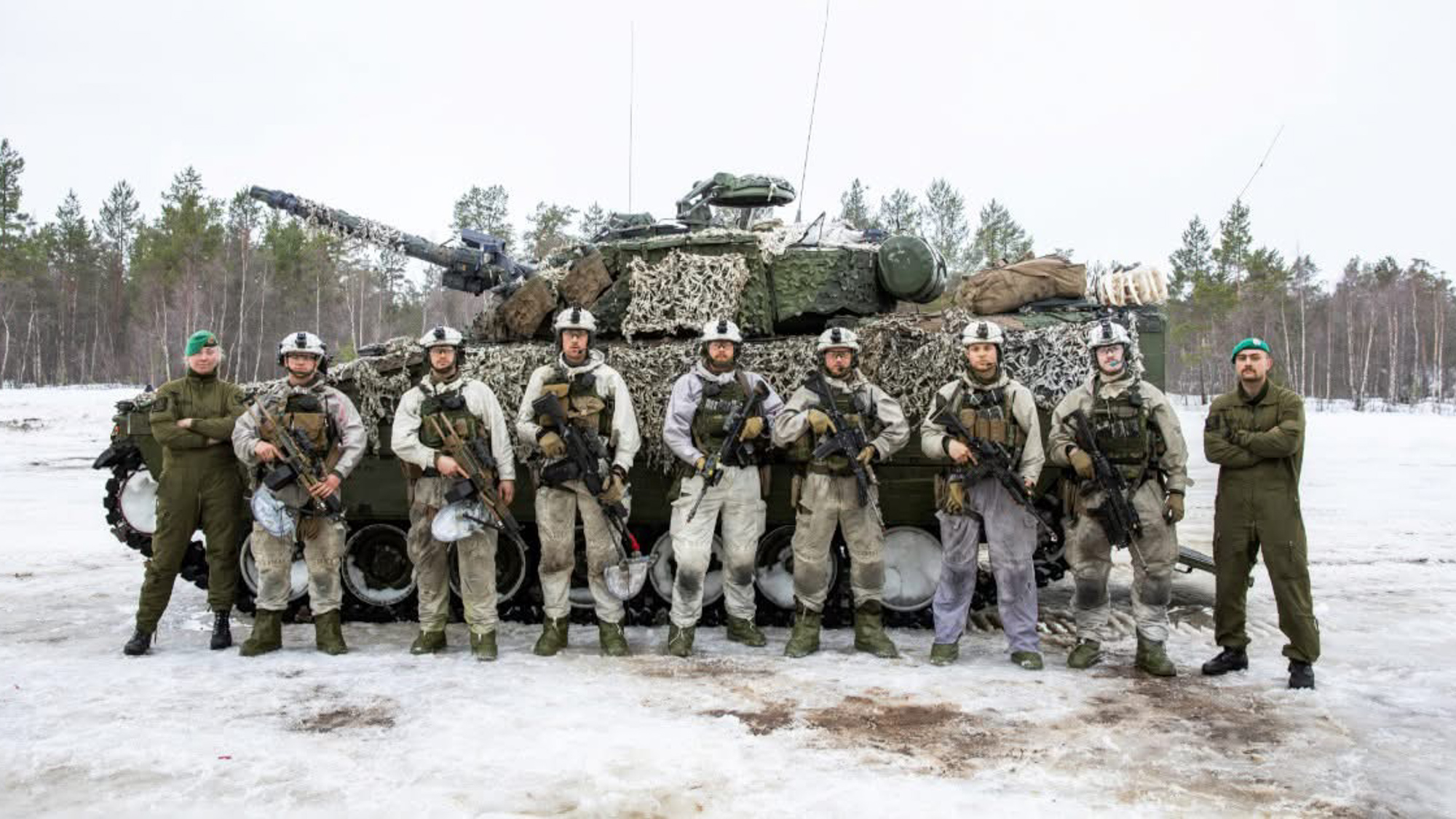
This year, the ice simply wasn’t there—a major problem. It had rained the full week before the exercises began, dissolving the freeze to slush. Heavy vehicles were going to do a lot more damage and there was little for the environmental unit to do but try to somehow mitigate it.
Warfare is an environmentally disastrous enterprise—both indirectly through industrial emissions and direct ecological violence. And, as the devastation of Ukrainian agriculture and recent toxic plumes over Tehran both exemplify, environmental assault can’t be separated from society. Yet many longer-term consequences of conflict—such as unexploded land mines, and groundwater and soil contamination—often go uncounted. In 2011, the South African environmental humanities scholar Rob Nixon coined the term “slow violence” to describe the long tail of those forms of collateral damage.
But what about the consequences of a war rehearsal, I wondered? Sitting next to an Arctic climate scientist helped sharpen an inherent paradox of the exercises. As much as Norway worked to mitigate damage, an allied presence on its highly sensitive high north homeland was actively contributing to its local degradation and—given the huge emissions involved in mobilizing thousands of global troops and their gas-guzzling vehicles, planes and ships—its long-term destruction.
There was a dark irony, I told Muilwijk, in the fact that I was making my way to Arctic war games alongside a sea ice specialist. As armed forces mobilize to defend this region, fossil fuel emissions are permanently melting thousands of miles of climate-stabilizing Arctic Ocean sea ice every year. Up here in the north, much like climate change itself, the “slow violence” of warfare is working even faster.
With that in mind, it didn’t feel like a leap to believe the same forces purporting to defend these Arctic landscapes were also directly accelerating their ultimate annihilation.
* * *
It looked like the most souped-up car show I could ever imagine. Thirty minutes south of Bardufoss, along the edges of a vast and slushy field, lines of dozens of armed and armored vehicles showed off some of each allied nations’ latest and greatest military gadgets.
Squinting against the bright sun under a flat-topped camo hat, NATO press officer Lieutenant Zach Leuthardt listed them off as I followed in his muddy bootprints: Spanish Leopard 2E tanks, Norwegian snow-chained Bandvagns, American Humvees, a German NH90 helicopter. Most vehicles were painted either white-and-tan or green-and-brown camouflage patterns, and the field-milling soldiers were similarly clad in whites or greens.
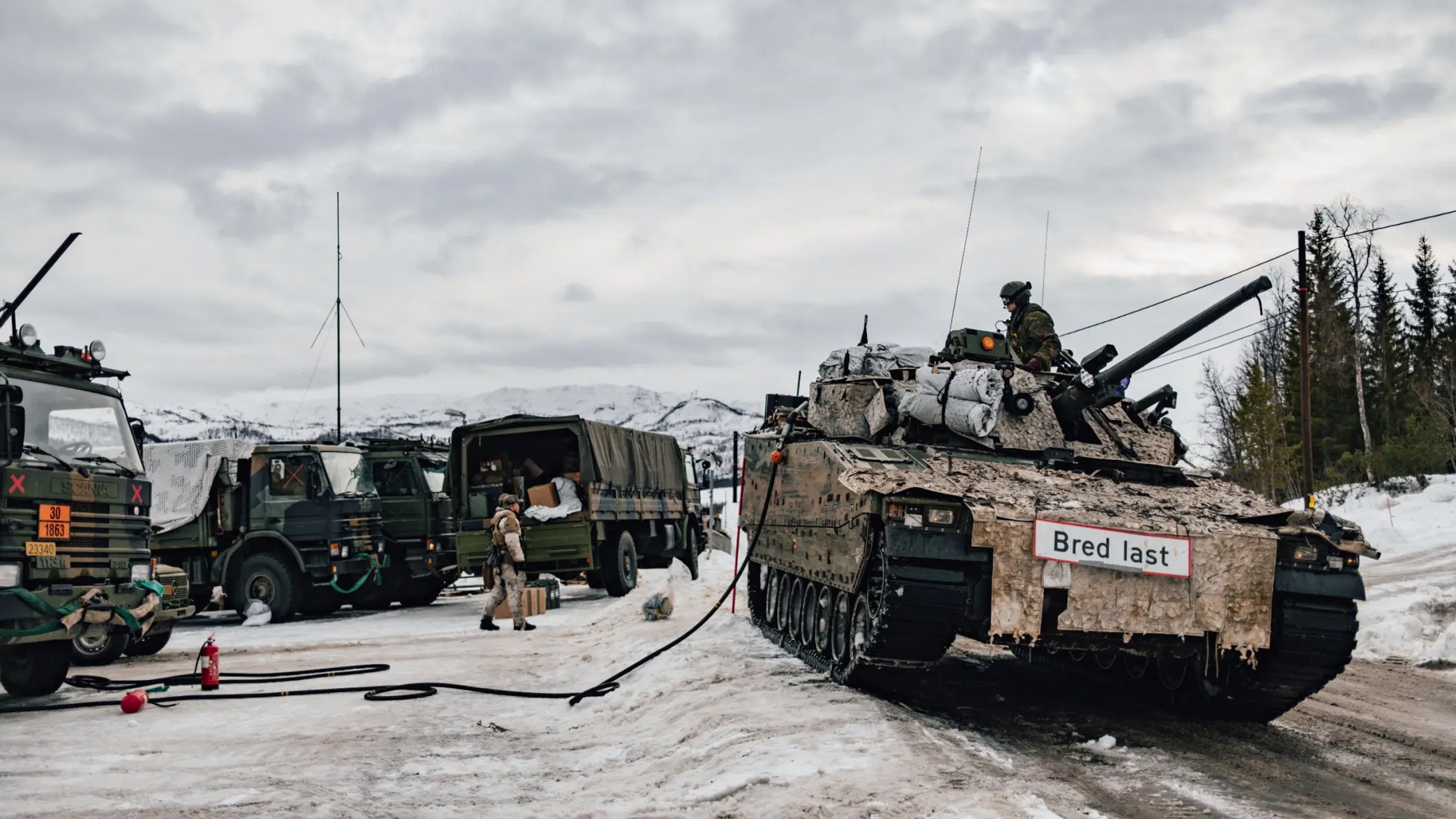
Amid the snow- and forest-ready vehicles, one fleet stood out: Several sand-colored, gun-mounted armored vehicles, their sharp-angled noses seeming to snarl like a pride of apex predators. This was the French Foreign Legion, Leuthardt told me with obvious reverence, and its Jaguar motorized cavalry, typically deployed in the Middle East and Africa.
The biggest and most menacing-looking of the vehicles, Leuthardt said, was the brand-new Griffon, a 6X6 multi-role armored machine designed to protect up to 10 officers from mines and IEDs. Its six massive wheels had left deep mud tracks. Mounted to its roof, the long scope of an anvil-shaped machine gun buzzed as it toggled and focused around the field. Leuthardt pointed up and inside, where a soldier sat with a control in one hand, operating the scope.
He glanced down through his sunglasses and saw us, then, with his free gloved hand, beckoned me up. I climbed the grated steps to peer inside. The cramped space was decked out with screens and dashboards, looping wires and hanging equipment. The officer didn’t speak English and I don’t speak French, but as he freely narrated his work to me, I think I got the general idea. He pointed to three mounted screens surrounding him, each depicting different angles of his target: two unsuspecting soldiers standing far on the other side of the field, their animated expressions rendered in surprisingly high definition. The soldier pressed the screen to engage night vision, suddenly turning the figures into white ghosts on gray.
I jumped down and turned to Leuthardt. “So these all work in cold weather?” I asked.
“That’s what we’re here to find out,” he said, then smiled. “So far, so good.”
Much like so many salespeople at a trade show, a handful of soldiers from each nation stood press-ready in front of their respective fleets. In Norway’s section, I approached two tall young men clad in white and we chatted in Norwegian. Sindre and Leon, both 20 years old and hailing from much further south, were based in Bardufoss for their year of obligatory service. Their unit was most involved in this exercise’s set-up and take-down, they said, so they were less busy this week.
“All we were told was to stand here with the equipment and be ready for questions. We thought it would be our superiors,” Sindre said, then smiled. “But it was just a lot of journalists.”
“I talked to some TV reporters but I didn’t know I had something in my teeth the whole time,” Leon said and they both laughed. He turned to face me with a suddenly serious expression as I raised my own camera.
“Maybe you can make me look cool,” he said.
* * *
As afternoon edged toward evening, clouds gathered and a chill descended. The NATO press tour bus had long since moved on, so Leuthardt drove me 30 minutes back to Bardufoss where I’d catch the regional bus back to Tromsø. As we rolled along the rain-slicked roads, he marveled at the relatively mild weather. He had been here last March for a smaller-scale exercise called Joint Viking, he told me. Last year, the snow was relentless and the roads were coated in several inches of ice.
I told him about last year’s Arctic Forge exercise in Finland—how the surprising warmth had made the snow wet, sticky and extremely difficult to ski. In retrospect, I realized, at least there was snow then. Here, you had to go into the woods to find it.
“It’s so crazy. This looks like an entirely different place,” he repeated, his blue eyes widening under pale lashes as he pointed to the lightly frosted view. “But I’m from Minnesota. We’ve lost a lot of winter there, too.”
Back at the Bardufoss base, independent journalists were packing up in the press room, discussing the next day. As part of his first-ever official visit to Norway, Canadian Prime Minister Mark Carney would make a statement, joined by Norwegian Prime Minister Jonas Gahr Støre and German President Friedrich Merz.
I struck up a conversation with two Finnish television documentarians, a baseball-capped producer and his ponytailed cameraman. They were working on a larger story about Arctic Sentry. Much like the January 2025 launch of Baltic Sentry, it was inspired at least partly by Finland’s recent entry into NATO. The Finnish public, these two told me, was extremely interested in how its powerful new allies would assist against an increasingly aggressive eastern neighbor.
But the American-Israeli invasion of Iran had thrown the journalists’ story off-track. The US Air Force had made a lot of early promises: These Finns had planned to join them at a NATO base in Suffolk, England, and then fly with them in F-35 fighter jets as they rehearsed a northern deployment. Instead, those jets and several other aircraft were diverted to real warfare in Iran. Now the Finns were scrambling for a new story. This was supposed to be a five-part series, they said, but they’d be lucky if they got two episodes out of it.
Here in Norway, they told me, they were also surprised by how involved the NATO press team was in its coverage. Their video camera in particular seemed to be slowing them down. Earlier that day, they had visited a shooting range. They were annoyed by how the military press officers had micromanaged them: Directing the angles where they could point their cameras and time-limiting them to extremely brief action scenes. The press team members had said it was a security precaution; they didn’t want public images of the surrounding mountain range to make their operations geolocatable. But that didn’t make any sense, the cameraman insisted. He pulled up Google Earth on his phone and pointed to the distinct U-shape of the cement wall they had been allowed to film. From above, he said, the curve of the mountain range was far less detectable.
“The security argument was totally arbitrary,” he complained. “It felt like an excuse to control us.”
The careful orchestration of the scenes, we figured, was clearly intended to convey something. But to whom, we wondered? We talked about Russia—the state media had been covering this exercise as an aggressive display of American Arctic domination, they told me. In the days before, Russia had announced some high north missile tests of its own. Deterrence made sense, but these exaggerated poses—along with Trump’s recent actions—seemed to fit well with the Russian narrative.
The cameraman glanced out the window at the growing darkness and thumb-gestured to his colleague: Time to go! They were heading back to Finland after the Carney news conference the next day, they said, but would make one last effort reporting this evening. They planned to drive north along the same road my bus would take, scanning the countryside for soldiers from any nation who might be willing to talk to them.
Somewhere on this vast and varied northern landscape, across which thousands of soldiers were sloshing through mud and slush and weeks-old slow, surely they could find a fresh story.
Top photo: I waited in line behind a crowd of international journalists to capture this photo of a Norwegian soldier.