
TROMSØ, Norway — “For some reason, we’re still calling you all our greatest friend and ally,” my friend Anders said, wincing at me as he lifted his coffee cup to his lips.
It was a dark and icy mid-morning in early January. But we were warm inside, sitting side-by-side at the bar in Tøllefsen, my favorite cafe haunt in town. Just days before, the United States had invaded Venezuela and captured its president, Nicolás Maduro. One day later, President Donald Trump started talking about invading Greenland.
It was a moment that left Europe reeling: What to do when the economic, political and militaristic hegemon of the Western world poses a serious military threat to its own ally? Soon after, Danish Prime Minister Mette Frekeriksen said such an attack would effectively end NATO.
Here in Norway, Trump’s threat feels especially dizzying. Denmark isn’t just an ally and friendly neighbor; for about 500 years until 1802, Norway, like Greenland, belonged to the Danish crown. On January 1, Norway assumed leadership of NORDEFCO, its military alliance with Denmark, Sweden, Finland and Iceland. All four nations are NATO members and all rely to some extent—through this alliance, bilateral agreements or both—on the same US military now threatening attack.
However, no other Nordic nation relies more on American defense than Norway, a founding NATO member. Finland and Sweden remained militarily neutral until 2022. Denmark not only has a larger military than Norway’s; its closer proximity to Germany and the United Kingdom have helped diversify its defense strategy. Norway, by contrast, has an ocean on one side and a 112-mile border with Russia on the other. Since the end of World War II, its entire defense strategy has rested on one goal: delay until the United States arrives.
At Norway’s annual democracy festival in August 2025, I watched Foreign Minister Espen Barthe Eide stand on a stage and offer a thought experiment to an auditorium packed with hundreds of fellow Norwegians: “If the United States invades Greenland, what would we do?”
What could Norway do if its primary defender invades its neighbor? The answer, Eide implied, was clear: next to nothing. With Russia an ever-present and growing threat, the Norwegians’ hands would be tied. “Without America, we are chanceless to defend ourselves,” he said.
That is not a new threat, of course. Even before he took office, President Trump had said the US “needs” Greenland and soon after refused to rule out military interference to take it. Still, until the Venezuela invasion, his words seemed empty, exaggerated or simply unrealistic. Now, Norwegians are grappling with mind-bending questions: At this point, is it even possible to disentangle its defense from the vacuum of US support? What about its entertainment, consumption, culture and capital? In an era of crumbling alliances, where can a country of only 5.5 million people turn for support?
“The US is the center of its own map but I think it’s at the center of our map, too,” Anders said. “Everything’s moving too quickly for us to keep up.”
When traveling abroad, I’ve had experiences that required me to seriously question my internalized propaganda. When I first traveled to Norway in 2021, I was struck by how closely its story of World War II resembles our own. Eighty years ago, US troops arrived here as the hero we aspired to be, leveraging our strength to free the country from a fascist invader. In the war’s aftermath, it made sense for the small nation to continue outsourcing most of its defense capabilities to its well-equipped and willing friend. Best friend, in fact: Norwegian leaders often use the word “bestevenn” to describe the United States. When I first heard that, I wondered about the blatant one-sidedness of the sentiment.
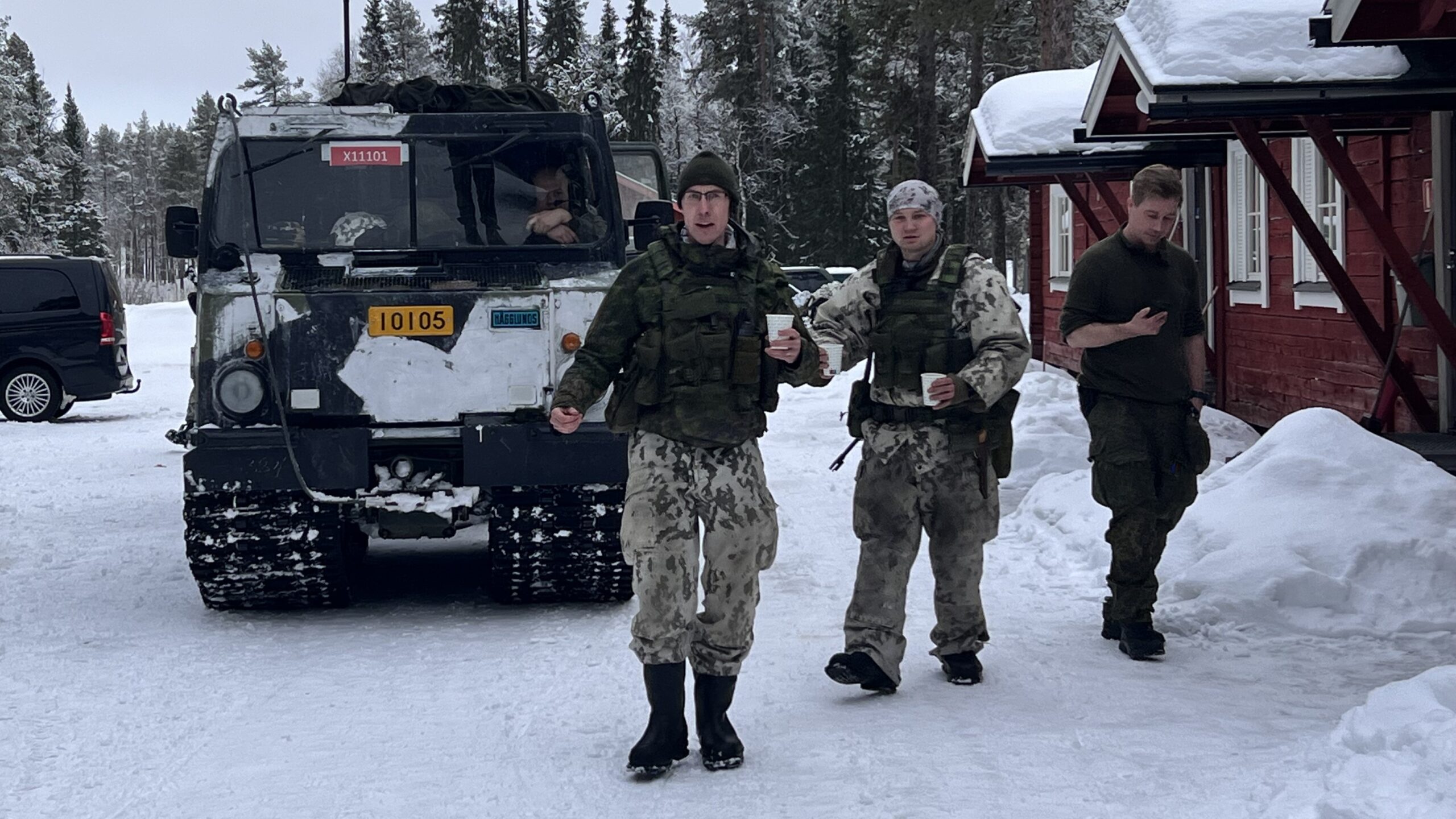
Perhaps it’s a smart strategy for a NATO member that shares a border with Russia to emphasize this friendship. And, since Russia annexed Crimea in 2014, American military presence in Norway, particularly in the north, has steadily increased. In 2021, a US nuclear submarine docked in Tromsø harbor, marking the first time in Norwegian history a foreign vessel of that power was allowed in its ports. In 2022, a bilateral agreement ensured the American military “unimpeded access” to four new regions across Norway. In 2024, eight more were added. In October 2025, a new central NATO hub, the Command Air Operations Center, opened in the high north city of Bodø.
Over the past year, some Norwegian leaders have expressed worry about their dependence on an increasingly volatile American ally. So when Trump pressured NATO member states last June to increase their defense contributions to 5 percent of GDP by 2035, Norwegian politicians seemed more than happy to commit to that goal. (Currently, defense spending hovers around about 2 percent of GDP.)
“Europe and Norway must take greater responsibility for building their own defense,” Defense Minister Tore Sandvik said in a news conference following the NORDEFCO leadership meeting in early January. “We are in the process of doing so because the world situation is what it is, and Putin has become a bigger and more dangerous threat than before.”

Norway’s ties to America go beyond the militaristic. Indeed, a US company plays a starring role in its transformative national story. In 1963, Phillips Petroleum applied to the Norwegian government to begin offshore drilling in the North Sea. At the time, few believed Norway’s continental shelf contained much promise. Years of dry wells seemed to confirm the idea. That is, until late 1969, when the persistent Texans tapped into one of the planet’s largest oil fields.
Over subsequent decades, as unprecedented wealth reshaped the tiny Nordic nation, American companies were working in the wings as mentors, assistants and profit-partners. Norway combines its capitalism with a strong welfare state, channeling wealth back to its citizens. Still, Americans who imagine that the country is some kind of socialist paradise might be surprised to learn how eagerly the country has partnered with, and imitated, American industry and policy. Since the 1980s, it has become increasingly pro-market and steadily privatized more sections of traditionally state-run industries—including telecommunications, energy, the rail system and, of course, petroleum.
To this day, the cultural imprint of the half-century-long petroleum partnership runs deep. In the southern city of Stavanger, Norway’s oil capital, for instance, you can buy exotic products like Cheetos and Girl Scout Cookies. I’ve met many Norwegians whose parents or grandparents had some kind of stint either living in Texas or traveling to its oil fields. And this very specific era of cultural exchange has at least one linguistic legacy: In an otherwise fully Norwegian conversation, you might hear people roll their eyes and call a situation “så [so] Texas.”
Translation: Wild, crazy or entirely descended into chaos.
* * *
“Make no mistake, Norwegians love America,” Anders said, then paused, pushing his black-framed glasses up his nose. Back in the coffee shop in early January, my friend, a lanky carpenter in his early 30s, felt the need to clarify. “Well, we like to act like we’re better than you. But really, we’re obsessed.”
We talked about my experience in the fall of 2024, when I was still fresh to Norway during the run-up to the US election. I could imagine that many Americans abroad felt the global reverberations of the historic vote. But at the time, I was struck by how deeply it seemed to consume this tiny Arctic city. During the entire month of October, the local movie theater offered an American-democracy-themed film selection. Several bars in town advertised election-watch parties led by politicians and academics. On the eve of voting day, the local paper reached out to me for an interview. In that evening’s edition, I appeared in a special pre-election feature along with three other Americans who happened to live in Tromsø.

The more I got to know locals, the more it became clear that this interest wasn’t recent or incidental. I was surprised to hear people casually comment about lower-level US political figures such as Florida Governor Ron DeSantis. One local business owner admitted to being “addicted” to the political podcast Pod Save America. I was ashamed to realize that I, a Norwegian resident, was still sorting out its own various parties and their politics. How many Americans, I wondered, could even name the Norwegian prime minister? (Days after I first wrote that sentence, Trump proved he knows at least Jonas Gahr Støre’s first name when he began a letter complaining about his Nobel Peace Prize snub to the leader with “Dear Jonas.” His own sign-off was “President DJT.”)
One year later, I received yet another reminder of the persistent saturation of American politics—in the form of an invitation to a Hamilton watch party. As it turns out, one of my local friends is a superfan of Lin-Manual Miranda’s historical hip-hop musical. She first found the filmed stage production on Disney Plus during the pandemic. Now she’s seen it more times than she can count. She listens to the soundtrack in her car and has memorized every song. I, by contrast, had never seen the show or even heard any of the music. As a result, my friend who grew up in a tiny rural northern Norwegian village, who had never set foot in America, knew more personal details about my country’s founding fathers than I did.
At that party in November 2025, I learned that my friend’s obsession was far from a peculiarity. I was the only non-Norwegian in attendance. But as the group sat for three hours through the entire show, many others sang along. Their enthusiasm was contagious: I felt myself, alongside my Norwegian friends, variously moved and inspired. I was struck by the universality of the musical’s message, the appeal of its underdog story and the way Miranda portrayed the tension between idealism and hubris. I thought about the stories we told about America in 2015, when the musical became a runaway hit, and in June 2016, when this particular production was filmed. I thought especially about how we connected to its stated aspirations—how we envisioned what America could still be.
As the show reached its soaring conclusion, everyone applauded. Then my friend’s husband spoke up.
“Next chapter: Trump,” he said. The group laughed, all eyeing me. I was laughing, too.
Lately, there’s been a lot less laughter.
* * *
In the Arctic, the month of January unfolds in breathtaking transformations. As the polar night draws to a close and the sun hints at its January 21st return, we gain two minutes per day of dawn-like warmth. Each successive midday grows and glorifies as twilit gray blooms into ever-richer golds and pinks.
This January, however, one thing has felt stubbornly unchanging: The wall-to-wall coverage of Trump’s America. From grocery store newsstands to the gym’s mounted televisions to the bright phone screens of fellow bus passengers, it feels hard to escape a surface emblazoned with his face. More and more, I’ve noticed, he’s placed alongside Putin: The twin bullies of modern imperialism. And, echoing the 2024 election season, nearly every Norwegian seems to want to talk to me about it.
Recently, I’ve found one unexpected refuge: my dentist’s office. Since late November, I’ve spent an unusual amount of time there after I had the poor luck of needing a root canal. From crown fittings to check-ups, I’ve come to know my dentist through the peculiar intimacy of one person talking into the other’s open mouth. Jenny, a kind-eyed woman in her early 40s, has two young children. Over many hours, I’ve learned a lot about them: How her older son shows remarkable skills on skis and her daughter’s schoolmates got her troublingly invested in plastic China-imported trinkets. I know what both of Jenny’s kids got for Christmas. But I never heard what she thinks about American politics. That is, until my final crown installment.
On a blizzarding morning in the second week of January, I arrived early to the well-heated office, stamping my boots and shaking snow from my coat. As I laid back in the chair, Jenny and I began our now-familiar exchange, her lilting-accented English punctuated by my variously pitched gargles and grunts. After a few post-holiday niceties, she launched into what seemed like yet another sweet family story designed to distract me from the action transpiring inside my mouth.
“New Year’s is always hard for us because my daughter is terrified of fireworks,” she began, lifting a metal instrument from her tray and tapping at my back molar.
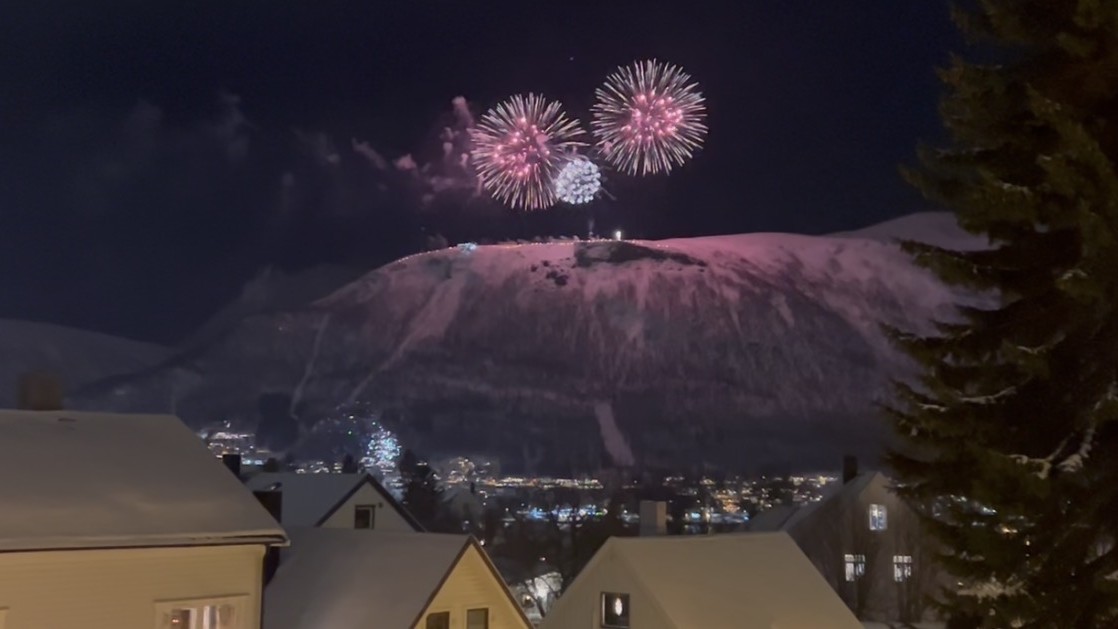
The girl, Jenny explained as she worked, is noise-sensitive and fearful. She was just a baby when the Covid-19 pandemic hit and Jenny worried about its effects on her early development. Then, only a year or so into regular school—her first experiences socializing in groups—Russia invaded Ukraine. Jenny knows that kids try to scare each other, and she can’t control what her daughter hears on the playground. But in the years since, as Tromsø started testing its blaring emergency signal system more regularly, the child’s jumpiness has increased. Every New Year’s, the city puts on a spectacular—and noisy—mountaintop fireworks show. Over the past few years, Jenny and her husband have made a point not to stay local over the holiday.
This year, however, Jenny saw an opportunity to help her daughter face her fear. They talked about courage and safety and prepped extensively. The young girl picked out her own earplugs and even protective goggles to wear for the occasion.
On the big night, the child bravely donned her winter coat and defensive gear, took her mother’s hand and stepped outside. As the first explosions filled the darkness above icy mountains, Jenny felt the grip of the small hand tighten around hers. When she looked down, the eyes that met hers were wide with fear.
“Are the Russians coming for us?” her daughter asked.
Jenny realized it was the perfect moment to teach her child about NATO. As they retreated to the warmth and relative quiet of their home, she did her best to explain the alliance. Norway might be small, she told her daughter, but it is part of a big team full of strong friends. If any bullies came after them, they could call on these friends, who would never let anything bad happen to them.
Jenny paused her story and carefully placed her instrument on the tray. She sat back on her stool, pulled down her medical mask, and looked me in the eye.
“If that conversation happened today, I don’t know what I would be able to tell her,” she said. “Because now I’m scared, too.”
Top photo: Norwegian Prime Minister Gahr Store in the White House Oval Office, April 24, 2025 (Official White House photo by Daniel Torok)