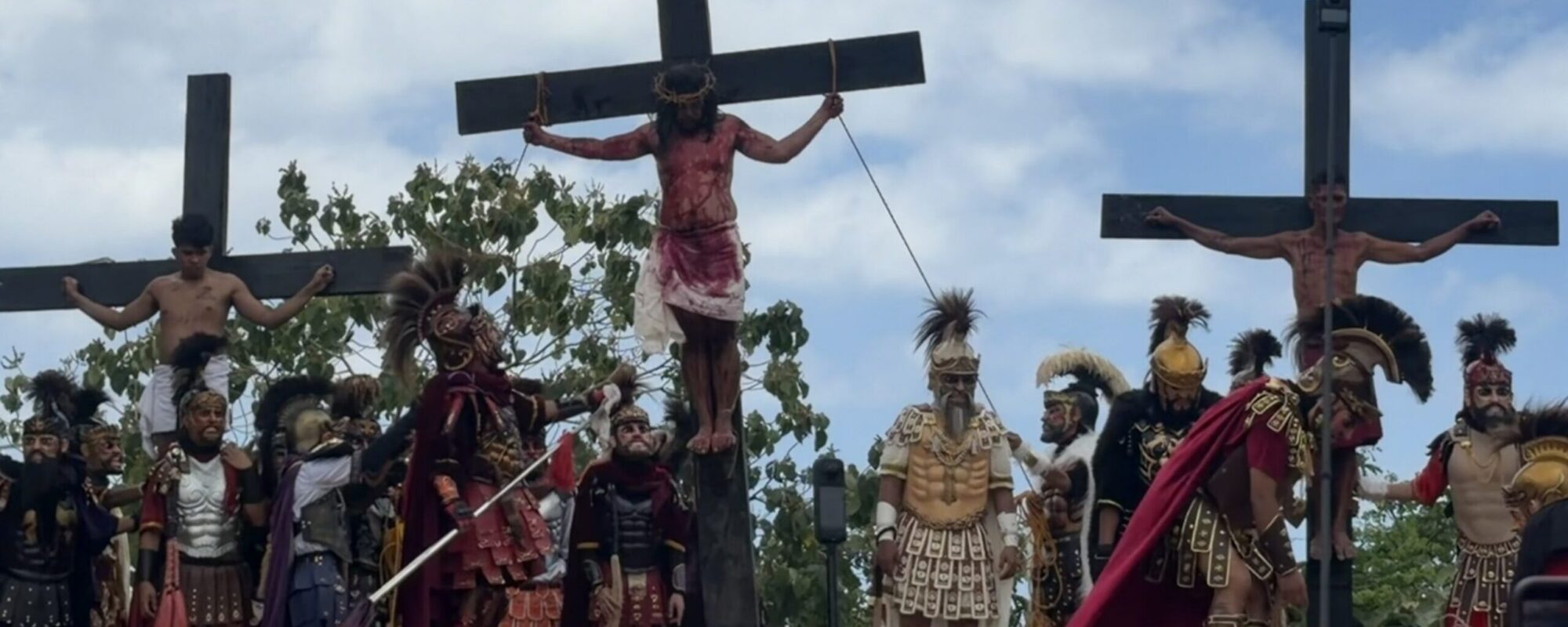
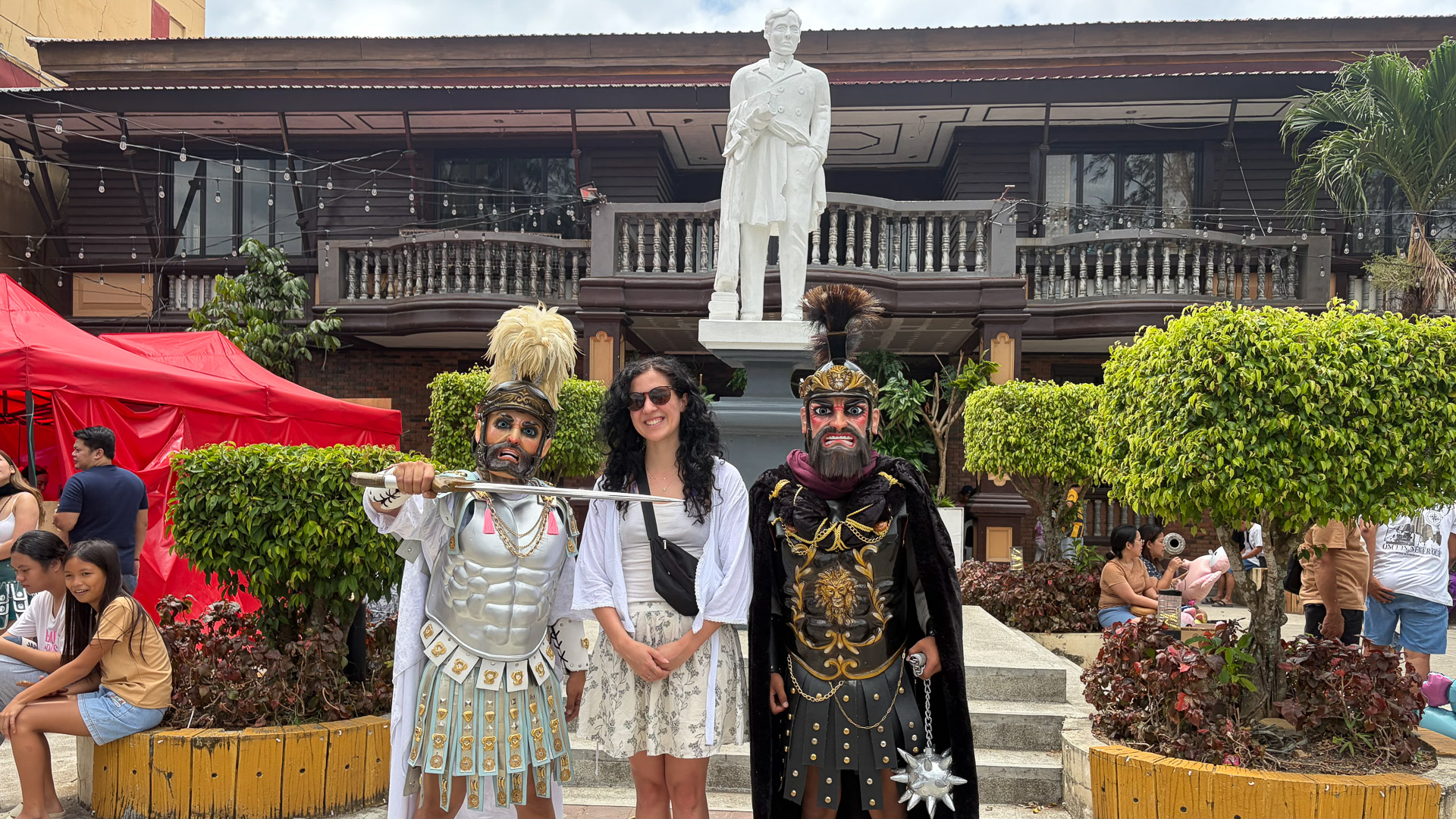
MARINDUQUE, Philippines — On this island in the exact geographical center of the Philippines’ 7,000-isle western Pacific archipelago, hundreds of people roamed the capital city of Boac dressed in Roman-style leather and armor, replete with fearsome masks and plumed helmets. Celebrants of the Moriones Festival, they were impersonating St. Longinus, the Roman soldier said to have pierced Jesus’s side when he was on the cross.
The event was just one local gathering among hundreds taking place around the country during Semana Santa (Holy Week), as devotees adopted a number of rituals throughout the Lenten season until Easter Sunday. There’s Visita Iglesia—the practice of visiting seven different churches on Maundy Thursday for good luck. There’s the Stations of the Cross—a 14-stop trek where worshipers, young and old, often walk the roads barefoot as a form of penitence. There’s Pabasa—singing of the “Pasyon” (an epic poem about Jesus’s life) with neighborhood worshipers, a haunting chorus that goes on for days until Good Friday. (I’m told neighborhood hosts feed those exhausted singers who make it to the end).
Eighty percent of Filipinos identify as Catholic, making Semana Santa arguably the most important holiday period of the year. Araw ng Kagitingan (Day of Valor), which commemorates the Battle of Bataan against the Japanese in World War II, has had to be rescheduled in past years when the two happened to overlap. Only during Semana Santa does the constantly buzzing capital Manila transform into a ghost town as seemingly everyone—religious or not—returns home to the provinces to spend time with family.
It’s strikingly different from any Easter season I’d experienced growing up in comparatively secular America. Still, I expected Holy Week in the Philippines to mirror what I knew about Latin American customs, given the shared history of Spanish colonization and central role of the Catholic Church. Indeed, watching a prusisyon (procession) of saints’ figures borne along the streets of Marinduque on elaborately decorated karos (floats), I was reminded of similar celebrations in Mexico and Guatemala, the latter so extravagant that UNESCO recently designated the procession as cultural heritage for humanity.
But I also came to understand that the religious landscape in the Philippines is grappling with a widening social chasm: the moral gap between the pomp and circumstance of popular religious devotion and widespread support for a “war on drugs” that resulted in thousands of extrajudicial killings under former President Rodrigo Duterte. As he instructed police officers to carry out deadly anti-drug operations across the country, religious ministers and their lay partners were often the first line of defense and response for targeted communities.
Now Duterte is on trial in The Hague after the International Criminal Court (ICC) last week confirmed charges of crimes against humanity for his drug war policies. But he and his politically prominent family are still widely popular and Diehard Duterte Supporters (DDS) continue to insist on the legitimacy and efficacy of his war on drugs. In the meantime, politically active priests, nuns and religious communities continue to form a normative bulwark against the shifting social tide that threatens to call for—and may ultimately embrace—an imminent sequel to Duterte’s war on drugs.
* * *
Christianity has existed in the Philippines for a little over 500 years. Imported by Spanish colonizers, religion served as a tool of the colonists’ “civilizing mission,” a means to control native Filipinos from hundreds of different tribes well-defended by the natural topography of islands and a mountainous countryside. Islam was a precursor to the arrival of the Spaniards, with 14th-century trade networks establishing a strong religious presence in the south (on what’s now the island of Mindanao) that remains to this day.
“The Philippines is a very interreligious landscape,” Raphael Yabut, professor of theology at Manila’s Ateneo University, told me. As we chatted in a student-filled cafe that also functioned as an industrial hardware store across the street from Ateneo’s campus—Yabut’s soft-spoken manner making it easy to talk frankly about such contentious topics as politics and religion—he explained alternate theories for the enduring popularity of Christianity despite the fact that it is not a “native” religion.
Some scholars believe the Spaniards forced conversion and religion on the native people, Yabut said. “Others point to clear examples of Indigenous Filipinos making Christianity their own, such as by translating Spanish services into the many local languages of the Philippines or changing the nature of Church rituals.” Some Philippine revolutionaries who fought for independence from Spain would even use pieces of statues of Catholic saints to make Indigenous anting-anting (amulets) for protection in their battles against the Spaniards.
Thus, the history of Christianity in the Philippines includes both narratives of active resistance and adaptation and accommodation by existing Indigenous traditions. Through a process known as “syncretism,” native spiritualities like animism and leadership by babaylan (shamans) inextricably converged with the mode of religious governance Spanish colonists imposed on Filipinos under their rule—creating a distinctly Filipino form of worship and religion.
For five centuries after the Spanish arrived, the Catholic Church continued to have a significant impact on national politics, eventually contributing to the fight for independence from Spain by establishing a nationalist Catholic denomination, Iglesia Filipina Independiente. Later in the 1960s and ’70s, Yabut said, the Church helped facilitate political dissent under martial law imposed by the dictator Ferdinand Marcos, Sr.
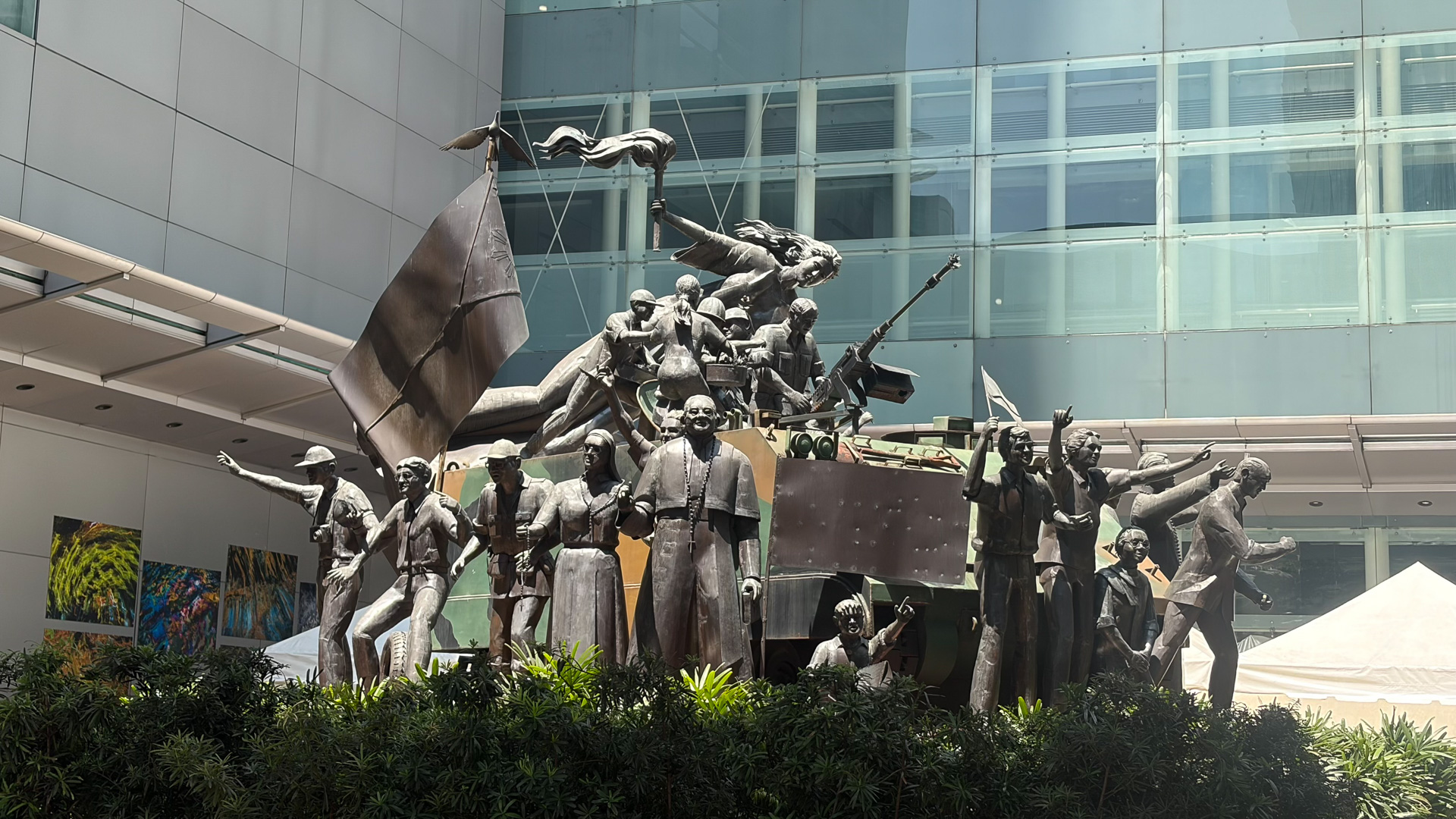
When Marcos tried to steal a 1986 snap election from the winner Cory Aquino, then-Cardinal Jaime Sin was instrumental in organizing the February 25th People Power Revolution, calling for people to go into the streets to peacefully protest. To date, the Church—through the Catholic Bishops’ Conference of the Philippines—continues to directly advocate over contemporary political issues, focusing on social policies related to the well-being of the poor and protection of the environment.
Not everyone agrees the Church and other religious organizations should act as explicitly political, vocal forces for social organizing. Yabut said that while the Catholic Church has embraced more social ministry and rallying for political action, Evangelical groups and other Christian sects have pushed for clearer separation between religious organizations and politics, using Biblical doctrine to pressure politically active ministers to leave social issues to the government.
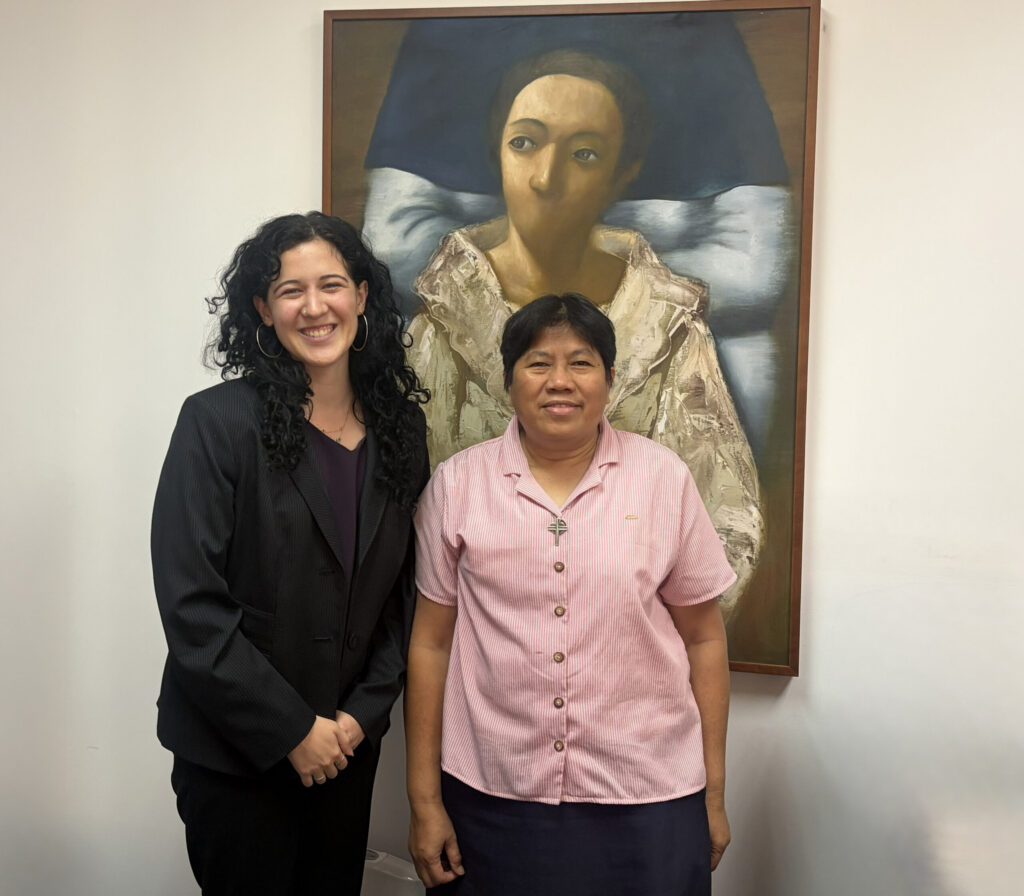
Conversely, religion can be a tool for those in politics to stay in power and avoid scrutiny. “Systemic corruption in the Philippines is unfortunately tied to religion,” Sister Auria Arabit, nun and theology professor at Manila’s De La Salle University, told me with unexpectedly fiery indignation and candor. “Officials are able to use popular devotion to win votes, for example, by designating a public holiday under religious grounds to curry favor with the people.” By generating a pious image, she added, officials can deflect accusations of corruption and distract voters.
Such social contradictions—between the prevalence of corruption and normative weight of religious ritual—illustrate what Arabit terms a “split personality” or “divide within popular religiosity” in the country.
Yabut agreed. “Many practice a cultural Catholicism,” he said. “Churches are filled on Palm Sunday because everyone wants to take home a palm, to participate in the drama and the festivity associated with religious ritual.” But in the context of widespread support for Duterte’s drug war, the dissonance between religious doctrine and social reality becomes stark. “When people go to Mass, they might hear a homily based on principles of solidarity with the poor, all the while the image of Jesus dead on the cross hangs in the background,” he said. “Then they’ll see pictures of an extrajudicial killing victim dead on the street, and say, ‘This person deserved it.’ They fail to see the connection.”
Arabit has also seen firsthand how prejudices toward those targeted by the drug war conflict with Church doctrine—which emphasizes the dignity of each person—and Church policy, which calls for a rehabilitative approach to drug addiction. She is actively involved in providing welfare for Manila’s “street kids,” the children of informal settlers, communities of unhoused people, many of whom are involved in low-level drug selling. Such kids face violence from police; some have been orphaned by the drug war. In her work with a group called the Sisters of the Poor, Arabit also gives psychosocial support to those receiving substance abuse treatment in rehab centers, where she often brings her students to observe.
Her experiences inform how she teaches theology to university students—some of whom are atheists—as an attempt to close the gap between religious doctrine and daily life in the Philippines. “I want to contextualize theology with the realities of the present time, with actual social advocacy,” Arabit said. “I want my students to challenge those who don’t live by their professed values, to challenge those who are corrupt. Otherwise, religious theory is useless.”
She paused and shook her veiled head. “I mean, can you believe that we’re ranked the third-most corrupt country in Southeast Asia and yet one of the most religious in the entire world?”
* * *
Ancient Rome’s legal system recognized a certain category of person as “homo sacer.” The most extreme form of social outcast, homo sacer’s life was forfeit. Anyone could kill him without legal consequence.
Before Duterte was arrested and brought to The Hague, the drug war’s victims were, in a sense, the Filipino homo sacer. After thousands of killings recorded by the Philippine National Police, only eight officers have so far been convicted for homicides during drug operations. Widespread impunity for police and associated vigilante gunmen essentially placed their victims outside the law. In communities targeted by drug war operations, residents lived in constant terror they might be next.
That was the case in San Andres Bukid, one of Manila’s most densely populated and impoverished neighborhoods. From the start of the drug war in July 2016, San Andres was widely described as a “killing field.” Within a few months, at least 35 people died in police operations in addition to a number of killings by unidentified armed men. At the height of the violence, 39 San Andres residents filed one of the first direct legal challenges to the war on drugs before the Supreme Court in 2017.
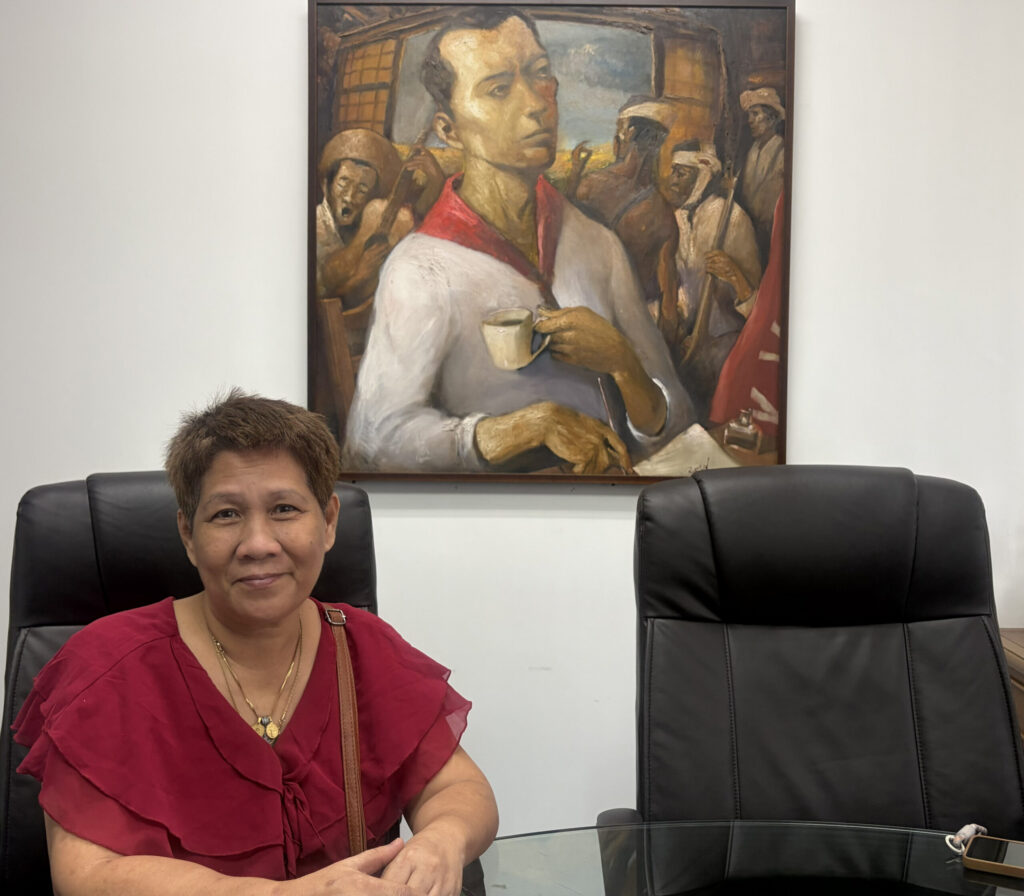
I met the lead petitioner in the case, Sister Juanita (“Nenet”) Daño, a nun of the Religious Good Shepherd congregation and social worker who lived in San Andres for 11 years running a basic ecclesial community (BEC). BECs are prevalent in Christian communities across the Philippines, functioning as independent Bible study groups that are often also involved in social advocacy.
Convivial and quick to smile, Daño spoke with a directness and lack of pretense that conveyed a deep familiarity with recounting the story of the San Andres community. “Since I worked in San Andres for such a long time, I knew there was a problem with illegal drug use and selling even before the killings started,” Daño told me. Every Sunday, she conducted neighborhood services to help people dealing with addiction. “I came to learn that many were using drugs to be able to work longer hours,” she said, “do more manual labor or otherwise provide for their families.” Taxi drivers, construction workers and women running laundry services would take a tiny amount of shabu (methamphetamines) the “size of a green bean” to keep up their strength and work on fewer hours of sleep.
It changed her attitudes about drug use and criminalization. When the killings began, Daño started recording the circumstances with the help of her BEC members. They discovered patterns in the killings, such as the typical times of the operations (10 p.m. to 3 a.m.), the fact that nearby CCTV cameras would be switched off on those days and widespread police intimidation of witnesses.
After each death, Daño would go to the local police station to ask for a required report. “It would state that there were multiple gunshot wounds and describe the situation as nanlaban [meaning the suspect fought back],” she explained. “I’d see the body, only hit by one gunshot, and ask them, ‘Why are you telling me he fought back?’ and I’d get red in the face and angry, and demand that they put the right description of the cause of death.” Although short and affable, Daño retains a formidable air; I could easily imagine her scolding a group of armed policemen.
With an impeccable memory for detail even a decade after the killings, Daño recounted story after story. They all had similar themes of terror, intimidation and hopelessness among victims’ families, especially those who directly witnessed killings. “Who are we against the law?” she recounted one resident asking her. “Against these burly men who demonize us?”
“After the third week of killings, I realized prayer is not enough,” Daño said. “We have to do something.” Other priests working in the neighborhood were afraid. However, one of them, Bishop Broderick Pabillo, helped her find a lawyer. “I knew we would be able to face the police with them on our side.”
Daño’s name was the first on the Supreme Court petition, her identity at the forefront of the legal challenge to the police and Duterte’s drug war. I asked if she had ever been afraid. “Jesus was crucified on the cross,” she replied matter-of-factly. “So I think if you’re a Christian, you need to be similarly brave.” She waved her hand, as if brushing away concerns. “Besides, when we filed the case, I just took off my veil,” she added. “If a hitman is looking for a nun, how would he recognize me?”
One neighborhood resident, Victoria Factor, remembers the fear and vigilance in the San Andres community as residents waited for the court to decide their case. She had worked closely with Daño as one of the BEC coordinators, often visiting the sites of killings moments after they had occurred and documenting the details. She faced threats and harassment: anonymous texts that warned her not to get involved in the case. “Even some priests of our parish were so scared and ashamed of the killings that they didn’t want to give a funeral mass for the victims, since they were alleged drug users,” she told me. “I think many of our priests were silent because they were afraid of being targeted, too.”
In 2018, a year after the case began, the Supreme Court granted the 39 petitioners a writ of amparo (protection), extending to the entirety of the San Andres neighborhood. Almost immediately, the killings stopped.
After that success, other Manila parishes began asking Daño for help. Much of her advocacy involved countering allegations that the extrajudicial killings were fake news, as well as navigating fear, silence and political dissent within the clergy. But as momentum continued to build, Methodist organizations and other religious denominations also began to organize and criticize the drug war’s rising death toll.
Bravery relies on a domino effect, it seems. “In San Andres, when one bishop finally came and gave a mass for a victim’s family, it gave us a bit of courage,” Factor said. “Even for just one day, it showed that not everyone had turned their backs on the victims.”
Now Duterte is in prison in The Hague, Daño said, “finally, there is a glimpse of hope of justice for those who were killed.”
Factor agreed. “I hope Duterte will face the consequences for what he’s done so that the victims will have inner peace.” These days, in weekly prayer meetings, Factor helps support victims’ families who still haven’t recovered from the trauma. “Our wounds are still fresh.”
Although she’s no longer stationed in San Andres, Daño is still involved in social work and supporting those struggling with addiction. “Giving up is not in our bloodstream.”
As we parted ways, I exchanged contact information with Factor, whom I now affectionately refer to as Ate Vicky. (Translated literally, Ate means “big sister,” but it’s a general term of respect for an older woman.) In the Philippines, the default mode of communication is Facebook. But as we friended each other, she explained that she no longer uses her real name on social media, relying on a pseudonym for security and to protect against harassment by Duterte supporters. On Facebook, she’s “David.”
“Bakit si David, Ate?” I asked her, puzzled. (Why David?)
“I picked it from the Bible, the story of David and Goliath,” she answered with a smile. “He’s a good role model.”
Under Duterte’s presidency, clerics vocal about social justice ran the risk of being “red-tagged”: a widespread practice of labelling activists communist rebels associated with the separatist New People’s Army, the armed wing of the Communist Party of the Philippines. Accusations were often made with no evidence to repress criticism with the threat of violence, government surveillance or death. By 2018, at least three priests had been gunned down in targeted assassinations; all were advocates against state abuses, including the drug war.
Even those at the top of the religious hierarchy were vulnerable. Two of the national Catholic Conference’s former leaders, Archbishop Socrates Villegas and Cardinal Pablo David, publicly criticized alleged corruption and extrajudicial killings under Duterte’s presidential administration. In response, the police filed sedition charges against both and several other prominent religious leaders.
The charges were eventually dropped but claims of sedition served as the cornerstone of Duterte’s response to his critics. Two priests who gained media attention from openly opposing the drug war, Flaviano Villanueva and Albert Alejo, were tried for conspiracy to commit sedition; they were acquitted in 2023, after Duterte had left national office.
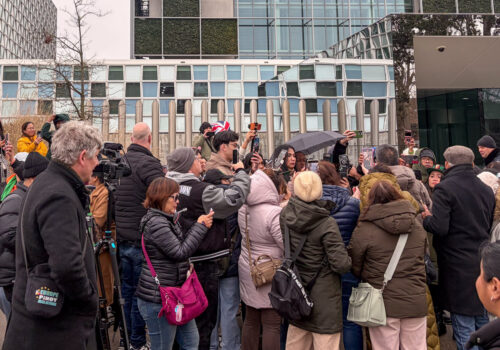
I first crossed paths with Alejo in The Hague, milling around in the ICC’s public gallery waiting for the confirmation of charges hearings to start. In black clerical clothing with a prominent crucifix around his neck, he had a very jolly disposition, asking for a polite mano po (a gesture where you bring someone’s hand to your forehead to “bless” you as a sign of respect) from those he greeted even as they tried to respectfully ask for a blessing in turn.
Ordained as a Jesuit priest, Alejo took up social and political advocacy long before Duterte’s war on drugs and the ICC investigation. Since the end of martial law in the 1980s, he has helped build and sustain the anti-corruption movement on Duterte’s home turf, Davao City, Mindanao’s commercial center. For decades, Alejo worked on interrelated issues in Davao and throughout the island, advocating for Indigenous peoples’ rights and engaging in dialogue with armed separatist movements like the Moro Islamic Liberation Front. “When I finally moved to Manila in 2015, it was as if Duterte followed me,” Alejo said, joking in reference to Duterte’s presidential election win in June 2016. “It was as if I had never left Mindanao.”
Now based in Rome, where he teaches at the Pontifical Gregorian University, Alejo is closer to the ICC and its investigators in The Hague. His longstanding familiarity with the political context in Davao—as well as the alleged killings perpetrated by Duterte’s so-called Davao Death Squad since the 1990s—has been critical for the development of the ICC’s investigation.
Duterte’s war on drugs launched with widespread, vocal support, making it difficult to communicate outside the Philippines the extent of the policy’s detrimental impact. But Alejo’s previous exposure to Duterte’s extrajudicial style of governance in Mindanao gave him insight into how to pierce the veil for international prosecutors. “I made the case to investigators that the prosecution would need to include incidents during the mayoral period, and not just his presidency.” Alejo said. “Because when talking about Duterte, we’re talking about a serial killer.”
Perhaps most significant, Alejo, with Villanueva’s help, is responsible for securing the insider witnesses whose testimonies form an indispensable foundation for the ICC prosecution’s case: that Duterte’s war on drugs was based on his previously successful Davao Death Squad killings, a blueprint later applied on a nationwide scale. Three former squad members became whistleblowers who revealed the manner of killings, patterns, financial incentives and other crucial details linking the group and the drug war.
The testimony of one of the witnesses, named Arturo Lascañas, helped reconstruct the death squad’s organizational structure, enabling investigators to draw connections between several of those who facilitated killings in Davao and their later appointments in Manila during Duterte’s presidency, to the National Police Commission, presidential residence security command and other agencies.
When I asked Alejo how he had convinced Lascañas and another witness named Edgar Matobato to testify, he was quick to correct me. “There was no need for recruiting or convincing them to ‘turn,’” he explained. Because of the trust between a priest and a penitent, he said, he believed their testimonies were a form of public confession, a way of clearing their conscience by telling the truth.
Matobato and Lascañas first testified before the Philippine Senate in 2017, after which they went into hiding and eventually escaped into ICC witness protection with the help of Alejo, Villanueva and a wider network. At the time of their initial testimonies, Duterte was still in power and it was unclear whether any domestic or international investigation into the drug war would ever bring prosecutions or accountability.
“Duterte turned the government into a killing machine,” Alejo said. “It’s an embarrassment how many priests, nuns and bishops forgot their moral training, voted for him and supported the logic of his drug war policies. Those of us in the Church who were advocating on behalf of the victims felt marginalized.”
Years later, with Duterte now detained and court proceedings under way, the tables have turned. But as he awaits the ICC trial to continue in earnest later this year, Alejo can’t rest easy. “At the court, there are many strong voices: the prosecution, the defense, the voice of the victims,” he said. “But who is taking care of the insider witnesses? Who is lawyering for them? Who is caring for their mental and physical ailments, or the cultural anxiety of being placed in witness protection in a foreign country, far from their family and their home?”
Such concerns reflect the dedication of a man of the cloth, who can pray and say Mass for retired assassins with an indefatigable compassion. Having lived and worked in some of the most conflict-ridden provinces of the Philippines, Alejo has spent decades confronting violence, corruption and war. But even as we chatted over Zoom, I could sense his weariness; he suffers from hypertension, he explained, and rested on a pillow for most of our hour-long meeting. I wondered: After years of caring for victims and former hitmen, whom does Father Bert have to care for him?
* * *
Nursing a crispy sunburn as my Lenten interlude in Marinduque wound down, I rode a jeepney headed to Balancanan, the island’s main port, to take a ferry home to Manila. Over the bumpy two-hour ride, I reflected on the inclusion of Longinus in the Catholic tradition despite the violence of his role in the story of Jesus’s death. After piercing his side, the story goes, Longinus realized Jesus’s divine status and proclaimed his newfound faith. By some accounts, he’s considered one of the first Christians to appear in the Bible. Ultimately, it’s a story about the power of redemption. But I found it difficult to square such themes with the detailed accounts of extrajudicial killings I’ve heard over the last few months.
Instead, I consider a Filipino saying, “Madaling maging tao, mahirap magpakatao” (It’s easy to be human, it’s hard to be humane). The proverb captures the sense of division between our morals (humaneness) and how we live (humanness). For those who watched it unfold, the war on drugs offered an opportunity to bridge that gap between a religious nation’s morals, including the principle of nonviolence, and widespread support for the killings of thousands of people.
Now the future outcome of ICC proceedings might widen the gap once more. Staring over the edge of this precipice, I view Longinus’s tale less as a redemption arc and more a story about speaking the truth despite the strictures of your role. Hidden behind the festival, there’s a lesson urging one to rise to the occasion, no matter the cost, when you feel a moral obligation to speak.
Top photo: In Boac on Marinduque Island, worshipers reenact the crucifixion of Jesus on Good Friday, with emphasis on the role of St. Longinus (bottom left), a Roman centurion turned believer and, by some accounts, martyr.