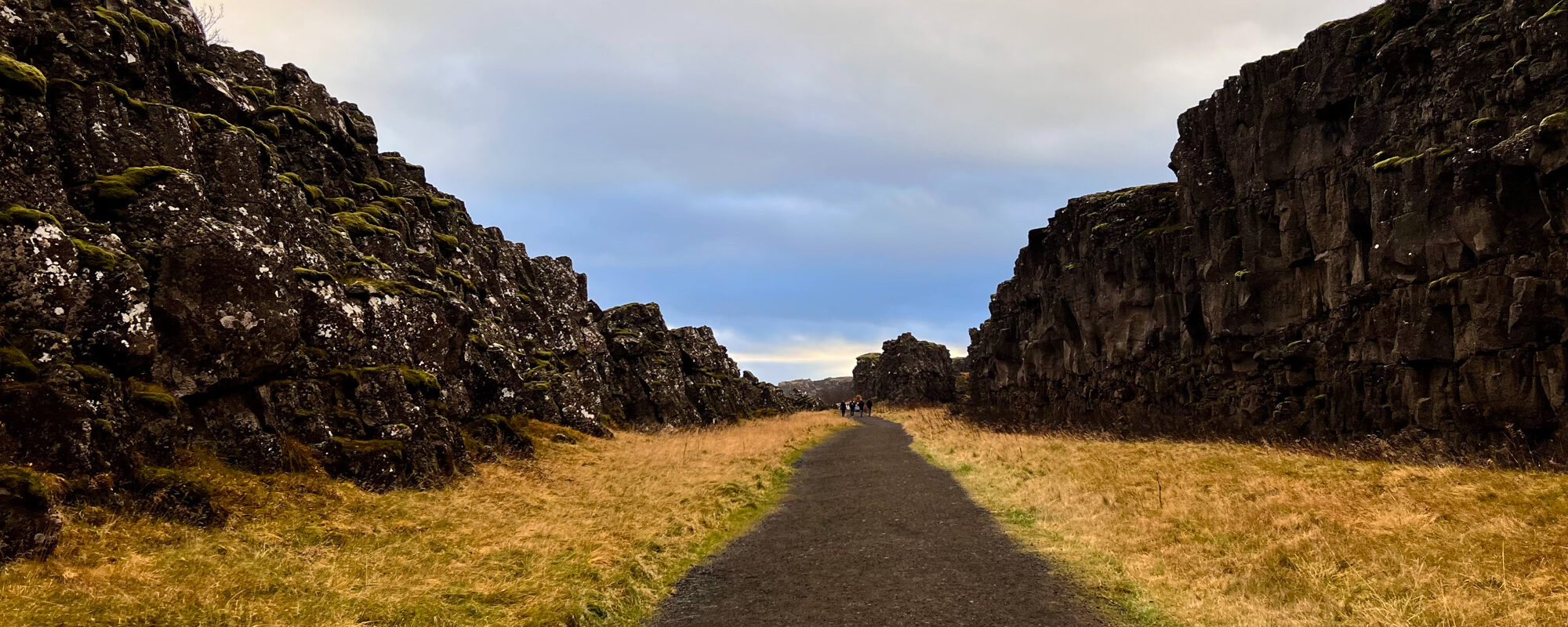
REYKJAVIK — On a gloomy Sunday afternoon in mid-October, I walked between two continents. At Þingvellir National Park in Iceland, a three-mile-long crack in the earth marks the fissure-point where, about 175 million years ago, Pangea began splitting apart into the North American and Eurasian continents.
After descending sheer rocky stairs between two close cliffs, I followed the rain-slicked stone path at the base of the crevice. On either side of me, 10-story-high rocky walls formed the torn edges of a once-fused supercontinent. Below my feet, deep tectonic forces are still actively spreading apart the Mid-Atlantic Ridge at a rate of two centimeters per year.
I was in Iceland for the Arctic Circle Assembly, the largest annual gathering of high north leaders, researchers, businesses and nonprofits. Over the previous three days, I had witnessed an analogous split in geopolitics: America’s retreat from its European allies. Tracing the divide between my birth-continent and current Eurasian home, the metaphor felt obvious to the point of on-the-nose. But it was still chilling.
Icelandic former President Olafur Ragnar Grimmson founded the conference in 2012. But “conference” doesn’t quite capture its scale or influence. This year was its biggest-yet, attracting 2,500 politicians, researchers, business leaders, activists and others for a packed three-day program of more than 70 simultaneous events. From NATO leaders to Indigenous activists to the princess of Japan, hailing from Nuuk to Nunavut to Brussels to Washington, DC. it was conferencing on a scale I couldn’t have previously fathomed.
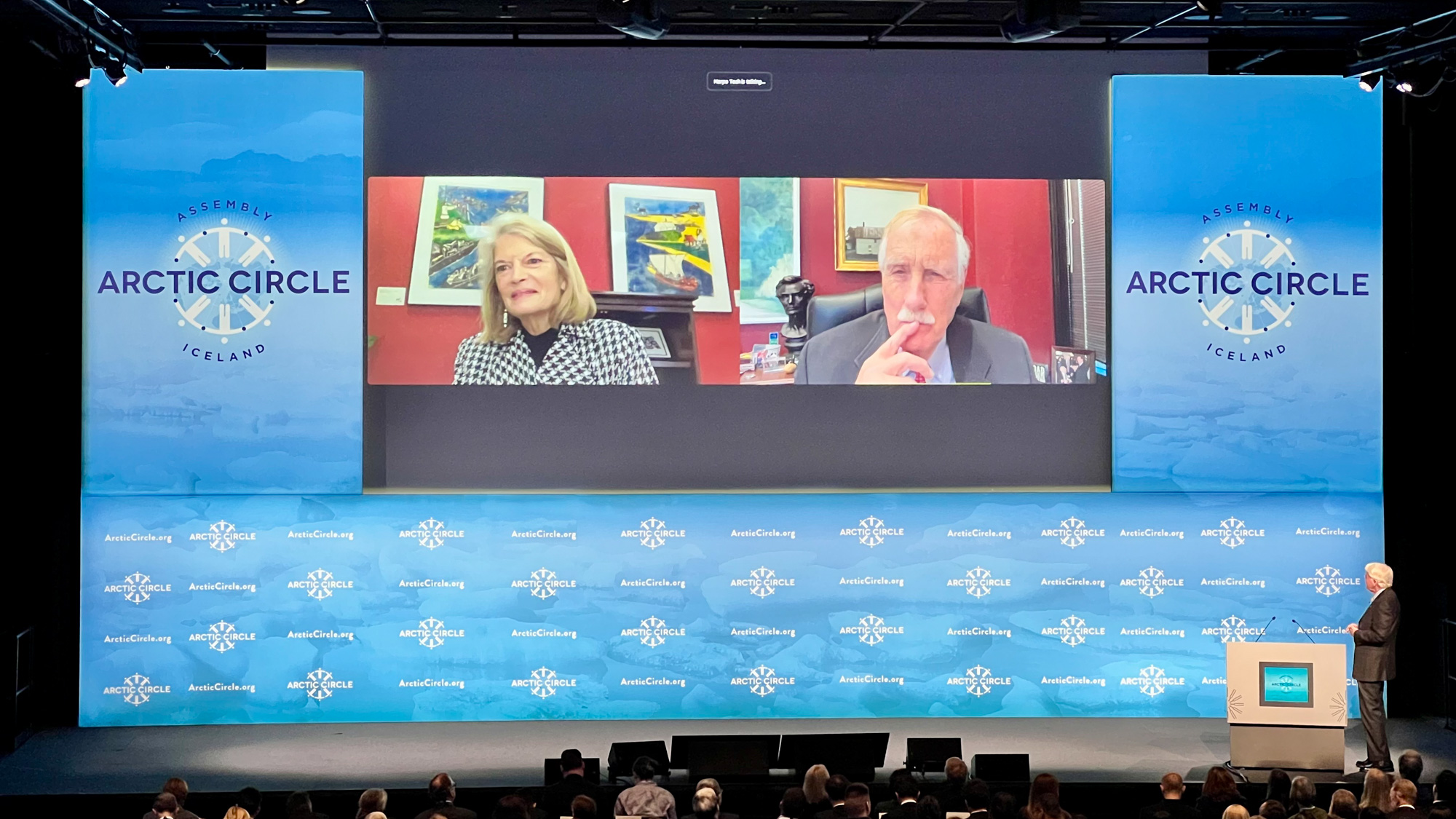
This year missed a crucial contribution, however. For the first time in the assembly’s history, no American officials attended. It was no protest: The absence took place during the longest government shutdown in American history. When senators Lisa Murkowski (R-Alaska) and Angus King (I-Maine) were broadcast into one plenary session by video, their perspectives were grim and apologetic. In so many panels and discussions, presidents Donald Trump and Vladimir Putin were bundled together—the bullies of the north.
Last year marked a turning point for Arctic geopolitics. Although Trump’s repeatedly expressed interest in purchasing Greenland had yet to be re-escalated to military threat, this particular group had not forgotten it. Streamed from her home in Alaska, Murkowski, who chairs the Senate Committee on Indian Affairs, made a point to affirm the sovereignty of Greenlandic peoples. And, visibly exasperated, she spoke candidly about her fears of DOGE policies during the shutdown: “We’re working hard to show that the Bureau of Indian Affairs isn’t a DEI project,” she said.
Across the fastest-changing part of the world, Americans were disappearing from crucial conversations. Unlike with the Russians, who have been uninvited from the event since they invaded Ukraine in 2022, the US retreat was often voluntary. The Trump Administration had already cut billions of dollars from globally critical scientific institutions, including the National Oceanic and Atmospheric Administration (NOAA) and NASA, and was threatening to leave international climate agreements. When I asked a researcher from a German foreign policy group about his impressions about the weekend, he summed it up succinctly, if crudely: “More Chinese and less Americans.”
But what’s in a conference? As it turns out, a lot. After three marathon days of plenaries and panels, coffee breaks and receptions, I had gathered a fuller picture of what Americans were missing. In the Arctic, which comprises a vast ocean bordering the northern regions of eight nation-states, regional governance is a crisscrossed set of treaties and agreements spanning nations, Indigenous peoples and regulatory bodies. The conference represents one of the few places where so many representatives from nations and peoples, interest groups and businesses, universities and think-thanks all come together in one space. The only comparable event—the more science-focused Arctic Frontiers in my Norwegian base of Tromsø, about which I wrote last year—is only about half its size.
Looking back in January 2026, as the United States withdraws from several global climate agreements, its non-attendance signified a deeper rift. Despite a stated aim to put itself first, America is getting left behind.
* * *
“See you at the Arctic Circus.” So wrote Volker Rachold, a scientist at the German Arctic Office whom I met while living in Berlin, in his email sign-off to me the week before the event.
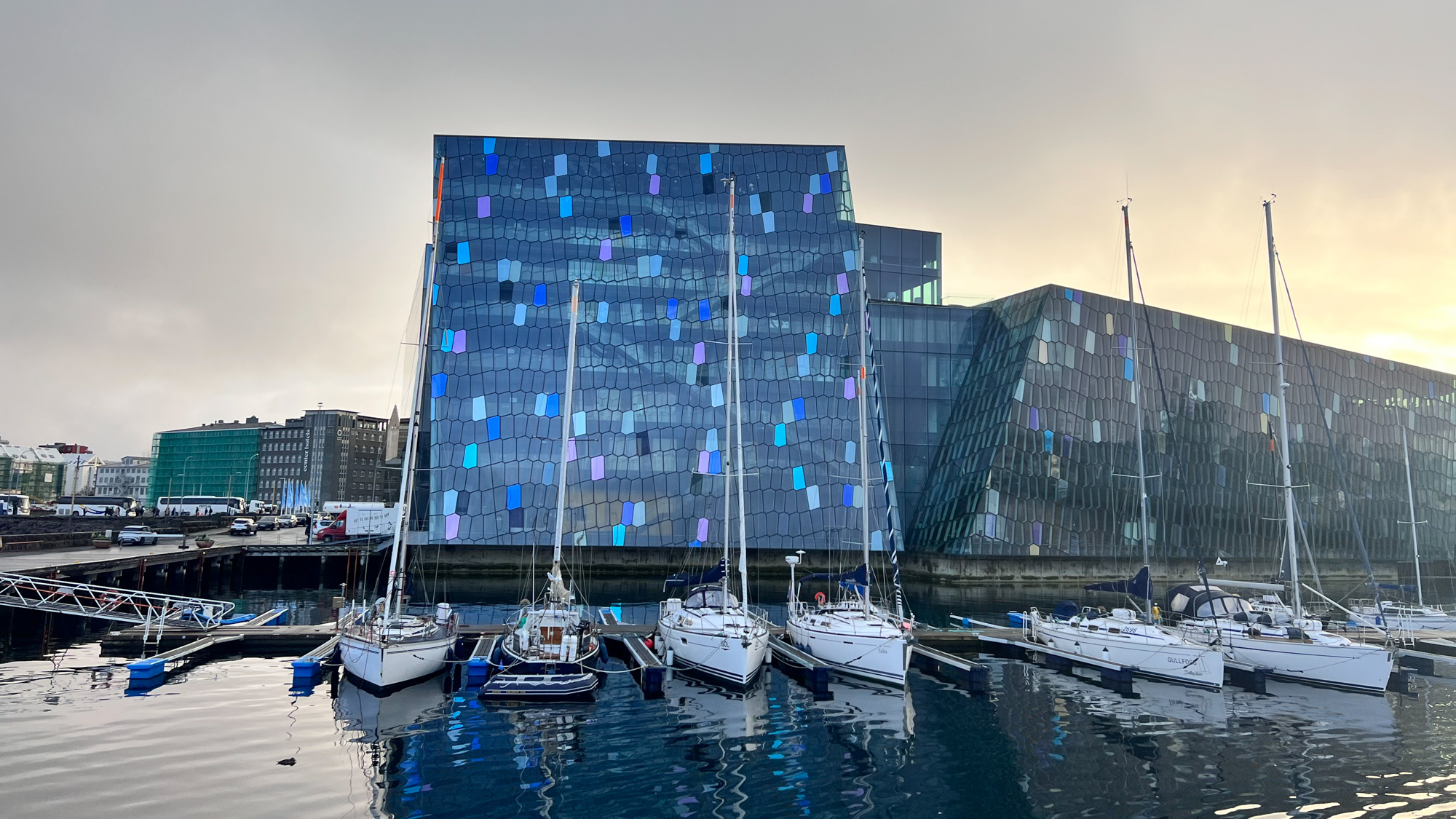
It took only about an hour in Iceland for me to see what he meant. Shortly after touching down a day early, I walked from my hotel to the venue, the Harpa Concert Hall, to collect my badge. Long before I reached the Harpa, I spotted it, glittering like the jewel of Reykjavik’s steely waterfront. Designed by the architect Olafur Eliassen, the grandiose glass trapezoid contains five floors of concert halls, conference rooms and a swanky ground-floor restaurant. Even this early before the event, hundreds of smartly dressed people were already streaming up and down its wide central staircase. On a white stair circling the perimeter of the open central space, a band of four men in white tuxedos played softly echoing jazz.
When Grimmson launched the first assembly in 2012, it was a forum for Arctic states to discuss solutions to the region’s rapid climate change. As the conference has rapidly grown and become more political, Grimmson has been fond of saying it couldn’t happen anywhere else. I heard quite a few people dismiss his view as characteristic self-importance from the 82-year-old, who led the small Nordic nation for five terms over two decades. There are plenty of reasons, they say, that this event could and maybe should happen elsewhere—after all, Reykjavik technically is not even in the Arctic. (Iceland barely qualifies for Arctic statehood; only a few islands off its northern coast fall just within the 66°N latitudinal circle.)
Still, I saw Grimmson’s point. With a population of only 300,000, Iceland isn’t just the smallest Arctic state (politically, Greenland can’t be separated from the Kingdom of Denmark), it’s particularly unthreatening. Since US forces left in 2006, it has had no standing military. Here, it feels, standard rules don’t apply. Conference security amounted to a modest staff of civilians checking badges. By contrast, the much smaller Arctic Frontiers conference in Tromsø has metal detectors, bag searches and a small force of friendly yet ever-present police.
Later that first afternoon, I made my way back up Reykjavik’s main street to meet a mutual friend, an Icelandic journalist named Anna Marsibil Clausen. In many ways, the city’s multicolored wooden storefronts and narrow tourist-packed streets were reminiscent of Tromsø, my own Nordic island. But in Reykjavik, the relentless whistle of salt-scented winds served as a constant reminder of its isolation—and the 500-mile journey over formidable seas to the nearest mainland coast.
At a tiny cafe tucked away from tourists above a kitchen appliance store, I found Anna already seated, arms around an infant who tugged at the end of her long blond ponytail. The child was clad in a fuzzy brown onesie complete with bear ears. (“His name means ‘brown bear’ in Icelandic,” Anna said, as if by way of explanation.) As I sipped coffee and she fed the small bear bites of cake, she told me that her nation often feels more like a village. Every year, she said, the Arctic Circle Assembly arrives as a rare internationally significant political moment. In the past, it’s attracted former US Senator John Kerry, former UN General Secretary Ban Ki-Moon, and, over video, Angela Merkel, Hillary Clinton and Al Gore.
When we parted on the street, Anna told me to say hello to the conference’s CEO, Ásdis Ólafsdóttir.
“She’s in my mommy gym class,” she added cheerfully, waved and pushed her stroller uphill.
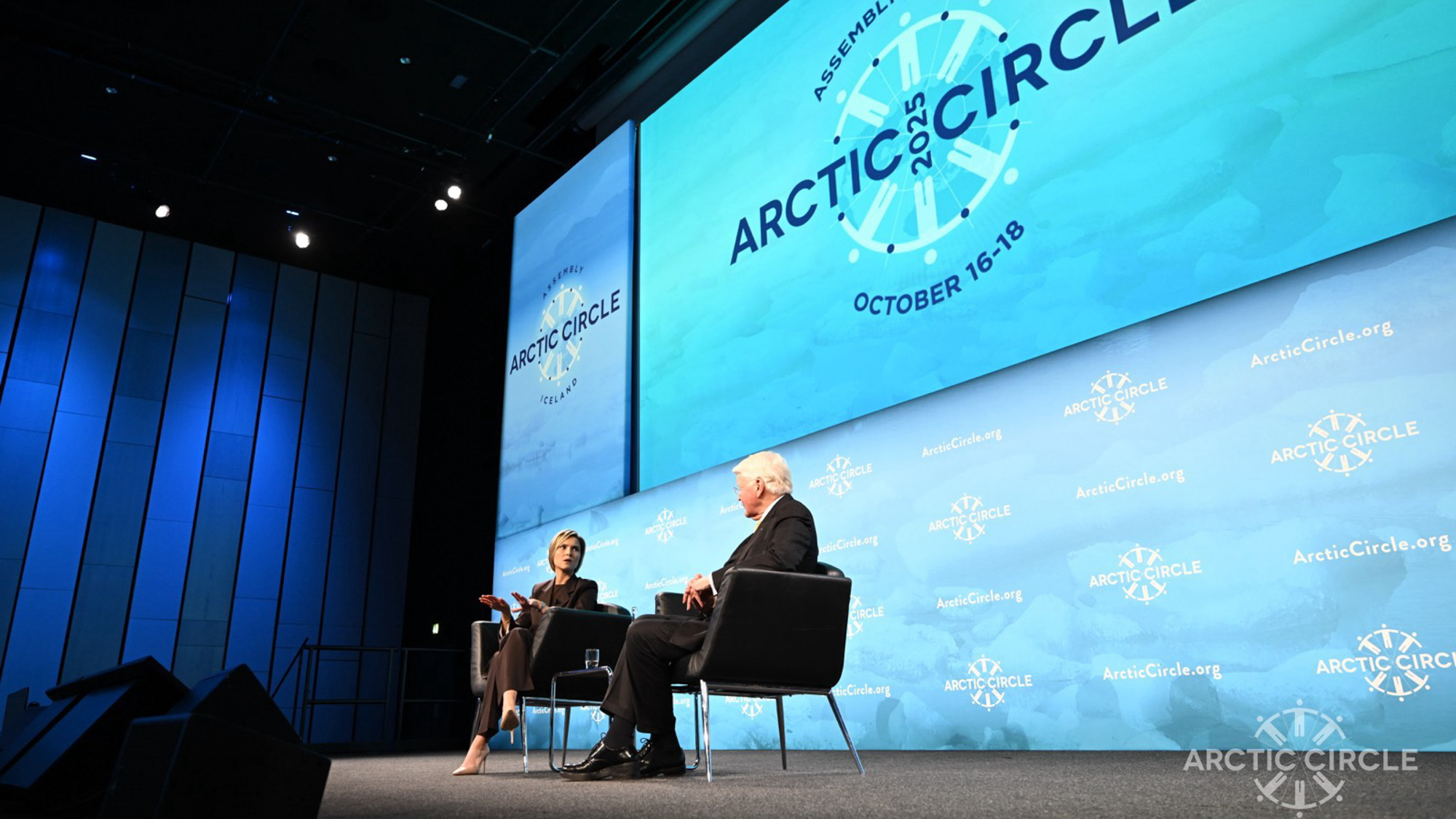
“The Russian-Chinese partnership… Russia looks at it like a marriage, while China looks at it like a love affair,” the chair of NATO’s military committee Admiral Giussepe Cavo Dragone said in a thick Italian accent, seated on the main auditorium stage across from Grimmson.
“What you’re saying is…that Russia is the mistress?” Grimmson quipped. The auditorium echoed with laughter.
Warning about Russia-Chinese collaboration, Dragone insisted on NATO’s commitment to protecting Arctic waters. His remarks marked a strong contrast with the views of his predecessor, Dutch Admiral Rob Bauer, who had for the past several years taken the same stage to foretell an imminent Arctic war. It was a welcome moment of levity. But it also represented the kind of exchange for which this conference is known. The gathering is large enough to attract relatively high-level officials. But it’s still small enough to bring them all together in one room—resulting in many surprising unscripted moments.
When Grimsson opened the discussion to audience questions, a member of the Chinese delegation raised his hand. Microphone in hand, he first objected to Dragone’s strong implication that China and Russia had entered into any kind of military alliance. Then he made his own sly remark.
“I’m glad to hear that NATO will guarantee free navigation of Arctic routes,” he said. “So if Chinese ships go from Chinese shipyards to Europe, it’s nice to know that NATO will ensure safe passage.”
The exchanges may have followed a tone set by Grimmson himself, whose reputation for self-importance seems, to this American, somewhat overblown. The aging former state leader is outspoken and sharp, often interrupting people and posing frank questions. And his commitment to open dialogue serves the audience as much as his own agenda.
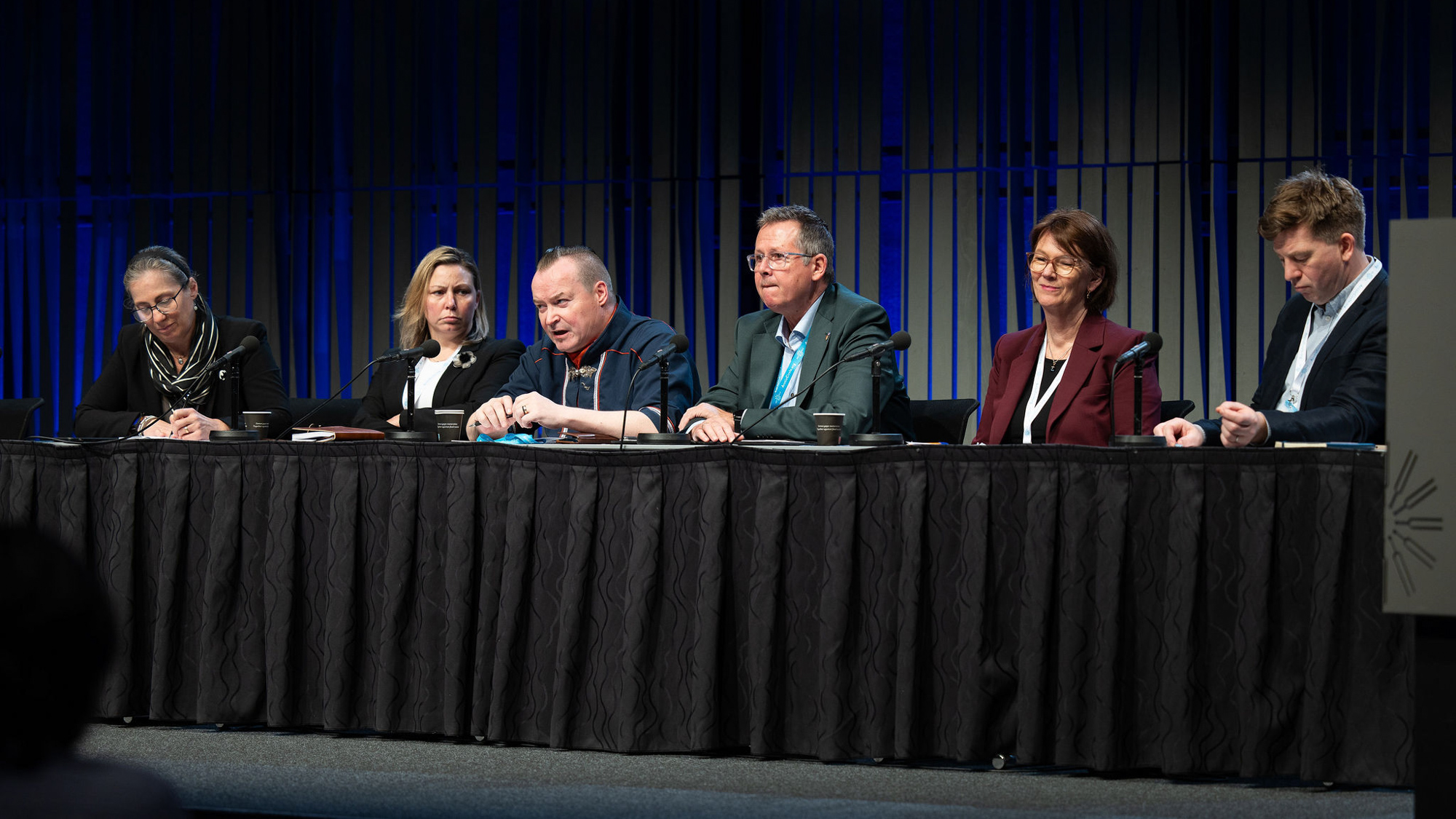
During one discussion, Norwegian Secretary to the Foreign Minister Maria Vareteressian unexpectedly stood up from her chair, moved to the podium and delivered an unprompted seven-minute speech about Norway’s new high north strategy. After she finished, Grimmson openly derided her for violating what was supposed to be an audience question-and-answer session. Then he turned to the crowd with a wince: “This is why my country has had centuries of trouble with Norwegians.”
Still, “The Grimmson Show” can drag on. The daily plenaries ran for several hours without simultaneous programming. Many stayed tediously on-script, while others felt downright propagandistic, including when a member of the Saudi Arabian government—which helps fund the assembly—took the stage to grant its “sustainability award” winner.
The real action, I found, took place offstage.
* * *
“We are living through the equivalent of the discovery of the Mediterranean Sea,” US Senator Angus King said. “Hopefully it won’t take us 300 years to settle living around it.”
That was the year’s major theme: As Arctic sea ice melts, the Central Arctic Ocean will soon be accessible to ships like never before in human history—opening shipping lanes, fishing zones and some major legal and jurisdictional blind spots. At a gathering of so many perspectives and interests from regions encircling this new hotspot, the contrast between ideas about potential opportunities, consequences and solutions was striking.
Over three days of panel discussions, that contrast emerged as the central tension of the conference. Unfortunately, unlike the plenaries, the panels were simultaneously programmed, making it impossible to attend everything of interest. (Many complained that they seemed intentionally poorly scheduled. One morning timeslot scheduled separate discussions about the Arctic’s three major sea routes: the Northern Sea Route, the Northwest Passage and the Central Arctic Ocean.)
Notwithstanding the absence of an official American presence, a closer look at panelist rosters revealed quite a few former federal workers. Many seemed much readier to divulge information than if they had still been on the government payroll. On the Northern Sea Route panel (I had to choose), a former Trump official who had recently been “DOGE-d” told the full story of an October “Ice Pact” deal in which the Trump Administration bought up to 11 icebreakers from Finland. Now we learned that the deal had started under President Joe Biden. It nearly fell apart when the Trump Administration insisted that the ships be built on US soil before Trump left office. One problem: The United States has no shipyards capable of making an icebreaker. After quite a few hurdles, both sides agreed that some vessels would be built in Finland before 2028 while a Texas shipyard would simultaneously be converted to build the rest of the Arctic fleet.
Later, a former Biden official told me she was surprised that this particular panelist had been so forthcoming. Even though he was no longer with the administration, one typically learns to never reveal so much “inside baseball” about government decision-making, she said.
“I don’t think he’s ever been public-facing enough to get the usual media training,” she said. “It was kind of awesome.”
Some of the strongest American voices present were Alaskan Native leaders. And, from plenaries to panel discussions, Arctic Indigenous voices brought otherwise lofty or abstract conversations back down to earth. On that same panel about the Northern Sea Route, for example, the discussion largely focused on the logistical challenges to navigation and economic opportunities, then touched lightly on potential environmental costs. At the end, it opened to audience questions. Chief Gary Harrison of the Chickaloon Native Village in Alaska, a stately man with glasses and a long graying ponytail, stood up.
“All of the talk here has been about how to best plunder Indigenous resources. I hear no talk at all about reparations for plundering that has gone on already,” he said to the panel. “They’ve taken trillions of dollars out of Alaska, not to mention the rest of the Arctic. What about the people now not able to survive on the land they’re on?”
It was a credit to the panelists that they took his point well.
Downstairs, a quieter conference was also steadily at work at the Harpa restaurant. Because the five floors of stacked auditoriums encircled its central high-ceilinged space, you could, at any moment, duck out of a panel, lean over a banister and look down on a who’s-who enjoying various coffees, lunches and drinks. I heard from more than one person that the restaurant was a sort of neutral zone of quiet diplomacy. And for many US-based researchers or former federal workers, it was an opportunity to make, or re-establish, official contact otherwise no longer possible.
I took part in one such spontaneous meeting. After a post-panel chat, a representative from an Alaskan Native corporation invited me to lunch. I won’t disclose the identities of the two other attendees since they asked for the conversation to remain off the record. Suffice it to say the group was both surprising and convivial. Long after we finished eating, we continued over coffee.

Even at such a large conference, it didn’t take long for word to spread that I was an American journalist. (I didn’t meet another over the three days.) I found myself in the strange position of receiving more than one longwinded off-the-record tale from former Trump Administration workers.
Bound by my duty not to report off-record conversations, there was very little I could do with their stories except wonder and worry.
* * *
On the evening of the final reception, thousands packed into a vast ballroom and mingled over long tables overflowing with fishy hors d’oeuvres. Soon, floor-to-ceiling windows delivered an Arctic conclusion bordering on cliché, as long-tailed green northern lights materialized to dance over the dark ocean.
Every large-scale conference deserves some criticism both for its costs (standard Arctic Circle Assembly tickets are a whopping $750 for attendance alone) and the inevitable wash of platitudes that often lack practical solutions. Such gatherings of climate-change-minded people deserve extra scrutiny. I’m reminded of one glaciologist friend’s opinion about the UN’s annual COP conferences: “The sheer climate costs of flights are already ludicrous,” he said. “But all that talk blows hot air that produces only one thing: more carbon dioxide.”
But by the end of this particular conference, I felt I had witnessed the singular, if at times intangible, power of an in-person gathering. Sure, the program offered plenty of by-the-books, non-revelatory moments. At the same time, hundreds of knowledgeable and often influential people had organized to discuss crucial issues too often sidelined in global arenas. And, sitting next to otherwise unlikely co-presenters (a politician, scientist, naval official and Indigenous youth in one example), they had both challenged and been challenged.
I wondered how much US officials were missed at all. No one was debating the importance of the region’s rapid changes. If some climate-change-denying US official had in fact been present, hampering progress by questioning basic premises, the conversations would certainly have been newsworthy. But would they have been as wide-ranging, imaginative and potentially useful?

On the last day, the Trump Administration offered a reminder of the impact it can make in international fora. The same weekend in London, more than 100 countries had been meeting for a final vote on an already approved International Maritime Organization green shipping fuels deal that would significantly cut global emissions. But over the days of reported pressure from Saudi Arabia and the United States, the deal was tabled for a year.
Ironically, America’s growing isolationism and emphasis on hard power has deprived it of more chances to exert its influence softly. Trump’s Greenland ambitions are an obvious example, flummoxing those familiar with the US’s existing military and economic agreements over the island. Cooperation may now signify weakness to Trump, but he’s passing on countless leadership roles—for himself and his subjects—in the same region he apparently intends to dominate and claim. As the president withdraws from more international agreements, he is losing countless possibilities available only through human-to-human exchange.
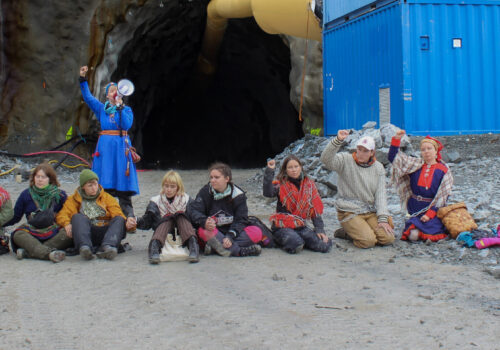
As I moved through a dense crowd of people clutching drinks at the final reception, I was surprised to suddenly come face-to-face with the Sámi activist Beaska Nillas. The last time I saw him, in August, we were standing in a field in northern Norway. He’s been a major source as I’ve followed the construction of the Nussir copper mine, approved to be built on Sámi reindeer herding territory. (I covered the topic in November.) Last year, the mine was designated a special project under the EU Critical Raw Minerals Act, which helped accelerate its approval.
Technically, Nillas was here representing the Sámi Parliament. But after only a brief catch-up, he had to excuse himself. He was in search of EU representatives, he told me.
“We’re going to try to get Nussir off of their special projects list,” he said, his eyes already searching the crowd behind me. “So far, they haven’t responded to us. But maybe I can find them over a beer.”
Top photo: At Þingvellir National Park, a three-mile crack in the earth marks the fissure point between the North American and Eurasian continents.