
RIO DE JANEIRO — As my plane made its decent into Rio’s international airport, clouds enveloped us, blocking out the sun. As we escaped their colorless embrace, Guanabara Bay’s dark green tropical mountains shone faintly in the approaching dusk as here and there factory chimneys billowed smoke. Across the water from the runway, northern Rio’s red-bricked favelas hugged the slopes. Only days earlier, they had been alight with the sound of automatic weapons as over 2,500 municipal and state police officers entered with guns blazing, leaving 121 people dead and taking 99 into custody.
The military-style siege on October 28 of the Alemão and Pena neighborhoods—headquarters of the city’s powerful Red Command (CV) gang, locally called a faction, and home to more than 280,000 residents—was the largest and deadliest single law enforcement operation in the country’s modern history. The most similar operation in Rio last occurred in 2004, when 24 people were killed. Across the entire city of 6.7 million residents, schools, health centers, public transportation and private businesses shut down as faction members blocked intersections with hijacked buses to divert the police’s attention. By day’s end, hundreds of thousands of people were forced to walk for hours home from work.
I had planned my trip to Rio months in advance as a fun layover on my way to Washington for the Institute of Current World Affairs centennial celebration, but the mega-operation inevitably became the focus of virtually all my conversations. On the morning of my flight south from my base in the northeastern city of Fortaleza, a local friend advised me to take care: “You’re entering a war zone!” Over the next 10 days, I heard from street vendors, Uber drivers, health care professionals, scholars and residents of Rio’s northern neighborhoods about how the large operation masked the city’s daily violence and accompanying weariness in the “Marvelous City.”
It quickly became clear that cariocas, as residents of Rio call themselves, felt trapped between fear of factions, paramilitary militias and the police, all of whom dominate different areas of the city. While most had strong opinions for and against the mega-operation, very few believed it had made a dent in the Red Command’s operations. That was later confirmed by Rio’s military police deputy chief of intelligence in a Senate oversight hearing where he described the raid’s impact on the CV’s operations as “insignificant.” Nevertheless, the raid prompted an unexpected bloodlust in Brazilians, 67 percent of whom approved of the police’s actions.
Ordered by the right-wing governor of the state of Rio de Janeiro, Cláudio Castro, with no prior notification or coordination with the federal government, the operation was a risky political play that—if only momentarily—resurrected his run for the Senate while weakening left-wing President Luiz Inácio Lula da Silva, known simply as Lula, in the run-up to Brazil’s 2026 presidential election one year away. That fact was not lost on anyone in a country that rivals the United States in its never-ending political campaign cycles. Beyond the images of sunny beaches and lively samba, Brazil is not for amateurs.
The night of my arrival was Halloween. I strolled along the bustling esplanade of southern Rio’s famous Copacabana neighborhood. Wandering among the tee-shirt and caipirinha cocktail hawkers, I noticed with disappointment that no one was wearing costumes. Hungry, I chatted with a young couple running a food stand. They live in a nearby favela and had left their 9-to-5 jobs to hustle in the informal hawker economy because it was more profitable.
Since the mega-raid, they told me, gang members had come through to order tee-shirt sellers to raise their prices, and their kickback fees, or risk death. The raid had done nothing to stymie the gang’s tentacles, they said: “Everything they get involved in gets f*cked up, and they can’t keep themselves from getting involved in everything,” the woman told me, exasperated.
The next morning, I hopped into an Uber heading north to hear firsthand about the difficulties of living in favelas. The driver wasn’t sad to see dead gangsters—as the victims were described by news media and the police—but he had no doubt there was already a line of young men ready to replace everyone killed. The police had tipped off gang leaders beforehand, he told me: “Only their soldiers had died.” Indeed, Rio’s police later admitted in a report to the country’s supreme court that the raid did not kill or capture any important leaders.
Pointing toward a group of women waiting at a bus stop, he said, “These people are not sad to see bandidos killed because they are the ones whose purses get stolen with no consequences for the robbers.” I wasn’t surprised to hear his perspective: Almost without fail, Brazilian Uber drivers seem to support right-wing politics for reasons I haven’t yet figured out. But I was surprised by his pessimism when he continued. “This mess will never get fixed because the police and politicians are in on the deal,” he said. “If they weren’t, the factions would be gone tomorrow.”
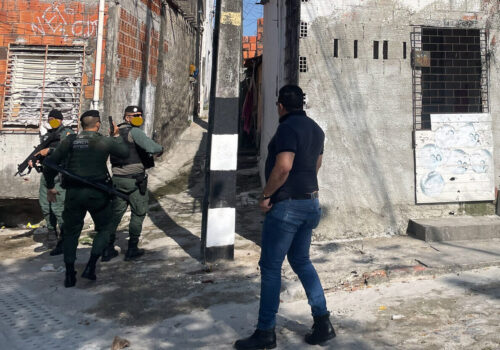
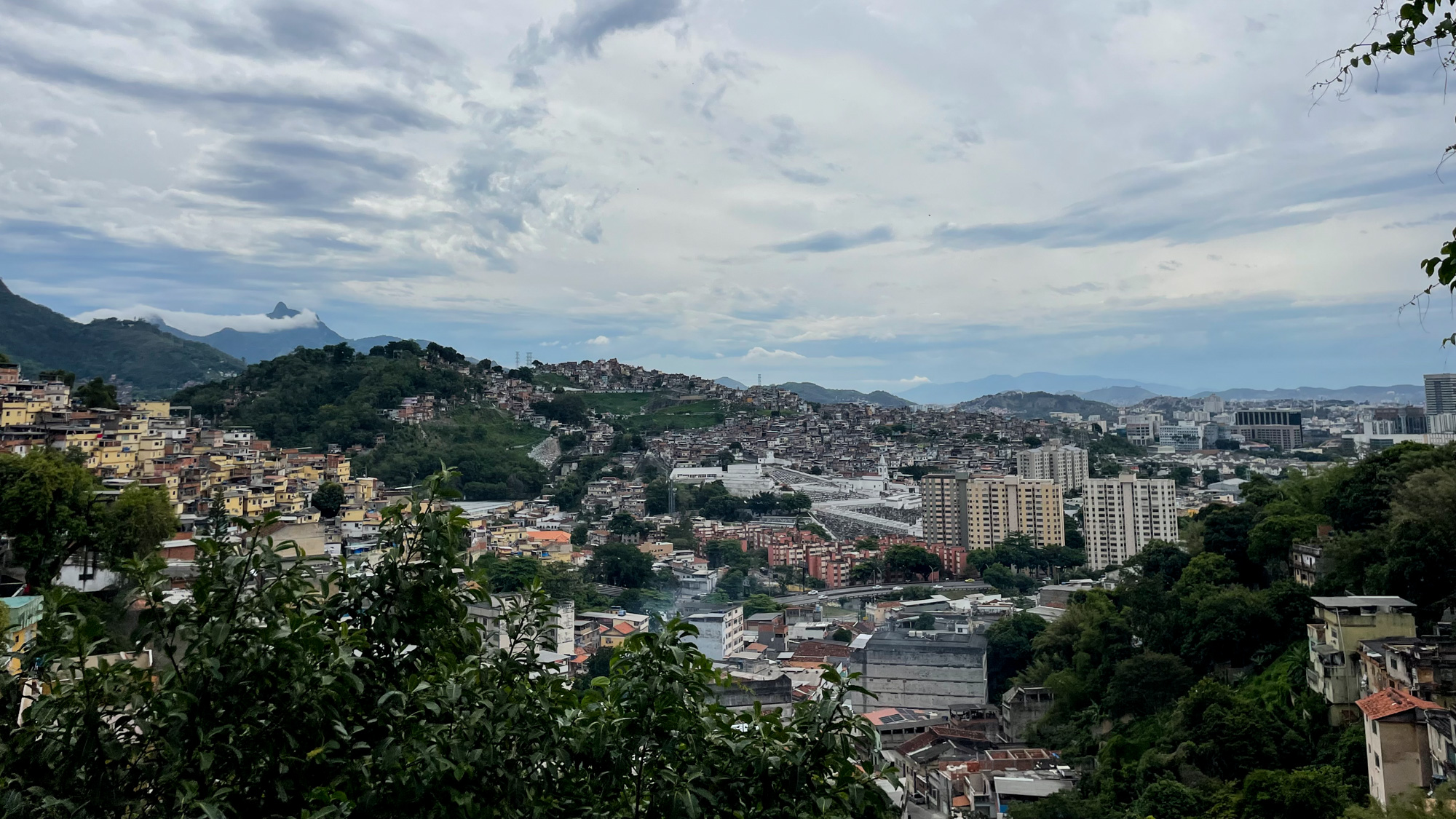
As we turned from a three-lane throughway into the Maré neighborhood, a short 15-minute drive from the Penha and Alemão neighborhoods, two police officers on the corner carrying assault rifles surveyed our car. I also noted an armored personnel carrier, the likes of which I remember from videos of America’s war in Iraq, parked a couple streets further down the freeway. How must it be like trying to get to work, let alone school, under such conditions?
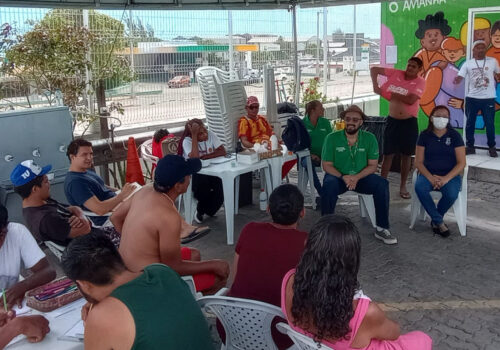
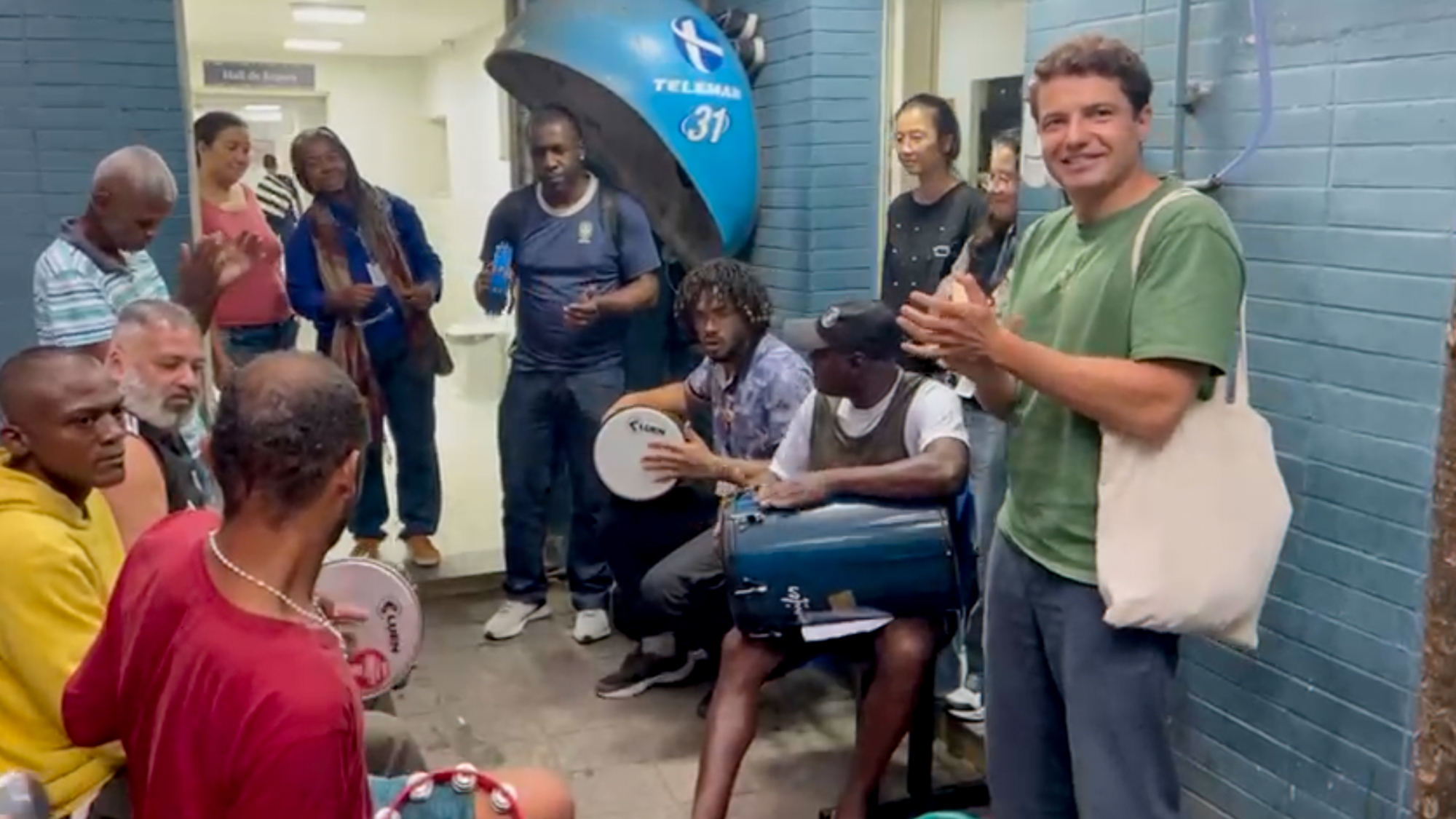
Vanda welcomed me with a hearty smile when I walked into the cavernous recreation room of Espaço Normal, a harm reduction-inspired community center open to all. Over the next three hours, she and her team explained how her staff and those they serve—many with housing and jobs trying to make ends meet and others living on the street—navigate the daily violence encircling them on all sides.
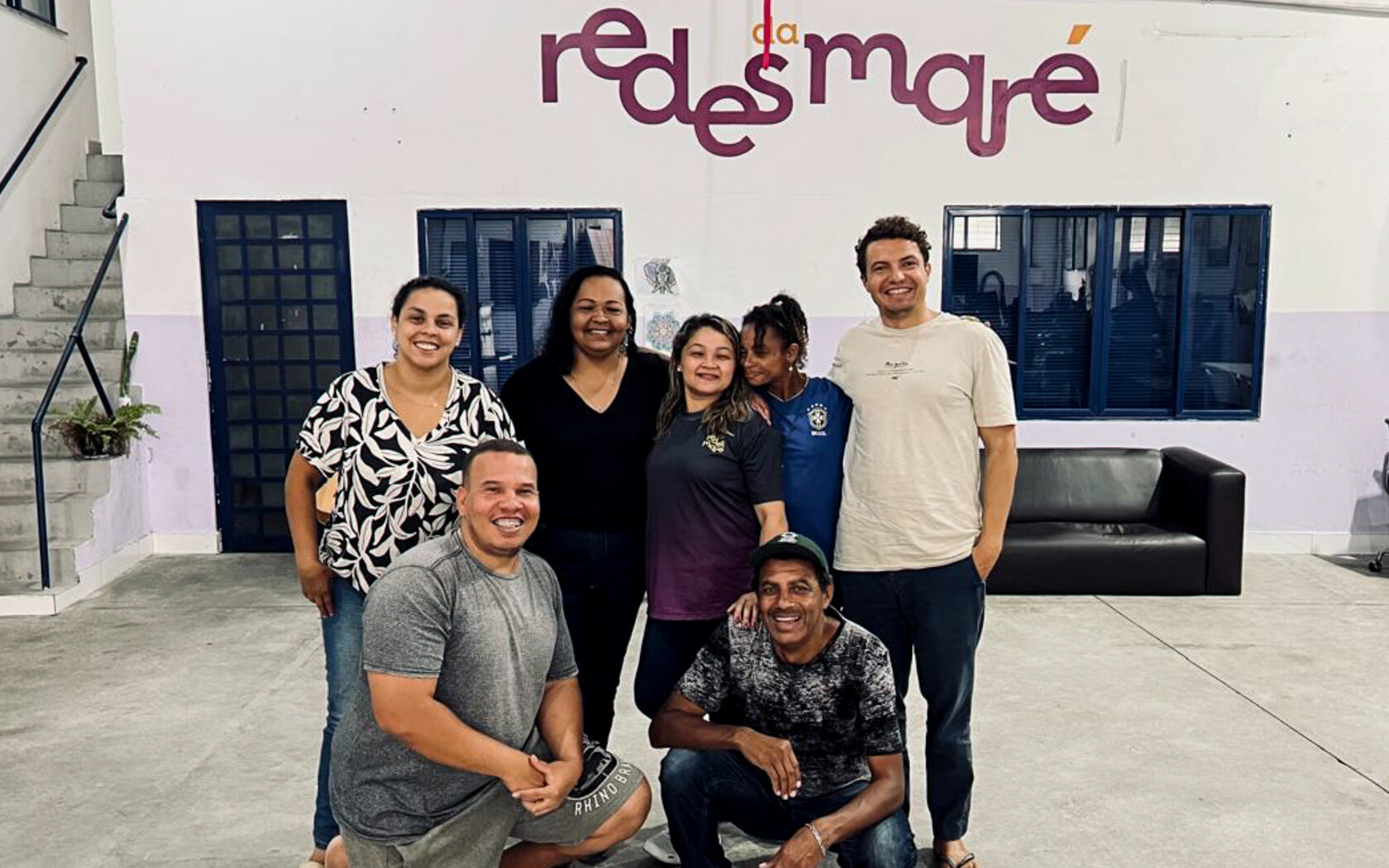
Everyone who spoke was shocked and saddened by the mega-operation and its gruesome death toll. No one present believed the government line that all who died were gang members. Newspapers later reported that about 30 percent of those killed had no criminal records.
Unlike in similar centers I’ve been to, visitors primarily ask for assistance finding good jobs rather than housing. Unemployment rates hover at around 50 percent. The lack of economic opportunity provides factions with the replaceable soldiers. A national survey of favelas found that 49 percent of respondents cited money as a main reason for joining a gang, and 58 percent of current gang members said they would leave if they had good job prospects.
Espaço Normal is located at the intersection of territories controlled by the CV, the Third Command (CV’s sworn enemies) and a paramilitary militia affiliated with the police. As if that weren’t enough worry, the Maré had been subject to 42 police raids in the past year—an average of almost one per week. While drug-related arrest warrants are commonly used to justify such raids, folks at the center said few if any ever take place in the territories controlled by the paramilitary militias even though drug trafficking and selling is alive and well in those areas, too.
Vanda said she wished the community center had a better relationship with the police like she’s observed in other favelas and certainly in Rio’s richer southern neighborhoods. So far, police have rebuffed all attempts at dialogue. The lack of engagement reflects how the state offers inconsistent law enforcement across the city, she said. Even more menacing, the popularity of the mega-operation prompted the governor to announce more in the future in other northern Rio neighborhoods, including the Maré.
Every raid, even small operations, shuts down whole sections of the neighborhood for the day, with schools, health clinics, public transport and shops closing their doors. Long-awaited medical appointments must be rescheduled, class syllabi revised and businesses are left hoping their customers will come back the following day.
The operations almost never make the news cycle despite violently interrupting life’s weekly routines at regular yet unpredictable intervals. Services shut down partly because of flimsy construction; the walls of many buildings aren’t resistant to bullets. A month after my visit, three people were killed and a 12-year-old child was hit in the leg by a stray bullet while in their classroom during a police raid in the Maré not far from where I visited. Thanks to Espaço Normal’s cement walls, residents of the surrounding street seek shelter there.
Because of the collateral damage, the Supreme Court has limited the scope and frequency of police raids over the past several years. But the previous week’s mega-operation ignored all judicial directives, explained Carolina Grillo, sociology professor at the Federal University of Fluminense in Rio and coordinator of a study group on new illegalities that specializes in understanding societal violence.
The chacina—massacre, as she called the raid—surprised her along with much of the nation for that reason. In her opinion, the governor and top police officials should be tried in court for deliberately acting against judicial rulings on the lawful use of lethal force. However, the fact that a large majority of Brazilians approved of the mega-raid made the prospect unlikely.
The popularity of state-sponsored violence in Brazil, and especially in Rio, has a long history, Carolina explained. As early as the 1940s, Rio’s police formed unofficial death squads that killed people for minor crimes. The groups increased under Brazil’s military dictatorship from the mid-’60s to the mid-’80s. However, cocaine and its exorbitant profits changed the nature of crime and law enforcement starting in the ’80s by empowering factions formed in the dictatorship’s prisons to buy guns and favors from the police.
In the 1990s, the fight for territory for selling cocaine led to bloody wars between criminal groups. Far from being saints, police would target gang leaders who hadn’t paid mandatory bribes. In that environment, off-duty police officers formed paramilitary militias, supposedly to fight the gangs with gloves off. But while they enjoyed unofficial support from fellow police officers and overt compliments from the press, residents found they were little different than the armed factions they were purporting to fight. Paramilitaries extorted local businesses, controlled access to water and other public services, and sold drugs.
Law enforcement investigations into how factions gained access to powerful weapons since the early 2000s have pointed toward rogue police and military units, Carolina explained. At the same time, criminals’ possession of weapons such as AK-47s and AR-15s has prompted an arms race that’s helped the police secure money for newer and larger weapon systems for themselves. In 2025, Rio de Janeiro’s state legislature approved a budget for public security at 19.15 billion reais ($3.55 billion), compared to 13.44 billion reais spent on health care and 10.53 billion reais—almost half—on education. Police get armored vans while children are shot in school.
Vanda, from Espaço Normal, summed up the confusion about whom to trust. “People living in favelas are afraid of the police when they’re in their own neighborhoods because the police are most likely to harm and kill innocent bystanders, they consider everyone a gangster,” she said. “But when those same residents travel to nicer neighborhoods for work or shopping, the presence of police makes them feel safer.”
“It’s puzzling for adults,” she added, “so imagine how bewildering it is for our children.”
The goal of the police raids, big or small, is to increase the death count, she said. They provide concrete numbers for publicizing even though it’s common knowledge most of the dead are easily replaceable low or mid-tier traffickers, and some are innocent civilians. Police in Brazil were responsible for killing over 6,200 people last year—an average of 17 per day. In comparison, police in the United States killed 1,366 people—fewer than four a day—even though the US population is 100 million people larger than in its southern neighbor.
In Rio de Janeiro state alone, police killed 703 people, accounting for a whopping 19 percent of all homicides in the city. That percentage is only the fifth-highest in the country. In the northern state of Amapá, police committed 38 percent of all homicides.
When I asked Vanda why, after all the death and disturbance, polls showed that 80 percent of people in Rio’s favelas still approved of the mega-operation, she reminded me that favela residents are very religious and avid churchgoers. Nationally, they have twice as many churches, half the number of schools and a quarter of the health clinics boasted by more affluent neighborhoods. Some 45 percent of favela residents identify as Catholics and a further 41 percent as evangelicals. “Talking about drugs in any way is taboo,” she told me, furrowing her brow. That makes the Espaço Normal’s harm reduction mission that much more challenging and important.
For many religions, but for Christians including evangelicals in particular, psychoactive substances, from alcohol to crack cocaine, are one of the roots of evil—people who use or traffic drugs are not seen as worth saving, while those claiming to reduce the presence of drugs by any means are applauded. Field research in Rio’s favelas coordinated by Stanford University in 2018 found Catholics and evangelicals had more positive views of Rio’s police operations than residents belonging to other religions or with no religion.
Paradoxically, one of the few ways a gang member is allowed to leave a faction is by joining the Church. Local pastors often play key roles mediating disputes and misunderstandings with faction leaders in ways political leaders can’t or won’t. Remarkably, faction members in Rio have also increasingly found God to give meaning to their work, prompting a phenomenon scholars call “narcopentecostalism.”
Even outside the favelas, it’s impossible to miss Brazil’s innumerable churches. Many are simply tiled white rooms with rows of plastic chairs facing makeshift pulpits. Of Brazil’s 213 million citizens, 57 percent identify as Roman Catholics and 27 percent as evangelicals, leaving only 17 percent of the population identifying as non-Christians or with no religion—compared to 37 percent in the United States.
Religion affects politics, too. National polls from Brazil’s 2022 presidential election suggest that over 50 percent of evangelicals supported Lula’s predecessor, far-right former President Jair Bolsonaro, the “Trump of the Tropics,” while only around 28 supported President Lula. Of the 10 largest influencers among Brazil’s far right, eight are evangelicals.
Context for understanding the real motives for the mega-raid, therefore, began several months earlier in May. Lula—a lion of Brazil’s leftist politics who is currently serving his third non-consecutive term and running for a fourth—was on the rocks at the time. Although Bolsonaro was facing an investigation by the country’s Supreme Court for a coup attempt, he was still widely popular.
Fast forward five months to just before the raid, and the situation had dramatically changed. The Trump Administration’s 50 percent tariffs on goods from Brazil, as well as sanctions against members of the country’s Supreme Court and leading public health officials at the Bolsonaro family’s behest, had backfired. By October, Lula was leading first and second-round election polls. Meanwhile, Bolsonaro was placed under house arrest after the Supreme Court convicted him for his failed coup attempt.
But Lula has a major Achilles heel, that a majority of Brazilians believe the country is headed in the wrong direction. A national poll from August 2025 found 30 percent of respondents saying public insecurity was a top concern, followed by social issues at 22 percent, the economy at 19 percent, corruption at 13 percent, health care at 10 percent and education at 6 percent.
On the face of it, the numbers are perplexing. Public security was a top concern for only 10 percent in 2023 before tripling in two years. At the same time, data shows that Brazil’s homicide rate had fallen by 21 percent between 2013 and 2023, including a 43-percent drop between 2017 and 2022, a trend that continued in 2024.
During the week of the mega-operation, had it not taken place, news headlines would likely have reported Lula’s success standing up to the Trump Administration’s economic and political pressure, and a positive meeting in Malaysia where Trump said he wanted to reduce tariffs on Brazilian goods. Two days after the meeting between the two presidents took place on October 26, Rio’s Governor Cláudio Castro launched the mega-raid.
It was a political gamble that initially fell in the governor and right wing’s favor: Rather than being able to take a victory lap, Lula—who days earlier in a Biden-esque slip had said that “traffickers are the victims of drug users”—was further put on the defensive as critics lambasted the federal government for not being harsh enough against factions. The mega-operation overshadowed all other news coverage for weeks, including the United Nations Climate Change Conference Brazil hosted in mid-November.
Since the mega-operation, both sides have continued to try to convince voters that they’re the toughest on crime. Right-wing politicians have called for groups like the CV to be classified “narco-terrorists,” parroting the Trump Administration’s rhetoric and leading some of those I interviewed to wonder whether those politicians are hoping for some form of American intervention like the kind undertaken in Venezuela. Each side accuses the other of being in cahoots with criminals.
Despite Lula’s most recent setbacks, how events will play out remains to be seen. Unexpectedly in December, Brazil’s federal police, under the Supreme Court’s supervision, arrested Rio’s right-wing state assembly president—and gubernatorial hopeful—Rodrigo Bacellar on obstruction of justice charges over the arrest of state representative T.H. Joias, who had been indicted for arms trafficking and money laundering for the CV. Bacellar has since resigned from his seat in the chamber. Brazil’s federal police are also investigating Rio’s governor for allegedly trying to hide and protect links between members of the state legislature and the CV from federal investigators.
Meanwhile, in an attempt to outmaneuver the political right, Lula called the leader of the global right, President Trump, in late November to request that the countries work together against Brazil’s factions by collaborating on stemming the illegal trafficking of US-made weapons, prosecuting their money-laundering operations in Deleware and sharing law enforcement intelligence—all without designating them as narco-terrorists, which would open the door to US military involvement.
But whether it’s the right or left that’s ultimately seen as toughest on crime, the undeniable winner has been the “law and order” narrative: that problems arising from poverty and the presence of drugs in certain communities requires primarily violent law enforcement and military-style interventions—even though they have so far led only to the increased influence of criminal groups and profiteering by police and politicians.
Unfortunately, public health discussions about the value of increased access to quality education, health care, housing and professional opportunities—let alone harm reduction or drug regulation—seem to have all-but fallen to the wayside. In no small part, it seems to me, that’s because of the lack of compelling narratives that resonate outside proponents’ own echo-chambers.
Top photo: Rio’s affluent southern neighborhoods seen from Sugarloaf Mountain