MANILA — “I’m a Christmas fiend,” my friend Valerie said as we strolled along a tiangge, or flea market. “But honestly, who in the Philippines doesn’t love the holidays?”
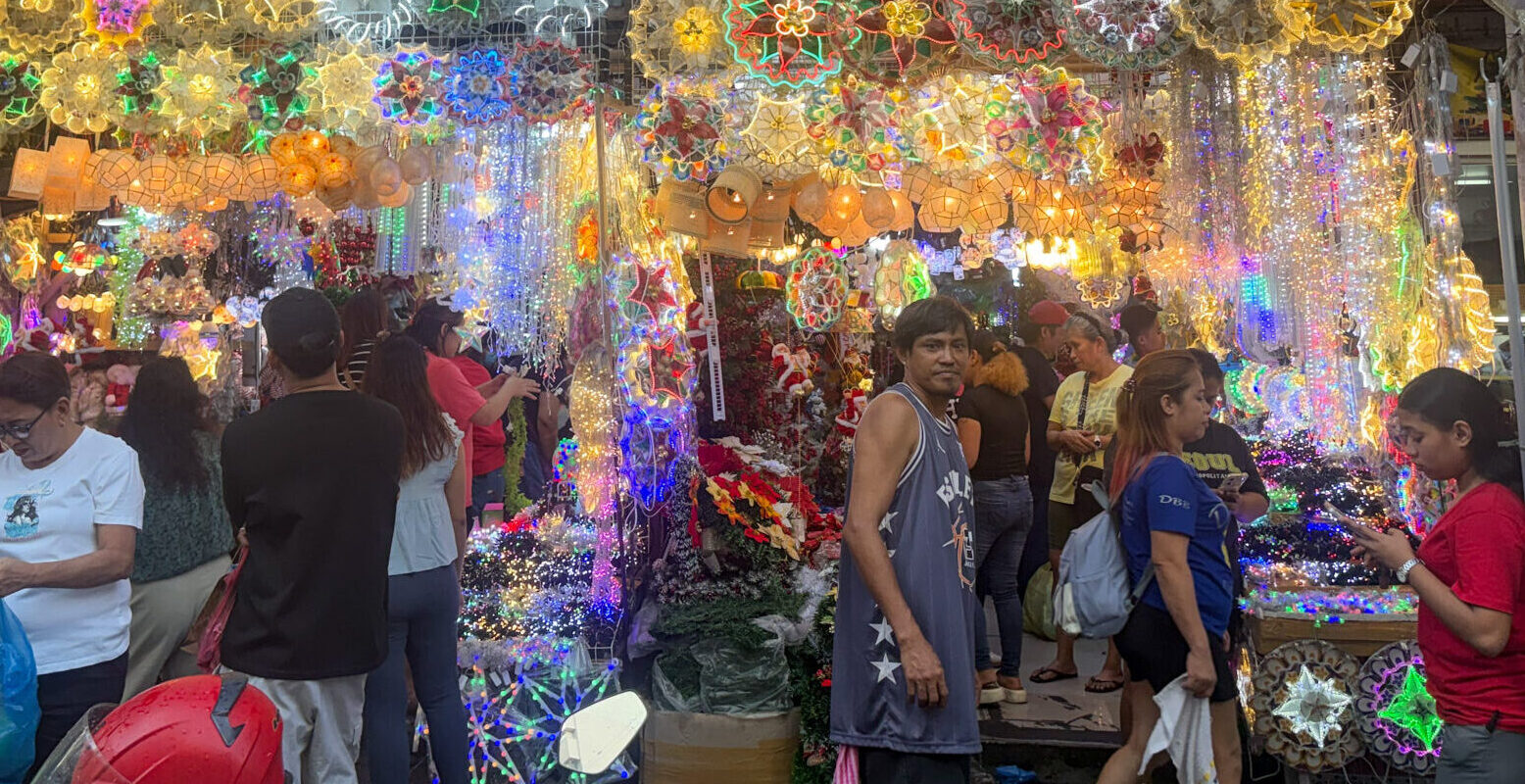
It was early October and we were in Quiapo district in northern Manila, perusing stalls along Carriedo Street, a bustling, pedestrian-filled quarter known for its vendors offering every product under the sun for a fraction of the retail price. As we passed kiosks selling produce, bedding, eyeglasses and electronics, a flash of neon caught my eye, and I knew our search was over.
Valerie and I had been on the hunt for one of the most essential elements of Filipino Christmas: the parol, a bright, five-pointed lantern that represents the Star of Bethlehem from the Nativity story and serves as traditional decor ushering in the holiday season throughout the Philippines.
We approached the shimmering, sparkling display in awe. Parol of every size and color covered the storefront, animated with blinking and circling LED displays, scintillating beacons of festivity and cheer on the busy urban street.
With characteristic patience, Valerie coached me through haggling with the parol vendor, an essential skill for tiangge shopping, consisting of offers and counteroffers, performative overtures and repeated insinuations that we could find parol mas mura (cheaper) somewhere else. Our combined efforts ultimately knocked 250 pesos (around $4) off the final price.
Euphoric over the thrill of a discount and enraptured with my oyster-colored ornament, I felt an unexpected fervor rising within me. What was happening? Val said it was “puso ng pasko”—literally the “heart” or spirit of Christmas that takes hold of the Philippines from September 1 onward.
Personally, I’ve considered myself ambivalent to the holiday season, its theatrics and commercialism too much for my cynical disposition. But maybe I was no longer immune to the festivities. With Christmas still 75 days away, I decided to investigate the makings of a Christmas “fiend” and how exactly the spirit of the holiday endures, and indeed reigns supreme in the Philippines for over four months each year.
* * *
The holiday season is demarcated by a clever mnemonic: the “Ber Months” (September, October, November and December) during which Filipinos transition from the rainy typhoon season spent mostly indoors to preparing for Christmas festivities, travel and reunions.
Halloween, All Saints’ and All Souls’ days fall in the middle of that 115-day period. Philippine alamat (mythology) provides quite a lot of paranormal source material for celebrating a local version of Halloween, based on legends of the terrifying aswang (man-eating demons), manananggal (vampiric, flying creatures that split their own bodies in half) and tikbalang (half-human, half-horse Minotaur equivalent). But tales of such haunted spirits seem to disappear under the blinding glow of sparkling Christmas lights.
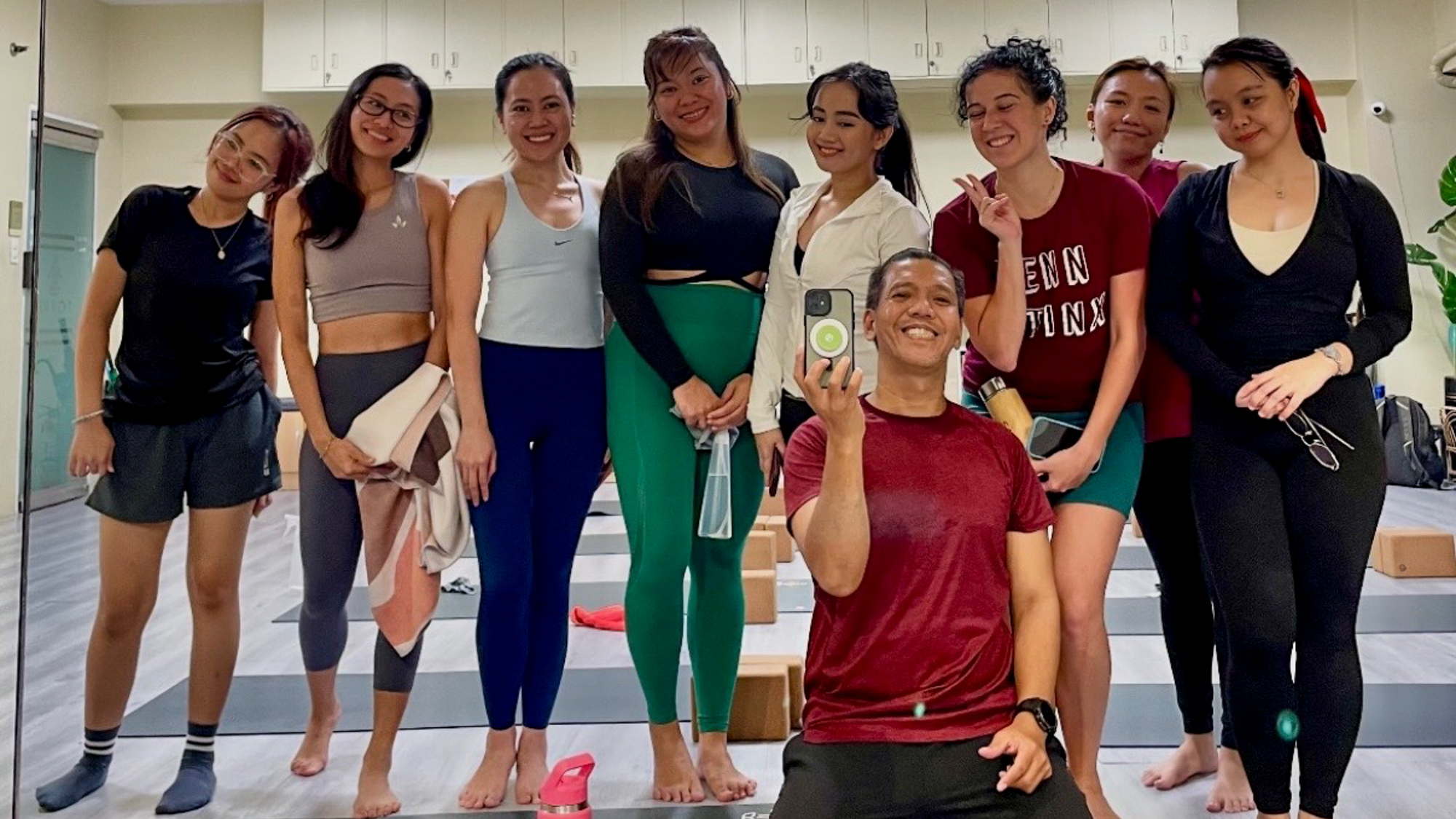
“Halloween can’t compete with Christmas here in the Philippines,” said Ferdz Decena, a yoga teacher, travel blogger and Manila resident. We met over coffee one afternoon in the neighborhood near Torre Yoga studio, where I attend his Vinyasa classes twice a week with a mixed group of regular and first-time practitioners. When I first moved to the Philippines, Ferdz’s classes were a place I felt a sense of belonging, from the simple fact that I could return to the studio, week after week, and trust he would greet me by name.
In addition to yoga, Ferdz’s passion for photography has taken him all over the Philippines and acquainted him with holiday traditions nationwide, so I consider him a de facto expert on Filipino Christmas both from his experiences in Manila and Bicol (his family’s province) and what he’s documented for years as a travel blogger.
“Similar to the Christmas season, All Saints’ and All Souls’ days are occasions to gather as a family,” he told me. “But the three-day period from October to November is a more somber holiday, focused on remembering those close to us who have passed.” The Decena family’s annual tradition on All Saints’ and All Souls’ days is to gather at the cemetery where Ferdz’s eldest brother is buried. Other Filipinos based in Metro Manila also often travel to the provinces where their ancestral homes are located to join in the traditional practice of cleaning and maintaining familial tombs and attending ceremonial masses.
Religion is central to daily life and practices in the Philippines, a topic I’ve explored in a previous dispatch, and something evident in the traditions of the Ber months’ holidays. Ferdz’s favorite Christmas tradition is Simbang Gabi, or “Nighttime Mass.” Hailing back to the 1600s during the Spanish colonization of the Philippines and imposition of Catholicism on Indigenous peoples, Simbang Gabi arose as the nationwide practice of visiting churches for nine consecutive days from December 16 to December 25. The practice enables believers to show their religious devotion and, if they complete the nine masses, be granted one wish by God. The catch is that the Christmastime services are scheduled at dawn, for which they’re aptly called Misa de Gallo (mass of the rooster), a tough bind for night owls.
“Through the years, I’ve never actually managed to complete Simbang Gabi,” Ferdz told me with a diffident smile and a shrug. “Try as I might, I’m just not a morning person.”
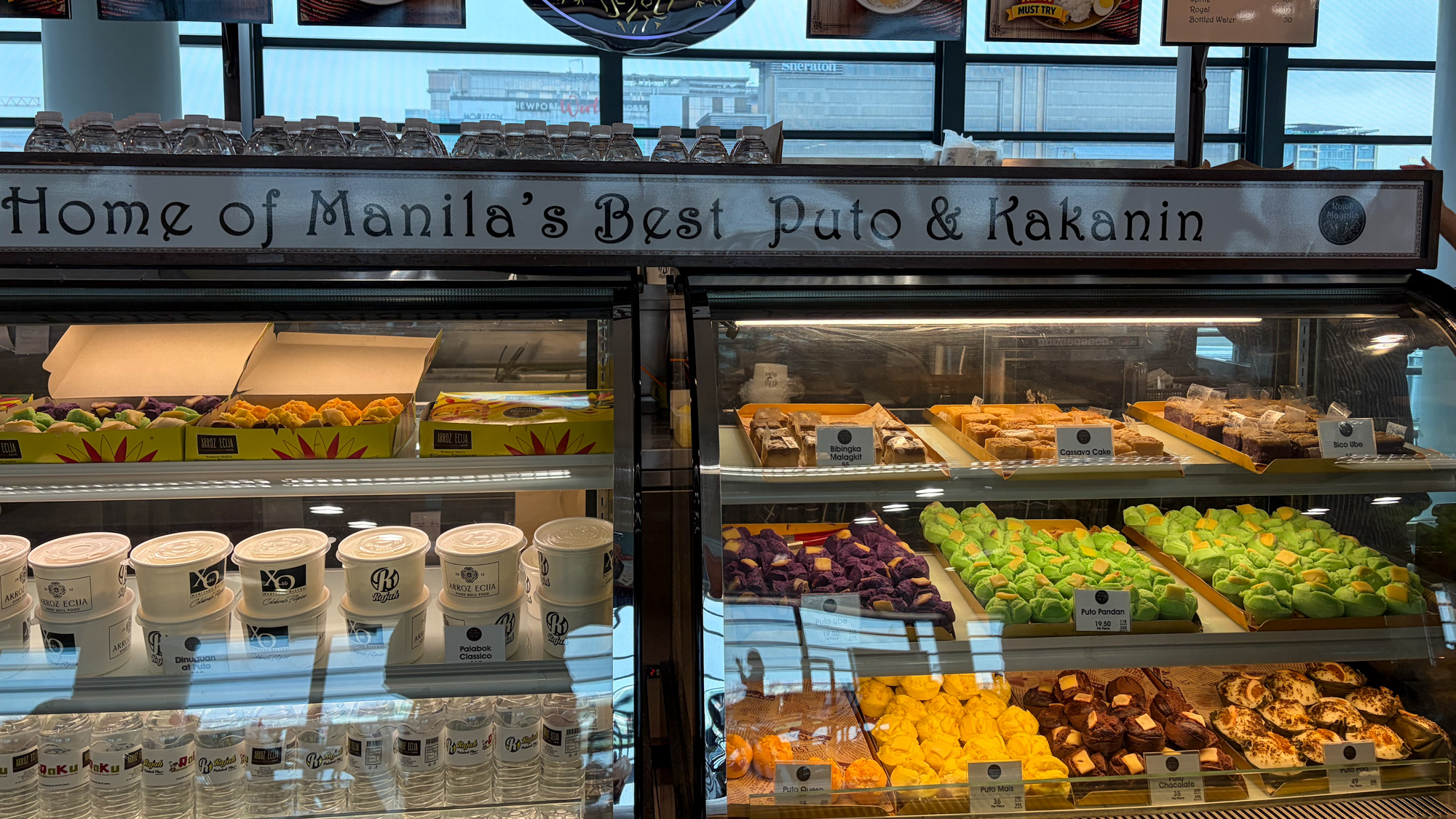
Traditional Christmas foods, especially sweets, are often associated with the ritual practice of Simbang Gabi. “Puto bumbong is a Christmas staple,” Ferdz said definitively. “It’s the go-to snack after early mornings visiting church for Simbang Gabi.” The sticky rice cake is often purple-colored, like the ube (sweet purple yam) used to give it a slight flavor. “You can hear puto before you can see or smell it,” Ferdz said, “there’s a distinctive sizzle” coming from the vendors as they steam the rice in traditional pots over heated coals.
Standard puto bumbong comes with a topping of shredded coconut and, if you have a sweet tooth, a little bit of condensed milk or muscovado (brown sugar). Ferdz explained that while the tropical Philippines are eternally hot and humid, the Ber months are the only time of year the weather dips. “The slight chill makes puto the perfect partner for sikwate, Filipino hot chocolate,” he said. The combination is particularly popular in the southern Visayas region and Mindanao.
The parol, or Christmas lantern I mentioned, also stems from the Catholic influence on Christmas traditions in the Philippines. Consisting of a star and tassels, it symbolizes the star of Bethlehem that features centrally in the Nativity story of the birth of Jesus. Strung up around public parks, in front of stores and throughout homes during the Ber months, the parol is more ubiquitous in the Philippines than evergreens or Christmas fir trees, although many urban-dwelling families also acquire a synthetic mini-Christmas tree if space allows. While they come in multiple colors and different illumination patterns, the parol now hanging outside my apartment balcony is made in the Visayan region’s traditional style of translucent capiz shells arranged in a floral design within a five-pointed star, lit by internal white lights.
While parols illuminate the holiday landscape, the soundtrack to Filipino Christmas is a mix of popular ballads recorded by much-loved singer Jose Mari Chan (the “King of Christmas”) and classic carols sung by neighborhood kids as they travel from house to house, performing in return for coins or candy. It’s reminiscent of trick-or-treating, which, according to Ferdz, has also grown in popularity in the Philippines in recent years, although caroling has been around much longer.
This caroling-for-treats practice is part of a larger tradition of giving pamasko (gifts) to children and younger relatives throughout the holiday season, in a spirit of generosity and to bless those who receive gifts. My friend Valerie grew up requesting pamasko from grandparents, godparents, aunts and uncles, and now passes on the tradition by giving it to her younger cousins on request—but only after teasingly asking them to perform a small song or dance first. To my question to her and other Filipino friends in their 20s, “When does someone transition from pamasko receiver to pamasko giver?” the answer was that no matter your age, you’re expected to start giving pamasko on earning your first paycheck.
Pamasko isn’t limited to relatives or even godparents and godchildren. Friends and work colleagues also participate in pamasko, and many office workers expect to get Christmas bonuses from their employers in addition to the legally mandated “13th-month pay” salaried earners receive before December 24 every year.
In the Makati Central Business District where I live, office workers embrace the Christmas season throughout the fourth fiscal quarter, as local restaurants and event halls fill with endless corporate holiday parties and end-of-year gatherings. The typical Filipino office Christmas party is an elaborate affair, often including team games like Pinoy Henyo (a word association-guessing game), costume competitions and charades, along with raffles and prizes for staff. But the intensity and pageantry has a dark side, so much that the Labor Department had to clarify in October that forced employee participation in office party activities, such as mandatory singing or dancing, is a violation of the labor code.
As long as it’s voluntary, then, the fun and games of gathering throughout the Ber months—with friends, family and coworkers—is part of what the Filipino psychologist Virgilio Enriquez describes as kapwa, the central societal value of shared humanity or connectedness with others in your in-group. In that vein, Ferdz calls this the season of “reunions,” noting that family members abroad begin to return to the Philippines as early as September, when barkadas (drinking buddies) and classmates from high school and college organize their yearly get-togethers. He said his sister was due to arrive in the Philippines from Canada within the week, as other relatives scattered throughout the United States make their way back to Manila as well.
When they arrive in the Philippines from abroad, family members are never empty-handed, often bringing pasalubong (souvenirs) from their countries of residence. That’s particularly true for the Philippines’ overseas foreign workers (OFWs), a population of over 10 million whose international remittances constitute almost 20 percent of the nation’s economy. Weeks ahead of their arrival and throughout the Christmas season, many carefully pack and ship balikbayan boxes to their families back home. Composed from the word balik (to return) and bayan (country or homeland), a balikbayan box is a sort of homecoming announcement, a heartfelt precursor to the ultimate gift of being together despite distance, sacrifice and various challenges of migration.
“A good balikbayan box is planned months ahead,” Ferdz said, adding that it takes time for packages to make their way through foreign and Filipino postal systems and customs. What’s in a balikbayan box? “Everything from soap to chocolate to branded clothes and even underwear from other countries are up for grabs,” Ferdz told me. “For the Decena family, it’s quite practical, we ask for what we can’t buy here.”

Typically stamped with huge red “Balikbayan” labels, sturdy cardboard boxes contain everything from novelty items to everyday goods, a miscellaneous assortment of luxuries, nonperishable foods, clothes and specially requested gifts—illustrating that the custom of sending and receiving a balikbayan box during the Christmas season is a way to show care to those you love rather than maximizing the monetary value of the shipment back home.
“Over the years, I’ve seen Christmas in the Philippines become more and more commercialized, focused on spending money and acquiring the latest gadgets,” Ferdz told me toward the end of our coffee chat. “But as a people, we’re very close-knit and family oriented. The spirit of Christmas will always be about prioritizing spending our time together and reconnecting.”
So when it comes to Filipino Christmas, the age-old adage applies: It’s the thought that counts, whether giving pamasko to your younger cousins or packing balikbayan for family back home. “Back here in the Philippines, when you receive a gift from abroad, the significance doesn’t rest on the item itself. It comes from the fact that you were included as a recipient of a gift. You were remembered.”
* * *
For my friend Valerie, the Ber months herald the influx of a steady stream of family members who visit Manila and Cebu, her family’s hometown in the Central Visayas region. Soon after our acquisition of a Christmas parol in Quiapo, Val’s Filipino-American cousin Megan arrived in Manila, and her family invited me to a weekend reunion to help welcome her back.
Megan hadn’t returned to the Philippines in over 7 years, so Valerie and I served as tour guides, finding the best places for Megan’s favorite grilled bangus (milkfish cooked with coconut milk and chili peppers) and KTV studio for some post-dinner karaoke, a staple of any nighttime outing in Manila.
Indeed, karaoke is a national pastime in the Philippines, one I’ve quickly adopted as my own. The beauty of it is that no one evaluates your skill—only your enthusiasm—and it’s a great way to break the ice with strangers and soon-to-be friends. As our trio swayed and sang power ballads together in the dimly lit studio, my voice cracked on the high notes, and I thought about how liberating it is to enjoy something for sake of it, simply for makisaya (joining in the fun with others).
Soon it was my turn to pick a song from a broad selection of Filipino, English-speaking and Korean artists. I took the responsibility seriously, hoping to select something popular enough that everyone would sing along with me in the background. I approached the highly technical machine, punched the flashing numerical buttons and navigated to John Denver’s “Take Me Home, Country Roads.” We’re far from West Virginia, but somehow it’s a fan favorite I’ve heard many times in karaoke bars across Manila. Maybe because it’s a simple song, easily accessible at every level of skill or inebriation.
I also think it speaks to a universal feeling or at least one that carries over from the Appalachian Mountains to the hills and valleys of the Philippines. This call to come home is what sustains the four-month Christmas season and provides the opportunity, every year, to embrace a full and enduring sense of belonging, by carrying on traditions that help Filipinos reconnect with faith and family, share their comfort foods, and give and receive gifts even from loved ones abroad.
As the song reached its bridge, I sang, “The radio reminds of my home far away.” There in a Manila karaoke room, I was far from my family but surrounded by friends, old and new—and home was only a short drive away.
Top photo: In historic Quiapo district in northern Manila, a parol vender sells traditional Christmas lanterns on busy Carriedo Street, famous for its bargains and cheap finds.