
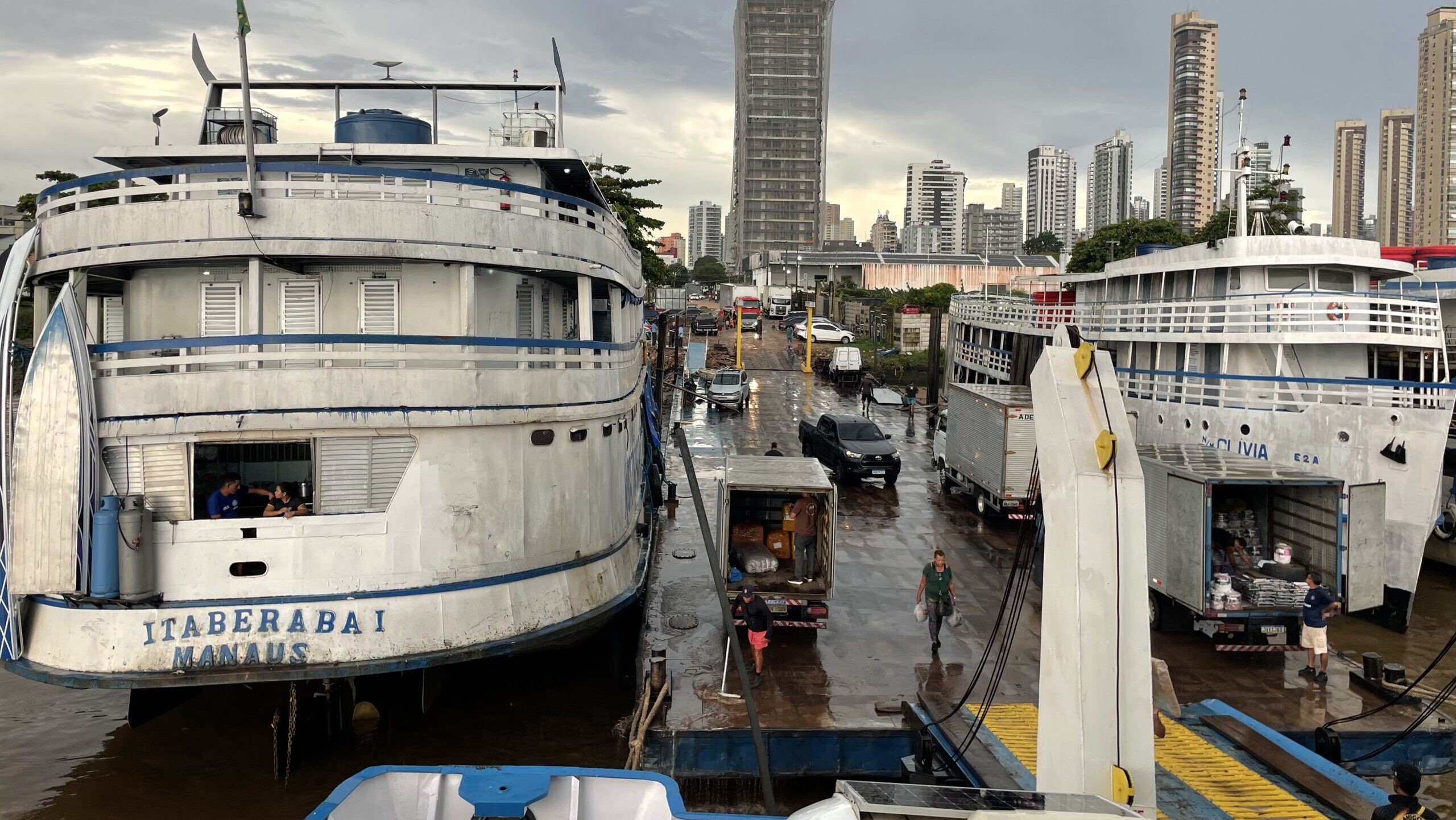
BELÉM, Brazil — The lights of this city’s exclusive condominiums flickered faintly in the quick-settling dusk as the Rondônia set sail for Manaus, the jungle capital at the heart of the Amazon. The late departure was surprising only for its relative shortness, a mere 45 minutes as dock workers stuffed the local ferry’s bay with frozen chickens, new Toyota pick-ups, desk chairs, melons, oranges, electronics and other daily necessities. Passing the working waterfront of fishing boats and ramshackle neighborhoods to the city’s east, the ship soon turned westward toward the darkness of the rainforest under a starless sky.
By dawn, the three-deck, 210-foot vessel, unsettlingly called a gaiola, or cage, by locals, had made its way into one of the narrow tidal channels that connect the Bay of Marajó, which opens to the Atlantic, with the Amazon River’s main artery. Men, women and children who’d spent the night in colorful hammocks on the first and second levels looked at their phones or observed the forest from the boat’s railing. There were 125 passengers in total, a fraction of the 500-1,000 people who make the trip in the tourist-heavy dry season. “We’d fit 2,000 if it weren’t for government inspectors,” a crew member said. A shuddering thought.
I’d been dreaming of ferrying up the legendary waterway in a Heart of Darkness-esque adventure since my days biking along Amsterdam’s peaceful canals at the start of my fellowship two years ago. After a few days in Belém, the bustling port town that has acted as the gateway to the Amazon for more than 400 years, I set off to explore the jungle and river that bears its name. Nothing from my visits to photography exhibitions in Paris or nature documentaries about the virgin rainforest and its recluse indigenous tribes had prepared me for the view from the ferry’s top deck: teeming human activity.
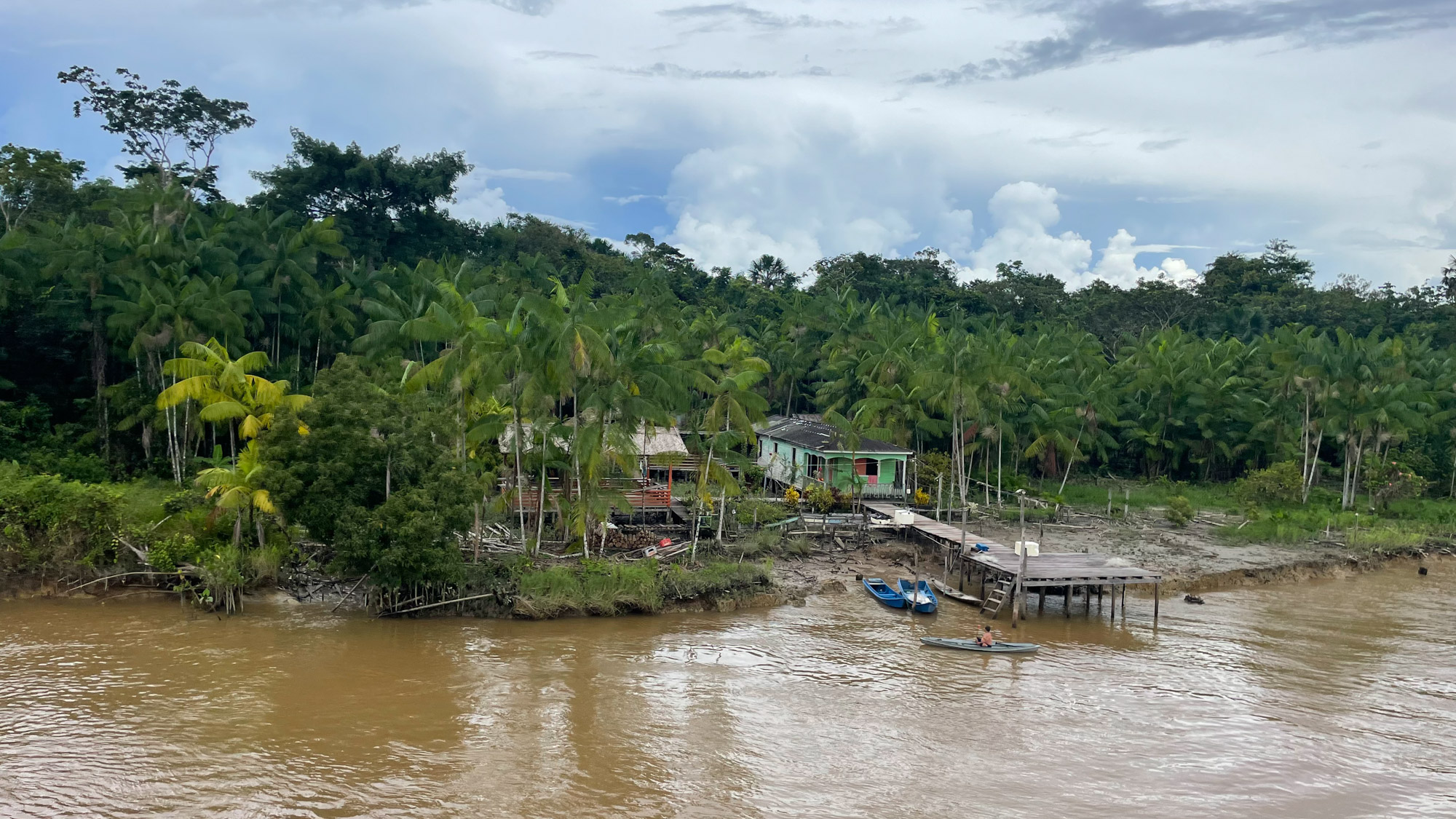
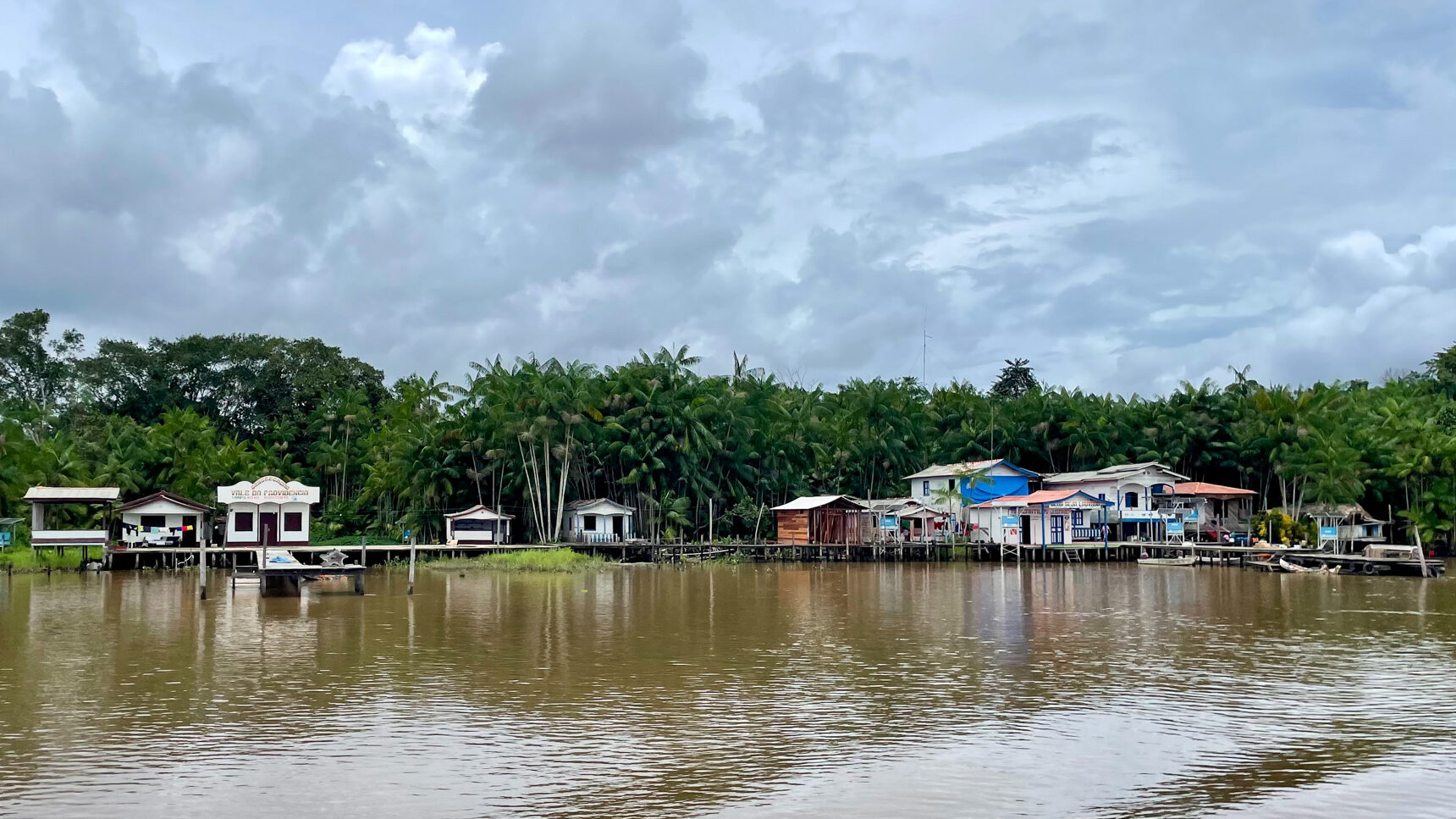
Wooden stilt houses cut into the jungle’s edge lined the banks of the narrow channel. Some were mere shacks while others boasted several rooms with painted façades and decorative woodwork on their roofs and porches. Açai trees and government-financed solar powered generators surrounded the houses. Some sported TV antennae and others were even connected to the internet through Starlink satellites.
From the long, protruding docks, prosperity was also measured in the size of the boats: from traditional wooden canoes to brightly painted motorized launches known as popopos for the sound of their motors, with long drive shafts that locals steer from between their legs, to slightly larger covered craft that reminded me of Maine’s island-hopping water taxis.
As the ferry passed, young children ran from their houses and paddled out toward us. They giggled and shrieked as the waves rocked their canoes. A girl threw her arms up in the air in celebration after grabbing a floating plastic bag, her younger brother cheering from the back of the boat. “Those are donations of food and clothes,” said Maximus, who ran the upper deck’s snack bar, in response to my quizzical look. “Things are difficult for these families because we are outside both the açai fruit harvest and the fishing season.” Most locals survive on sustenance fishing and government assistance with the exception of a few local merchants, he explained. Spiking fuel prices and the accompanying inflation caused by the joint US-Israeli war against Iran have hit the already vulnerable population hard.
The plastic bag chase, a fun game for some children, seemed a heartbreaking disappointment for others as they returned empty-handed. A young girl who’d paddled out alone from an unpainted shack hauntingly stared at the passersby and empty water separating her from the ferry. Those further upriver were also less fortunate as donations ran out.
Punctuating those unfamiliar scenes were innumerable churches. For every 10 houses, there seemed to be a church to serve them. Primarily evangelical, the Assembly de Deus denomination most prominent, with a few Catholic parishes mixed in. The churches stood out for their fresh paint and electric lights. Over the past 40 years, evangelicals have quintupled from around 6 percent of Brazil’s population to nearly 30 percent, a seismic societal shift in a historically Catholic country that also extends to the ribeirinhos, river people, of the Amazon.
“You are either living the word of God or you’re not,” Raimondo, a fellow passenger, told me flatly. We were looking out at the riverbank from the second-deck railing. A large black and blue butterfly flitted above the ferry’s wake as we chatted. Raimondo had joined his local Assembly de Deus congregation after one too many Sunday afternoons drinking cachaça, a popular sugarcane juice distilled spirit, with his Catholic pastor.
A portly man in his 60s, with a shaven face and a buzzcut, he was returning home from Belém, where he’d been visiting his parents. “I can’t sit at the same table with you if you are drinking beer, even if I’m drinking Coca-Cola,” he continued, “because I’m tempting myself and condoning your behavior.” True to his word, he kept to his hammock and his Bible, shunning the top deck above him where some men were nursing their third beers of the afternoon.
The abundant presence of churches has not ensured the safety of the most vulnerable, however. Many young children are forced by desperate parents into prostitution, another passenger told me. The issue was widespread enough to prompt a national parliamentary inquiry in the late 2000s after a Catholic bishop accused parents of forcing young girls and boys to take part for food and diesel fuel, while other children completely disappeared. Continuing investigations by Brazil’s Commission on Human Rights in 2025 show that abuses are still occurring, adding another dark undertone to the scene of the children who so readily paddled out to the ferry.
As the sun began to set, the boat veered to port and the cappuccino-colored expanse of water stretched to the horizon. A distant bank was the only sign that we had finally arrived at the main artery of the great Amazon River, and not, by accident, the sea. Stretching from the Peruvian Andes to Brazil’s Atlantic Coast, the river and its 1,100-plus tributaries move around 1,600 square miles of water per year. That’s five times more than the Ganges, 12 times more than the Mississippi, 70 times more than the Rhine. Under its murky surface, it hosts more than 3,000 species of fish. The Congo River, the second-most diverse, counts fewer than 800.
The Amazon basin, 60 percent of which is in Brazil and which itself accounts for 60 percent of Brazil, is only slightly smaller than Australia by territory. Its tens of thousands of plant species, thousands of animal species and millions of insects make it the world’s most diverse ecological area. From the ferry, the wall of trees looked like an impenetrable labyrinth of green. Or so it seemed.

As the sun sank in pink, orange and red hues over the unbroken horizon of jungle, the ferry snack bar’s TV played a movie about the crucifixion of Jesus Christ, while a speaker loudly played sertanejo, Brazil’s version of country music. Next to the light of a full moon, stars twinkled brightly. There was Orion’s Belt and the Southern Cross, constellations that prompted memories of looking up at those same stars while lying on the warm western beaches of La Réunion near my mother’s home. But from the darkness came another unexpected twinkle, this one much nearer.
Local vendors on Mount Alegre’s docks were full of energy as they clamored for attention. While the ferry’s crew threw out two wooden gangplanks with which they loaded and unloaded passengers and cargo, these port hustlers reached passengers on the upper decks by pegging plastic bags stuffed with homemade snacks and juices to long wooden poles. At the top were plastic bottles cut in half where eager customers, sick of the mess hall’s monotonous menu of rice, beans and a protein, paid cash or used a QR code to pay in PIX, Brazil’s state-backed instant money transfer system. As the shouts subsided, the crew packed up and the ferry headed back into the river’s dark waters.
Each one of the 10 stops was memorable in its own way. From the railings, travelers laid inquisitive eyes on cities ranging from bustling Santarém with its 360,000 souls to Parantins, host of a renowned folkloric ox festival. Seeing them reinforced my dawning realization that beyond the virgin rainforest and 450 or so Indigenous tribes highlighted in environmental advocacy campaigns, the Brazilian Amazon is home to 28 million people. The stilt houses of the first day were an exception, not the rule, with as many as 80 percent of the jungle’s inhabitants living in urban areas along the river’s many tributaries and inlets.
A more informed traveler might have expected such bustling activity. The first European outposts on the Amazon date back to the 16th century. However, new research suggests that some 10 million people already lived in the region at the time, many in complex cities with more than 100,000 inhabitants—including on the grounds that are today’s Santarém—with population centers dating back 4,000 years.
Scientists believe that as much as 90 percent of the pre-European native population was decimated through a combination of disease, famine and war. Many died well before direct contact with the colonizers from epidemics of measles and influenza brought by coastal merchants and refugees. A travel log by the Spanish Dominican missionary Gaspar de Carvajal in 1541 recounts large agricultural societies. However, the mass deaths of locals soon after and the forest’s rapid regrowth buried that fact, reinforcing misperceptions about the Amazon as an untamed and uninhabited green hell, until recent archeological laser technology proved otherwise.
The region rose to international prominence around 1880 with the refining of Charles Goodyear’s vulcanization process. Previously unstable natural rubber could now be transformed into a durable substance indispensable for the development of everything from tires, industrial belts, waterproof clothing and electrical insulation to gas masks. Lasting 30 odd years, the boom made a few fabulously rich. While the seringueiros, rubber tappers, lived under violent debt peonage, the merchant elite kept up with Victorian-era opulence, sending their dresses to be laundered in Lisbon and importing Italian marble and French stained glass to build basilicas and opera houses—famously paving the streets surrounding the Manaus Opera House with rubber so as not to disturb patrons with the clatter of passing horse carriages.
This period of Brazilian history tends to be overlooked in traditional narratives of the country that focus on natural resources from its various states: Pernambuco’s sugar, Minas Gerais’s gold and São Paulo’s coffee. But in the first decade of the 20th century, rubber accounted for 40 percent of the country’s total exports. The boom became bust around 1910, after a decades-long shift that started when an Englishman stole 70,000 rubber tree seeds that were eventually used by the English Royal Botanical Garden to grow rubber in Britain’s Southeast Asian colonies. Because of a lack of natural predators, they could be planted in large monoculture plantations that fatally undercut Brazil’s monopoly, which relied on collection from wild trees.
The fall from prosperity is never far from locals’ minds; children are taught to curse the Englishman, Henry Wickham. Successive governments have tried to bring back economic dynamism to the region. In the late 1930s, President Jutelio Vargas declared that the Amazon should be populated and developed as part of his “March to the West” policy.
Twenty-five years later, under the banner “A land without people for a people without land,” the country’s military dictatorship promoted the relocation of millions of people to the area, particularly poor residents of the drought-stricken northeast. The dictatorship bolstered the effort with road-building projects such as the infamous trans-Amazonian highway. In 1967, it inaugurated the Manaus Free Trade Zone. Today, the special economic zone comprises around 600 companies, generating roughly half a million direct and indirect jobs.
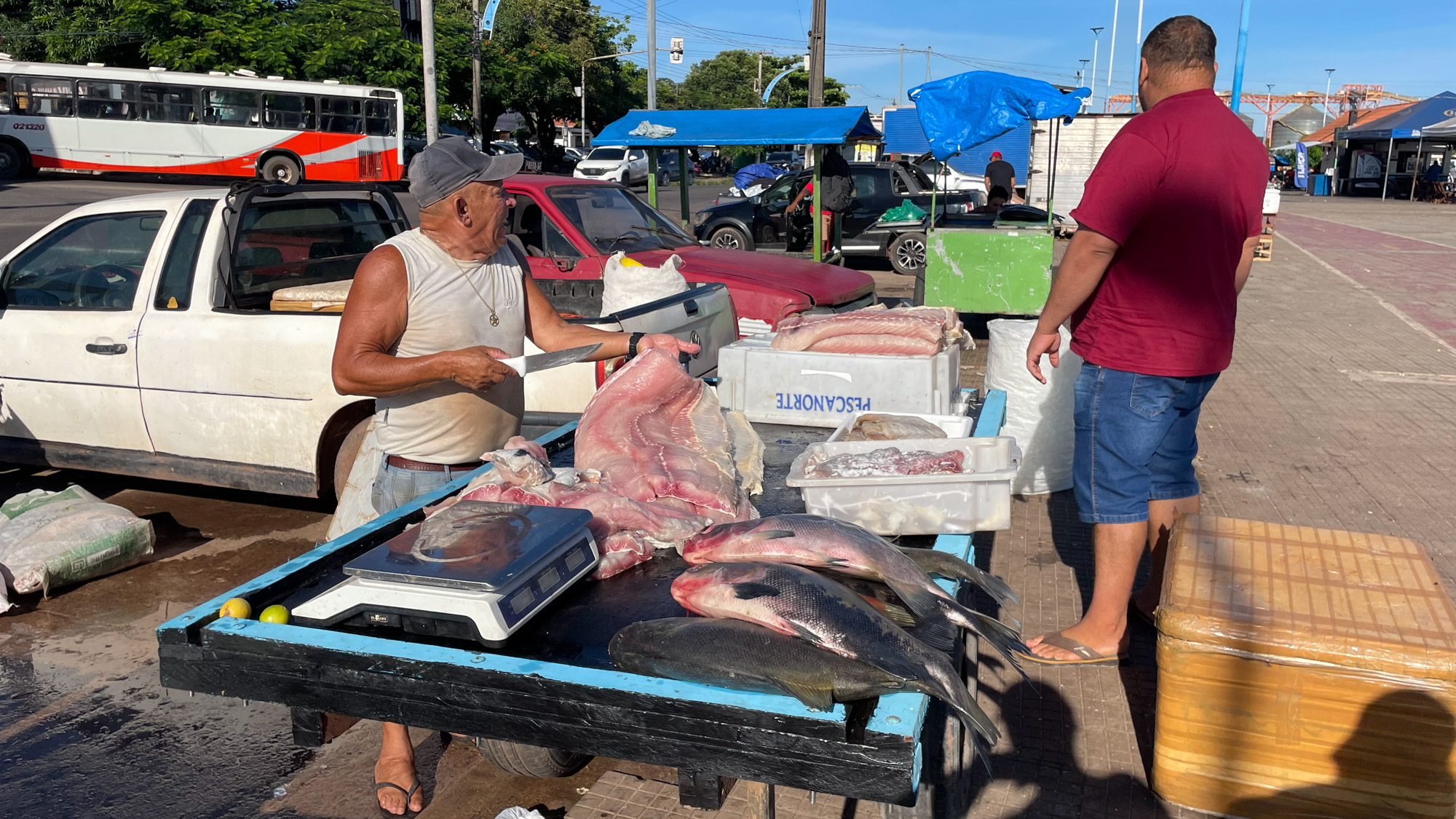
Descendants of those migrants and new arrivals continue to search for economic opportunities of their own. Under Brazilian law, rural occupants who live on and cultivate a property for at least five years may be eligible to acquire legal ownership, with restrictions. Some bribe local officials to forge land titles purportedly dating from before the 1988 constitution, giving them ownership of land that should otherwise be state property. Locals’ economic desires often clash with environmentalists’ hopes to safeguard the rainforest that produces 20 percent of the world’s oxygen and regulates rainfall for the entire continent.
Mr. Ceará, another fellow passenger, was leaning on the railing at yet another nighttime stop when we struck up a conversation. With taut, sunburned skin, the cleanshaven, short-haired 63-year-old casually recounted how he had fled his home state of Ceará in his youth after he got into trouble with the police. Arriving in the Amazon around 30 years ago, he began selling gasoline and grew his business to 300 head of cattle and 50 milk cows.
His story reflected a reality that was impossible to ignore as the ferry meandered its way upstream: An hour on the river wouldn’t go by without passing a clearing made for cattle on the nearby shore. Some were just grassland, others well-organized ranches with houses and livestock fencing. Cattle-raising in the region dates back to the 17th century, but the military dictatorship’s occupation policies of the 1960s and 1970s turbocharged the transformation of the land as chainsaws and tractors helped reduce the cost and time involved in clearing the forest.
Another important change was in the cattle themselves. Beginning in the 1930s, European breeds were replaced with zebu cattle from India and other parts of Asia that were much more resistant to heat, ticks and tropical disease. It enabled ranchers to expand into forested areas that previously required extensive clearing before cattle could survive. “Ranchers just let them loose anywhere they want, even in the protected areas,” a shop owner in Santarem told me.
Brazil is now the world’s second-largest beef producer, with 70 percent going to domestic consumption and the rest accounting for 20 percent of global beef exports. Far from a delicacy, beef is eaten by even the poorest Brazilians. Beef production accounts for 8.4 percent of national GDP and generates just shy of 9 million jobs. In certain regions, it has also taken on strong cultural significance, as in the case of the Parintins Folklore Festival, which celebrates a legend about a resurrected ox.
While cattle-raising is the most land-intensive occupation, soybean cultivation, which requires more mechanized agricultural infrastructure, isn’t far behind. In 2003, the US multinational Cargill invested in a grain export terminal at Santarém that now handles 4.9 million tons of grains flowing primarily from the landlocked state of Mato Grosso, over 1,000 kilometers to the south and part of the Amazon Basin’s southern tip. The complex has helped generate billions of reais in economic activity and thousands of jobs in the region.
Brazil is the second-largest producer of soybeans after the United States. The northern river ports of Manaus, Santarém and Barcarena accounted for 14 percent of Brazilian soybean exports in the first half of 2025. The Amazon’s deep, navigable channel means that large ocean-going vessels can travel 1,450 to 1,600 kilometers inland to Manaus even in the dry season, connecting production deep in the interior to global markets.
Overseeing and regulating those activities requires a lot of work. But government regulators are also responsible for stopping illegal business, including the logging, mining, poaching and drug smuggling that happens on the banks of the long river and its innumerable capillary channels. Satellite monitoring has exposed the immense scale of environmental loss: Over the past 40 years, the Brazilian Amazon has lost around 52 million hectares of native vegetation, an area roughly the size of France.
But difficult is not impossible. Since he took office for a second time in 2022, President Luiz Inácio Lula da Silva’s administration has reduced the pace of deforestation by 50 percent. Brazil’s agricultural industry is also adapting to new market pressures. When it starts coming into effect later this year, the European Union’s Deforestation-Free Regulation (EUDR) will require that imported cattle, soy, wood and other commodities not come from areas deforested after 2020. But while President Lula’s promise to end Amazon deforestation by 2030 has garnered international praise, local pressure to develop the region’s economy remains substantial.

The growing presence of large international companies and proliferation of export routes inspire economic hope in small farmers. “It is hard for the family but this is where the opportunity is,” Milton, another passenger, said. In his early 50s, he had a steadfast yet preoccupied look behind his tinted glasses. His wife and four sons, aged six to 17, lay in hammocks as we talked, their life’s possessions packed in bags on wooden pallets to avoid getting wet.
Having bought a plot of land in Mauá, a 30,000-strong city a day’s boat ride from Santárem, he was relocating his entire family to farm guarana, a local fruit used as a source of caffeine in supplements and energy drinks. “Guarana won’t pay off for four years, so I will start by planting and selling bananas, melons and other fruit to bring in some money,” he told me. Next to him, his eldest son looked nervous.
As Milton and I were finishing our conversation, a piece of trash thrown from the top deck fell into the water. “People don’t have the culture of looking after things here,” he lamented. No tree-hugging environmentalist, he complained about President Lula but still couldn’t stand people polluting nature.
The amount of single-use plastics, propensity to throw trash on the ground and lack of proper garbage collection cause problems across northeastern and northern Brazil. However, pollution here in the “lungs of the world,” the planet’s most diverse ecosystem, brings up a more fundamental question: How can urban populations uneducated in cleaning up their own trash, and facing all the difficulties of deeply socioeconomically unequal cities be taught to value their natural environment and care about even more abstract developments like climate change?
Just as the Amazon’s urban residents should be better educated about proper trash disposal and day-to-day conservation, the international observers and self-designated Amazon defenders must also realize that the region is much more than a virgin forest occupied by saintly natives and evil loggers. There’s a bustling society here with ordinary families struggling to realize everyday needs and dreams.
As the Rondônia finished its five-day voyage under the setting sun, I couldn’t help but feel a sense of awe at the Amazon’s expanse. That while it may be observed, cut down or revered, it can never be fully understood. The jungle and its river may temporarily succumb to man’s hubris, but it has long preceded us and will far outlast us.
Top photo: Fishermen on the Amazon