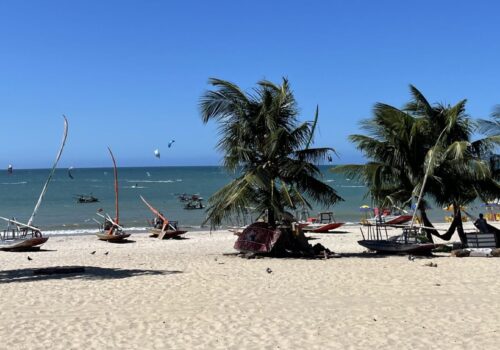
FORTALEZA, Brazil — The putrid smell from a nearby sanitation plant swept across the waves and seemed to stick to the water. Trash floated past my surfboard with disturbing frequency. This northeastern city’s most renowned waves are framed by its most notorious favela: Pirambu. “Bodies thrown into the water upwind wash ashore here—the ocean rejects them,” my surf instructor muttered. On shore, multi-million-dollar condominiums reflecting the city’s growing economic prosperity gleamed in the sun.
In favelas like Pirambu, called comunidades, violent armed mafias that have come to rule daily life are the bogeymen of Brazil’s efforts to improve public safety. That will be a big topic in state and national elections scheduled for October, ahead of even health care and education in order of concern. Other big issues are the economy, rise of evangelicals, a national corruption scandal and America’s erratic foreign policy.
In the state of Ceará—Brazil’s eighth largest with a population of almost 9 million people—where Fortaleza is the capital, elections for governor, two federal senators and 22 federal lower house deputies will be influenced by the country’s concurrent presidential contest, on top of local issues. The governor’s race will pit the incumbent Elmano de Freitas against former Governor Ciro Gomes in what promises to be an eventful campaign mixing family feuds, political priests, gun-toting bandidos and ever-present corruption.
For understanding the nature of the choices facing voters, it’s helpful to know that since the end of Brazil’s 21-year dictatorship in 1985, Ceará has not experienced a vibrant democracy. Rather than developing a competitive political atmosphere, the state’s first democratically elected governor, Tasso Jereissati, came to oversee a governing coalition that held power until 2022. That year, it split over a succession dispute. The lawyer Elmano de Freitas won the contest with the support of two previous governors, Camilo Santana and Cid Gomes. The trio is closely aligned with Brazil’s left-wing President Lula Inácio de Silva of the Worker’s Party (PT), known as Lula.
This fall, de Freitas will be running for re-election against Cid Gomes’s brother Ciro Gomes, who is running with Jereissati’s support. Both are members of the center-right Brazilian Social Democracy Party (PSDB). This cycle, Gomes has entertained an alliance with the far-right party of Jair Bolsonaro—the former president whose son Flávio Bolsonaro is now running against Lula for president—which has historically been part of the opposition in Ceará.
The candidates’ political maneuvers may seem confusing but the issues for Ceará’s voters are clear. Public safety tops the list. Although there have been recent improvements, the state and its capital city have a terrible history of homicides and robberies.
During the 2000s and early 2010s, crime in Fortaleza was largely limited to local street gangs that sold drugs and sometimes fought over territory, says Luiz Fabio Silva Paiva, professor and director of the Laboratory on the Study of Violence at the Federal University of Ceará. “That changed when Rio and São Paulo-based factions arrived around 2014 with money and guns aiming to control the state capital’s international seaports and airport that connect to profitable European and US markets,” he said. In 2016, the various groups declared war and by the following year, Fortaleza’s metro area was strewn with corpses as the murder rate hit 86.7 per 100,000—comparable to St. Louis’s in the United States. Robberies and other crimes also peaked that year.
Since then, homicide and robbery rates in Fortaleza, where most of the fighting was concentrated, have decreased by over 40 percent. Between February 2025 and February 2026 alone, total homicides for the state dropped 30 percent, while robberies fell 40 percent. One recent headline trumpeted that Maranguapa, a town in Fortaleza’s metro area, registered zero homicides in February—a stunning announcement given that in 2024, it had Brazil’s highest homicide rate at 80 per 100,000 inhabitants.
At a news conference last month, Governor de Freitas attributed the reduction in crime to “investments in hiring more police officers, investments in equipment, increasing the number of intelligence personnel and the integration of all these forces.” Others aren’t so sanguine.
Hideraldo Bellini, a reserve colonel in the state military police’s intelligence unit, said the shift in law enforcement strategy masks a darker underbelly. He pointed to the unusual ferocity with which law enforcement services have targeted one criminal group, leaving its rival Rio-affiliated gang in full control of the state and its capital. “No war means fewer deaths and robberies, but it also means that the crime bosses’ focus now can turn to corrupting society,” he told me sullenly over a cafezinho.
To prove its tough on crime credentials, the governor’s administration touts that the state sent 2,541 people to prison last year for gang membership, double the previous year’s tally. It’s also building four new prisons to house an inmate population that’s reached 26,000—roughly 40 percent above the official capacity of 18,000. The colonel wasn’t impressed: “They’re just going after the replaceable soldiers. The leaders live hassle-free in the city’s nicest neighborhoods.”
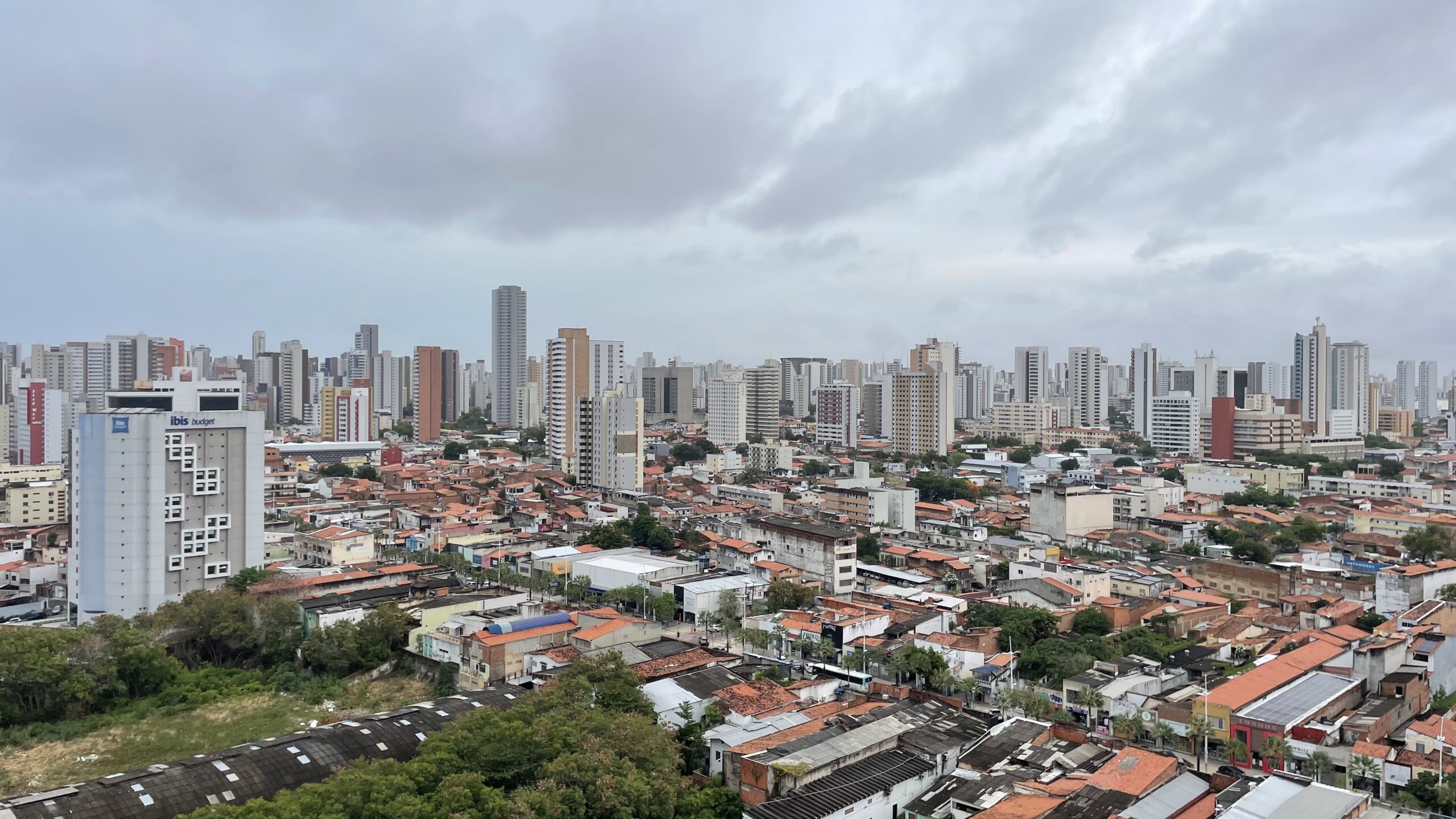
While Ceará’s government is cheerleading its imprisonment rate and radical drop in homicides and robberies, it’s likely voters will remain skeptical. Last October, I wrote about how gangs, referred to as “factions” here, have turned into mafia organizations controlling access to health care and extorting local businesses. Further interviews confirmed their status as a growing hybrid power, usurping the authority of the state and community associations by deciding who’s allowed to enter what neighborhoods, who gets to live in public housing blocks and even who gets to use the public athletic fields.
More recently, the gangs have come to control people’s personal lives, too, resolving disputes between neighbors over loud music, banning the private lending of money they don’t control and coming to adjudicate local disputes about everything from adultery to theft. They’re also increasingly dominating the legal economy in those areas, taking control of the profitable distribution of drinking water, internet and cooking gas while levying fees on business they don’t control.
Gang domination has raised serious questions about the upcoming elections, as reports spread of criminal groups barring some candidates from entering certain neighborhoods, at the same time financing others.
Furthermore, the push by US President Donald Trump’s administration to classify factions as narco-terrorist organizations has roiled local politics over the issue. In polarized Brazil, disgust for the gangs is universal but responses to the proposed American policy fall along ideological lines, with the left generally opposed and the right more supportive.
Those against the terror classification fear US military intervention in Brazil, as they’ve seen in other countries in the region since Trump’s 2024 inauguration. Washington’s aggressive moves also raise memories of US support for Brazil’s 1964 coup that led to two decades of dictatorship. Those who support the narco-terrorist classification change also believe the government is at best not doing enough and at worst in bed with the bandidos. Therefore, they believe, only the United States with its superior law-enforcement and military capabilities can save Brazil from itself.
In addition to public safety, voters will also be looking at candidates’ promises over health care and education, two traditionally top concerns.
Brazil nationalized its health care service in 1990, creating the Sistema Único de Saúde (SUS) under the joint responsibility of federal, state and municipal governments. Inspired by the United Kingdom’s National Health Service, it offers free health care to all Brazilians and foreigners, from preventative care to complex heart surgeries. While state-specific statistics are difficult to find, nationwide, 72 percent of Brazil’s residents solely rely on SUS, while 28 percent supplement their care with private insurance.
For decades, Ceará’s only government-run hospitals were in Fortaleza. As recently as 2012, 58 percent of patients came from the state’s semi-arid interior. But during the past two decades the government has built primary care centers and hospitals in rural areas. Of the state’s 14 hospitals, four act as regional hubs outside Fortaleza. Primary care centers now function in all municipalities.
Opening hospitals is the easy part, however. Staffing and operating them is harder, explained Erico Firmo, editor at the O POVO newspaper. “Medical professionals are in short supply, particularly in rural areas,” he said. And as people are provided more care, they discover more problems, generating growing demand. The most common complaints are the months-long lines to see specialists or undergo surgery. Approximately 45 percent of Brazil’s population is satisfied with SUS services, 10 percentage points above the average satisfaction rate of other Latin American countries, a 2026 study found.
Like most Brazilians with a private plan, I, too, have used SUS and came away impressed. While facilities are run down, the quality of care is very good. When I was bitten by a stray dog, I was able to get free rabies shots at a public clinic half-an-hour after arriving without an appointment.
When it comes to education, the challenge for candidates will be to maintain the current success rates. Around 2007, then-Governor Cid Gomes launched the Programa de Alfabetização na Idade Certa (the Right Age Literacy Program) with the goal of ensuring literacy by second grade. The state-wide program was a scaling up of a successful program started in Gomes’s hometown of Sobral in the north.
It catapulted Ceará’s education system to one of the country’s best performing for young kids by focusing on continuous teacher development and funding schools based primarily on performance rather than size while providing struggling schools with additional teacher training. In 2024, 85.3 percent of Cearense children were literate by second grade, compared to the national average of 59.2 percent. Former governors Cid Gomes and Camilo Santana were both in turn appointed to head the country’s Education Ministry after their governorships ended. As a political consultant told me, “Ceará has few natural resources, so we must invest in our human capital to grow.”
Ceará’s economy is small for the region’s size: While it hosts 4 percent of the country’s total population, its GDP accounts for only 2 percent. The state’s main businesses have historically been in trade and services, accounting for around 70 percent, with manufacturing and agriculture rounding out the rest. Over the past year, the economy overcame the initial trade shock from Trump’s levy of 50 percent tariffs on Brazil last July. However, it’s unclear how it will be affected by the repercussions of the ongoing US and Israeli war against Iran.
Gasoline prices have not yet spiked as drastically as in the United States, thanks to government intervention and the mitigating role of Petrobras, Brazil’s state-owned oil company, in controlling domestic fuel prices. On average, the price has risen only 5 percent, although there are wide regional variations. However, the 20 percent increase in diesel prices, on which Brazil’s freight truckers and ferries rely, threatens to prompt a cascade of higher prices. Whether voters will blame the ruling government coalition or the Trump-aligned Bolsonaro opposition remains to be seen.
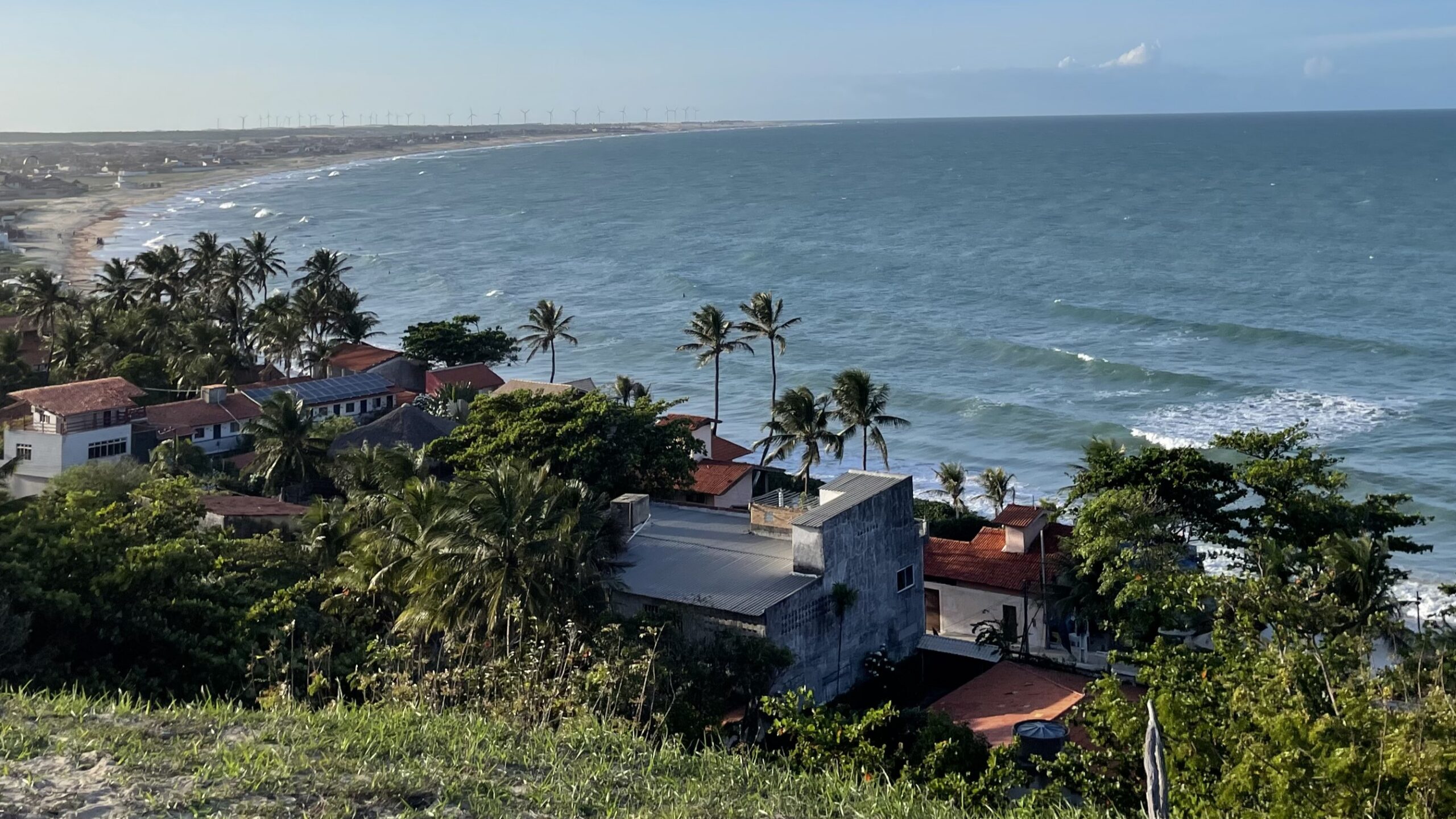
Before those price shocks, Ceará’s economy had been experiencing favorable growth. Thanks to improved public safety, there has been a boom in tourism. Famed for its long sandy coastline, the state is one of Brazil’s premier tourist destinations for sunbathers, surfers and wind-powered water sports enthusiasts. Furthermore, the state is looking to position itself as a technology and AI hub. It’s well-placed to be a leader in that field: 90 percent of Brazil’s internet capacity runs through undersea fiber optic cables from North America and Europe that make landfall in Ceará. It is also home to 12 data centers, with more on the way.
Finally, there is the rise of the evangelical church. Inspired by their American counterparts, evangelicals have grown to 27 percent of Brazil’s population in 2022 from around 9 percent in 1991. They’re cited as a main reason for Jair Bolsonaro’s presidential victory in 2018, when priests openly called on their flocks to vote for conservative candidates. Ceará is no different, although evangelicals play a relatively smaller role; they count for only 20 percent of the population. Moral conservatism continues to be a strong factor, however, with 70 percent of the state identifying as Catholic.
Ceará’s voters will go to the polls in October thinking about those major themes. If one thing is certain, it’s that there will be no upstart candidates on the ballot, according to Carla Quaresma, a professor at a higher education institute in Fortaleza called the Faculdade CDL. As she explained over Zoom, “The election laws favor existing dominant parties.”
Election-reform advocates in the United States tired of their two-party system and the flood of corporate money in political campaigns might look longingly at Brazil’s 30 registered parties—among which six are dominant—along with its 2015 ban on corporate donations and public financing for federal, state and local elections. But they look much better on paper than in practice. The electoral fund, which is set to use 5 billion reais ($1 billion) from the federal budget this year, distributes only 5 percent of its money equally to all registered parties, with 95 percent given to political parties on a proportional basis relative to the size of their congressional representation.
The ban on corporate donations is about as watertight as a sieve. The law stipulates that individuals can contribute up to 10 percent of their declared gross income to political campaigns. But Quaresma discovered during her doctoral research that many such donations have been fake, with companies obscuring contributions by listing their employees’ names on fundraising lists. Those workers often receive financial kickbacks or promotions in return. “The electoral tribunals don’t have the bandwidth to cross-check the bank information to see who gave the money,” Quaresma said. “As long as the amount in the campaign account matches the amount given on paper, nothing is flagged.”
Political advertising during campaign season also favors dominant parties. They receive free airtime on TV and radio in amounts proportional to the size of their representation in Congress. Incumbent state governments also routinely advertise their achievements on radio, TV and billboards. While neither the governor nor the ruling coalition parties are named, it’s not hard to read between the lines. Local journalists told me that government ad-buys can make up a significant portion of some outlets’ revenue, which also influences editorial lines.
Back in 2018, then-Congressman Jair Bolsonaro surprised Brazil’s political establishment by winning the presidency as an outsider from a tiny party with only two federal deputies. Today, his Liberal Party has the most representatives in the National Congress, with powerful alliances that give his son Flavio all the advantages of an establishment candidate in the upcoming election race against President Lula and his Worker’s Party (PT), which has mostly dominated the presidency since 2003. That political power will matter in Ceará’s election if Flavio Bolsonaro and Ciro decide to join forces.
Social media has recently diminished some of traditional media’s influence. Unlimited data usage for WhatsApp on mobile plans during the 2018 election helped Bolsonaro’s team circumvent established parties’ traditional media dominance by creating thousands of WhatsApp communities, each with thousands of participants, a key factor in his win.
Brazilians spend more than 3.5 hours a day on social media platforms, including WhatsApp, compared to around 2 hours for their American counterparts. While literacy rates are high in Ceará, 86 percent, Brazilians are much more comfortable getting information from audio and video than written content. That’s partly due the difference between formal written Portuguese and how Brazilians speak the language. In their digital messages, 5-second audio notes often replace a written “I’m coming.”
As AI-fueled deep fakes of candidates are making their rounds this year, it’s unclear how the convergence of fake information and high social media use will affect the elections. Although Brazil has laws against defamation, Quaresma says, “the electoral justice system is always a year behind, so I expect it to be a free-for-all.”
The last and most old-school method through which traditional politicians assert control of outcomes is clientelist relationships with mayors. As a political reporter who asked to remain anonymous explained, most municipalities don’t have enough money to balance their own budgets; they depend on state governments for support as well as federal aid directed by friendly deputies and senators. While transfers to municipalities are formally apolitical, the fact that 163 of 184 Ceará municipalities were aligned with the government’s coalition in 2024 suggests that the rules often function more as guidelines than firm constraints. If municipal leaders start flipping to Ciro’s PSDB, Governor de Freitas will be in deep trouble.
Given the structural favoritism toward dominant parties, it’s no surprise that corruption is an evergreen concern for Brazil’s voters. Newspapers are awash with one politician’s dirty scheme after another. But public anger grew to new heights after the revelation last year of a national scandal involving Banco Master. A mid-sized bank, it was liquidated by the Central Bank for insolvency in November, its founder jailed as federal investigators continue to uncover a Bernie Madoff-scale Ponzi scheme combined with Jeffrey Epstein-level access to politicians, justices and businessmen—minus the sex-trafficking. Time will tell which national political coalition will be most harmed by the scandal. Either way, voters will likely be stuck choosing between public officials who may have benefitted from it.
In the race for Ceará governor, it’s telling that de Freitas’s main threat comes from a former ally. Moreover, even if they agree with his policies, voters may see the current governor as too personally weak. “I’ll vote for Ciro even if he runs with the help of the far right because at the end of the day, he’s independent and will let go of them when they no longer serve him,” said one elderly left-wing voter who also plans to vote for Lula.
Having run four times for president during his long political career, Ciro Gomes might have chosen just the right moment to break from the ruling state coalition with an anti-establishment message that takes shots at both the Worker’s Party and Bolsonaro’s Liberal Party. As the official campaign period’s August 16 starting gun approaches, Governor de Freitas is trailing Ciro Gomes by more than 12 percentage points in recent surveys.
Given that Ceará state has long been a stronghold for President Lula, any shift in voting away from his Worker’s Party could carry national implications in a presidential race that remains closely contested. While a Ciro Gomes governorship might differ only marginally from Elmano de Freitas’s given their shared coalition history, a presidency under Flávio Bolsonaro—with his alignment with Trump’s Make America Great Again movement and plans to pardon his father and other 2022 coup plotters—would be a far more consequential national shift toward ideological conservatism and overt authoritarianism.
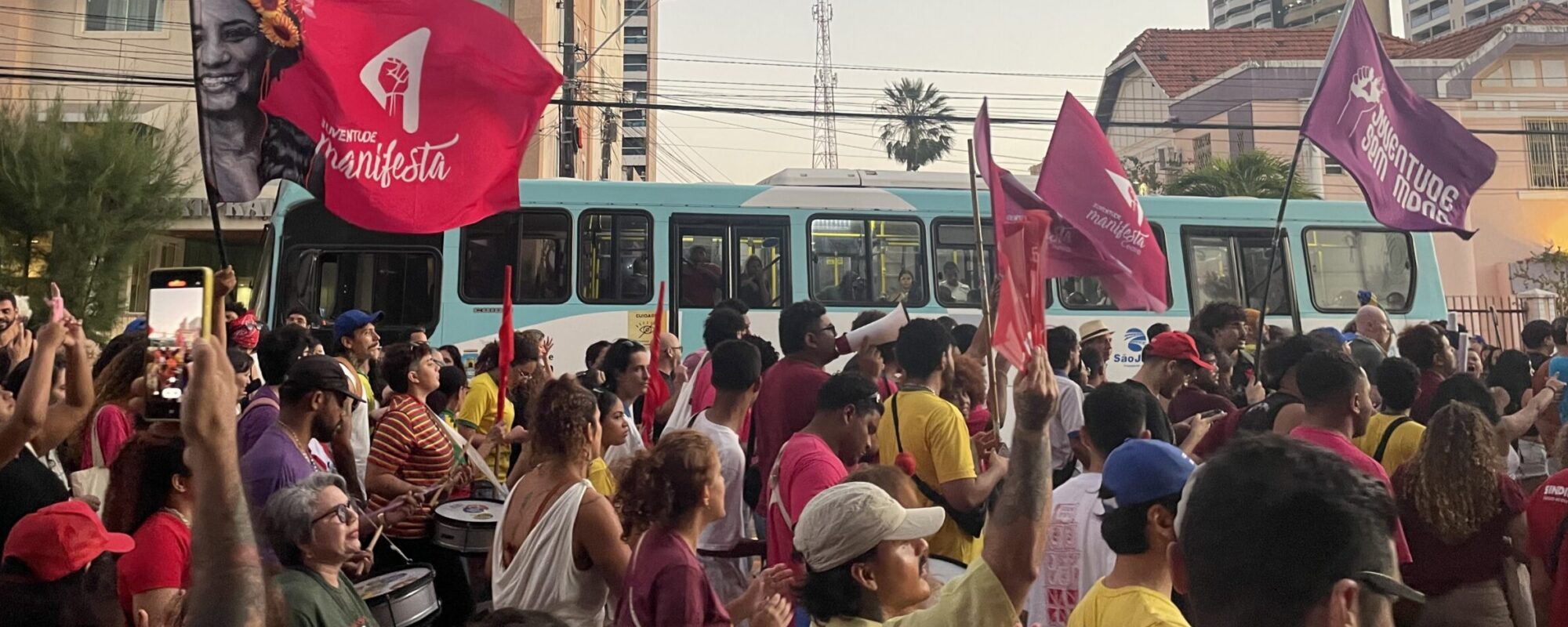
Top photo: Left-wing protest against amnesty for 2022 coup plotters, September 2025