OURO PRETO, Brazil — The hands that carved the mines were first cuffed on Africa’s Gold Coast, near modern-day Benin. Their owners survived being shackled across the Atlantic and marched up mountains in this country’s east, forced to work underground in near-darkness as their Portuguese masters waited in sunlight with food rations to be distributed proportionately to the gold they did, or didn’t, retrieve.
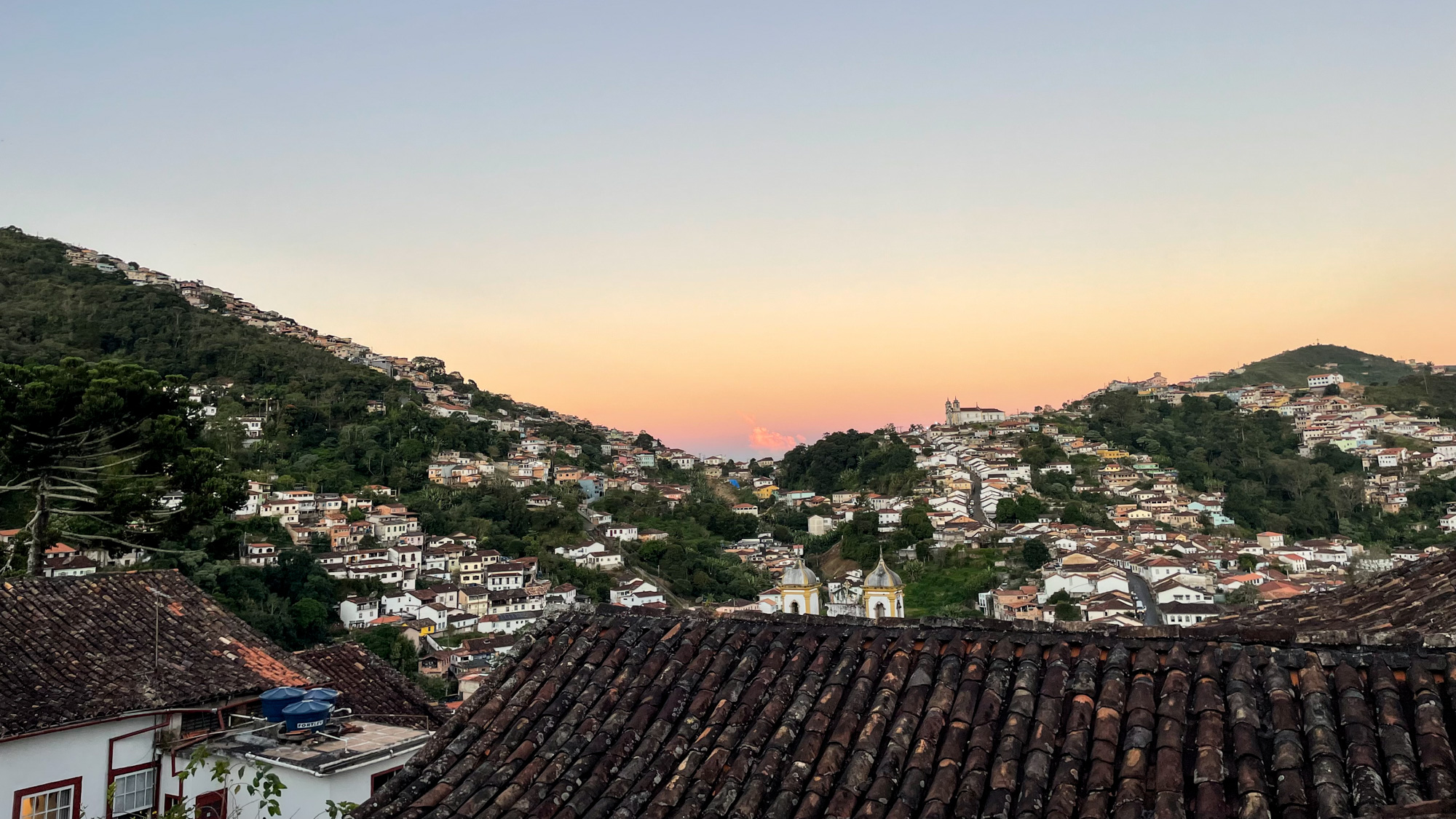
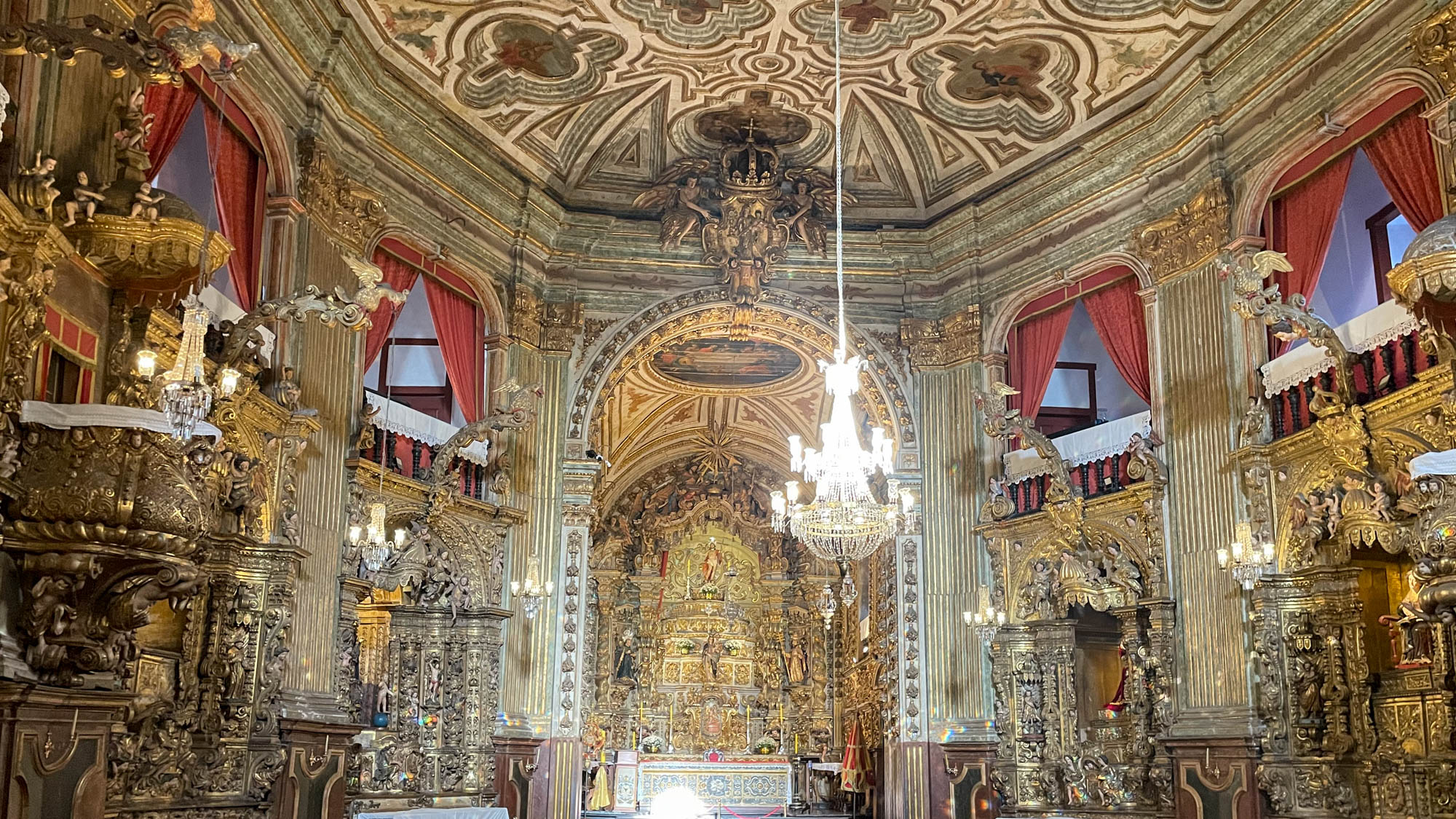
Above ground, they would have witnessed what today’s tourism brochures claim is “the prettiest town in Brazil.” From my hostel window, the sight of an incongruent-seeming banana tree was the only sign that I was still in Brazil and not Portugal. The former capital of Minas Gerais state until 1897, Ouro Preto is an architectural replica of the mountain towns I’d visited last year, during my six months in Brazil’s European colonial metropole, with cobblestone streets, stout houses, red tiled roofs. This town’s 12 Portuguese-styled churches with their baroque exteriors and rococo interiors each seemed to boast more gold than the others.
The wealth displayed in their chapels reflected the region’s privileged status as the source of the lion’s share of 1,200 tons of gold mined in Brazil during the 18th century alone. Multiple times more than what Spain extracted from its colonies over several centuries.
As I explored Ouro Preto’s gold mines in early May, President Lula Inacio da Silva was in Washington meeting with President Donald Trump to discuss access to the country’s vast mineral deposits. As technology and societies have evolved, so, too, has the definition of a critical mineral. The rush for gold and silver has been displaced by the drive to extract lithium, graphite, niobium and other resources key to the electrification and digitalization of modern societies. The race has once again put Brazil at the center of strategic competition among the world’s traditional and emerging powers, which begs the question: How could Brazil’s past influence how it approaches its future?
I’d arrived by car from Belo Horizonte, the current state capital, during a two-month road trip across northern and central Brazil. Unknown to most foreigners, Minas Gerais is a large, landlocked state north of Rio and São Paulo and one of the most influential regions in the country because of its mineral wealth. The 19th-century governor’s palace includes Italian marble, French-style salon chairs inspired by King Louis XV, Qing dynasty Chinese vases and a signature central staircase of marble and iron from Belgium.
Throughout my tours of the region’s gold mines, the guides appeared incredibly knowledgeable about geological formations and mining technology. That’s because while the older mines have prospered because of a tourism boom, active mining remains an important part of the local economy. Minas Gerais produces most of Brazil’s iron ore, gold, zinc, lithium, niobium and phosphate. The ongoing excavation contributes roughly 8 percent of the state’s GDP with an even larger indirect impact on steelmaking, manufacturing and logistical industries.
Nationally, Minas accounts for around 40 percent of all Brazilian mining revenue, with the Amazonian state Para coming in second. In 2024, the mining sector exported $43 billion worth of minerals, accounting for roughly 14 percent of the country’s total exports—although it has reached up to 50 percent in the past. The mining revenues also generate financing for railroads and ports.
On the international level, Brazil is the world’s second-largest exporter of iron ore after Australia. It also has a near monopoly of niobium, a critical mineral used in advanced manufacturing, superconducting and nuclear industries. In addition to being a major exporter of bauxite, gold, manganese and nickel, Brazil produces lithium, an indispensable element of rechargeable batteries for electric cars and large-scale energy storage.
The country is believed to hold around 390,000 metric tons of lithium, accounting for 1.3 percent of the world’s total. Brazil is the world’s fifth-largest producer of the element, and it increased output by 143 percent between 2022 and 2023. Eighty percent of those reserves are in Minas Gerais, in the Jequitinhonha Valley, dubbed “Lithium Valley,” 400 kilometers northeast of Ouro Preto. In 2023, the Chinese electric car maker BYD bought 852 hectares of land there to secure future access to the important mineral.
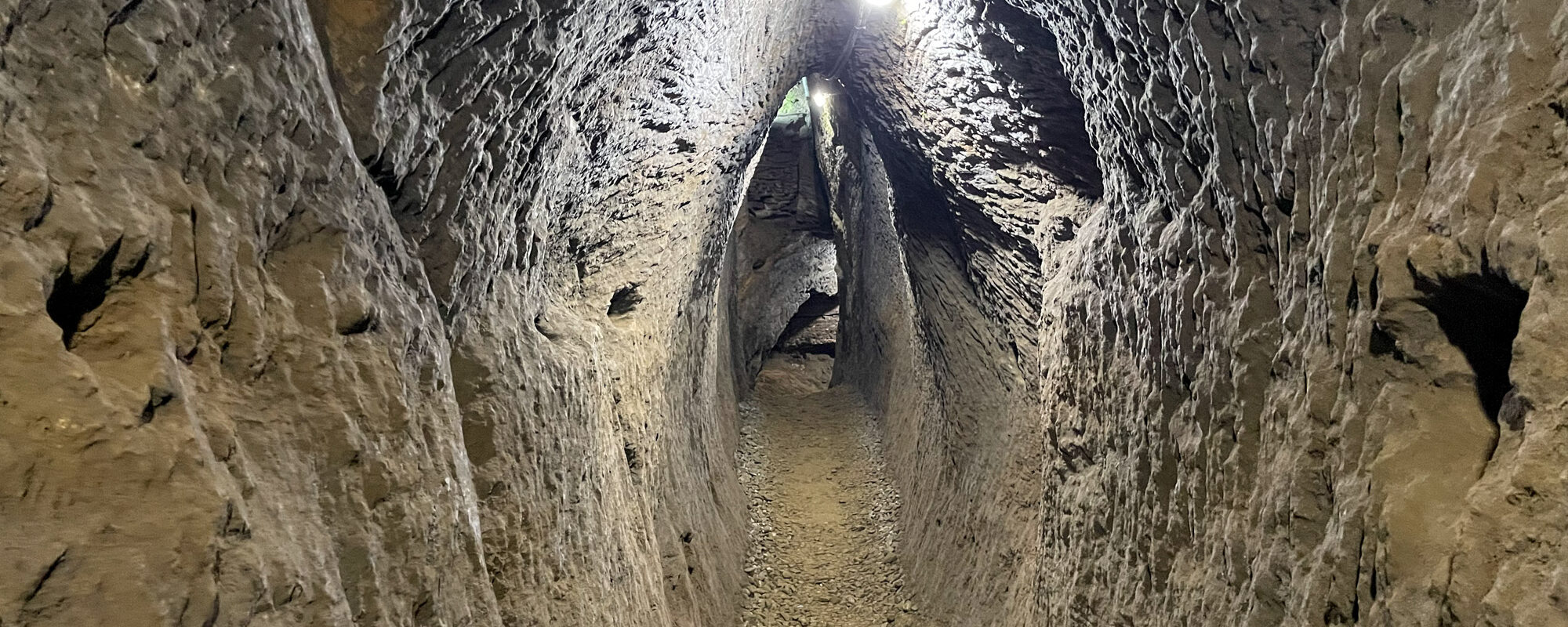
Back in the gold mines, the galleries of Ouro Preto’s central mine are the width of a man’s shoulders. As I walked with other visitors single file with hardhats to protect from the low ceiling, our guide led us through its 600 meters of tunnels. Accidently rediscovered only a few years ago behind the living room wall of a local house, the mine includes several kilometers of uncharted passageways. The walls were marked by painstakingly cut lines hacked with pickaxes that form a ribbed pattern from top to bottom.
“The slaves used the experience of mining in their homeland to ensure the structural integrity of the mines,” the guide Gustavo explained, pointing to a curved arch. The book Ouro de Minas: 300 Anos de História confirms that “slaves greatly contributed to the introduction of new mining techniques.” In addition to damming rivers, drying riverbeds, transporting gravel and washing it to discover hidden gems, African slaves taught the Portuguese to use the bateia—a metal or wooden hat-shaped object used for panning.
The slaves often engineered the underground expeditions they were forced to dig while the Portuguese waited above ground with guns. The great demand for skilled slaves led to the construction of a Brazilian-financed port in current-day Benin. In the 18th century, 17 percent of all slaves imported into Brazil from the African continent were sent to work in these lightless tunnels under Minas’s mountains. The “useful” life of an enslaved person was deemed a mere 12 years. Children would often be forced to work in the deepest parts of the mine where the passageways were narrowest.
Of the hundreds of thousands of slaves who mined the mountains, only one became his own master: Chico Ray. Our guide exalted him as a prince who, through cunning and leadership of his peers, bought his freedom and came to own a mine where he treated his own slaves fairly.
Not everyone shares that perspective. Twenty minutes down the road from Ouro Preto toward the small town of Mariana, I visited the Passagem mine. My guide there, also of African descent, believed Chico Ray had treated his slaves as badly as the white master he had replaced, except that he provided food rations regardless of the amount of gold collected. But the guide raved about the English, who had controlled the Passagem mine for much of the 19th century.
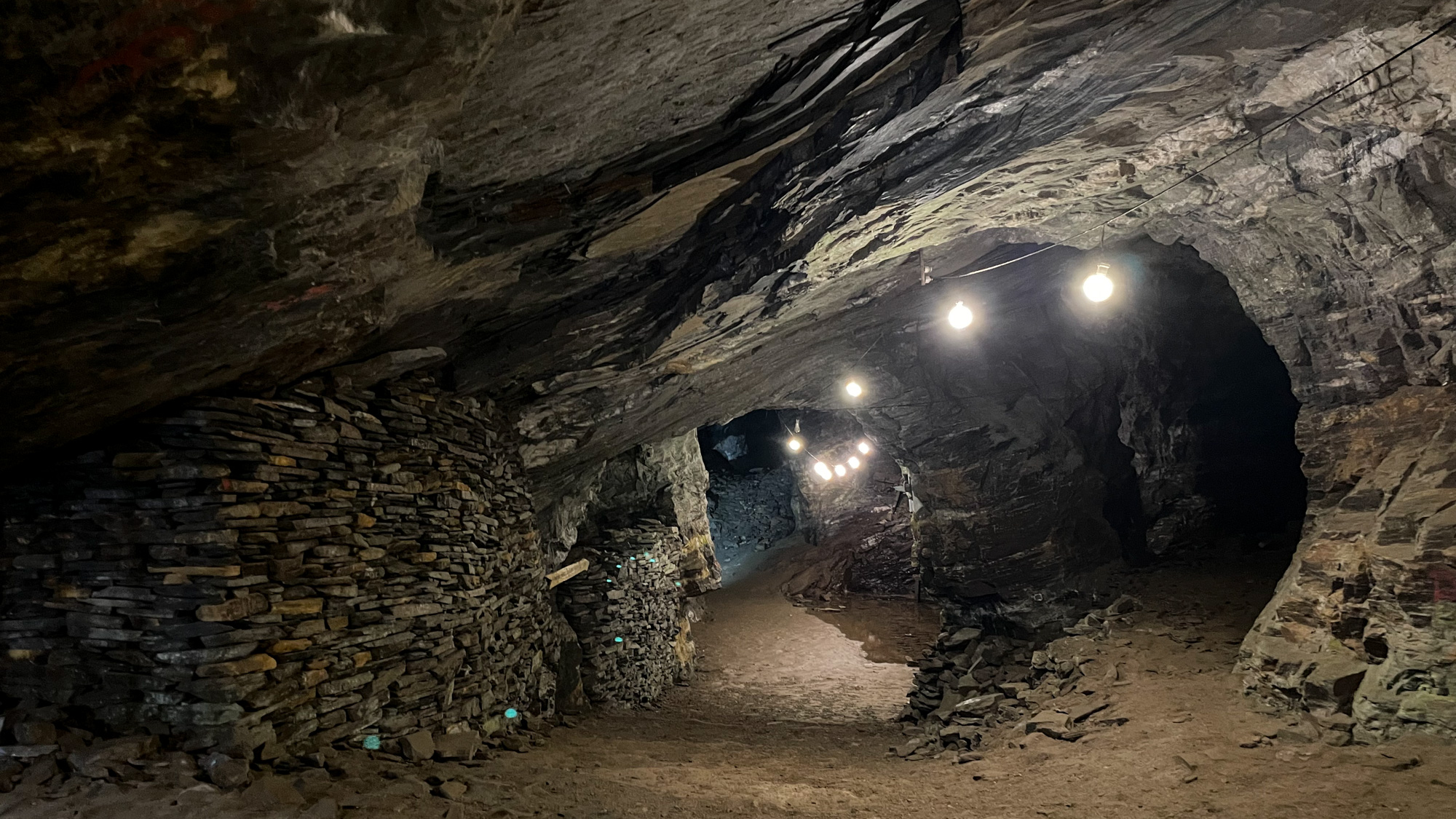
The 315-meter descent in a rail trolley led us 125 meters underground into a cavernous interior gallery that could have easily fit hundreds of people. One of the most productive gold mines in Brazil, it’s said to have produced more than 30 tons of gold over its three centuries of operation.
The walls were scared by dynamite rather than pickaxes, with large columns of bedrock holding up the ceiling. “The Portuguese were so greedy they would have collapsed the whole mine and lost out on the gold deeper down just to access the gold in these first galleries,” our guide quipped as she pointed out gold-laced quartz veins in the columns. Like most Brazilians, even those directly descended from the Portuguese, she had disdain for the colonizers. Even though the separation from Portugal was relatively amicable, there is no “special relationship” of warm feelings between the two countries like between the United States and United Kingdom.
During the 18th century, the Portuguese used slaves to excavate the Passagem mine using rudimentary techniques similar to those in Ouro Preto. However, mining became more mechanized in the early 19th century, after the Portuguese royal court’s flight to Brazil during the Napoleonic wars prompted a greater need for cash. The king invited a German engineer named Wilhelm Ludwig von Eschwege to the Passagem mine in 1819 to bring modern techniques that would extract more gold and revenue for the crown. The Sociedade Mineralógica de Passagem that Eschwege led is considered to have been Brazil’s first modern mining company.
In 1859, the mine was bought by an Englishman and a few years later came under control of the Anglo-Brazilian Gold Mining Company Limited. The English brought additional technical and mechanical expertise that enabled them to extract around a ton of gold within its first decade in operation. They also implemented wages and an eight-hour workday, endearing them to locals when the Brazilian state and national mining companies continued relying on slavery until its abolishment in 1889. The mine was later returned to Brazilian ownership, and in the late 1970s, its directors found it more profitable to open it to tourism.
From African slave engineers to European mechanical engineers, the mine tours showed how Brazil has historically used foreign expertise and capital to extract wealth from its vast natural resources. With the new rush for critical minerals, Brazil is at a crossroads. Will it continue to be merely an exporter of raw materials or able to compel external players to invest in auxiliary industries that train the local workforce and shift Brazil toward value-added exports?
Minas Gerais still has many active mines. However, the economic wealth they’ve generated hasn’t come without environmental and human cost. In addition to the everyday destruction mining wreaks on the local environment, three of the state’s largest mining-related disasters of the past century have happened during the past 12 years. The Itabirito/Herculano (2014), Mariana (2015) and Brumardinho (2019) tailings dam failures in the state represent some of the largest concentrations of mining-related industrial destruction in modern Latin American history. Companies use tailing dams to store slurry of waste material from the mining process that includes chemical residues, processed water and crushed rock.
The dam failures killed 300 people, displaced tens of thousands and flooded nearby nature preserves with 55-60 million cubic meters of mine waste—the equivalent of 20,000 Olympic swimming pools—contaminating hundreds of kilometers of river systems that reach to the Atlantic. The catastrophes supposedly prompted major reforms in Brazilian mining but have also significantly damaged the industry’s national and international reputation.
But as Trump’s recent meeting with Lula showed, foreign interest in Brazil’s underground riches continues to grow. The US president pressed his counterpart to agree to produce millions of tons of critical elements, officials said.
If it were to join the race to invest, the United States would be late to the party. Many of the country’s mines are owned by Brazilian companies, but many others are fully or partly owned by companies from the United Kingdon, Canada and Australia. Chinese companies are also ramping up investments to extract more minerals. Between 2007 and 2022, their spending totaled $4.4 billion, with an additional $3.5 billion in 2025 alone. As previously mentioned, BYD, the Chinese EV company, has acquired mining rights to lithium deposits in Minas Gerais.
Although Chinese firms are for the moment well behind their international counterparts, they’re also far ahead of the Americans. No commitments were made during the Lula-Trump meeting discussing partnership in this area, it appears. Moreover, recent aggressive moves by the Trump Administration to designate Brazil’s criminal gangs Primary Commando da Capital and Commando Vermelho as terrorist organizations against the wishes of the Lula government, as well as Washington’s recent threats to slap new 25 percent tariffs on Brazil, promise to strain relations between the two countries rather than foster cooperation.
As I was leaving Ouro Preto, President Lula was finishing his trip to his country’s northern neighbor, and Brazil’s Chamber of Deputies passed a bill establishing a national strategic mineral policy. It pledged to promote sustainable growth for the industry and attract foreign investment. As the legislation makes its way through the Senate and to the president’s desk, I hope Brazilians will learn from their past and ensure opportunities for their traditional mining workforce, particularly descendants of slaves who built the industry, to build a stronger middle class while acting as stewards of their vast geological treasures.
Top photo: The interior of Ouro Preto’s central mine