

The US opioid crisis—which has cost the country $1 trillion so far—is solvable, returning Andrew Weil Fellow Rowland Robinson said during his final fellowship report in Washington on June 12 at the George Washington University’s Elliott School of International Affairs.
After spending two years studying how cultural and historical shifts in three very different countries led to the enactment of progressive drug policies, he told the audience, he was confident compassionate public health policies can uphold individual dignity and ensure safer, more prosperous communities.
Rowland traveled across the Netherlands, Portugal and Brazil investigating public policy and integrative health care approaches to problem substance use. He spent time with people who use drugs as well as harm reduction workers on the streets and in care facilities, speaking to policymakers in the corridors of power and leading experts at international conferences during his remarkable fellowship.
In the Netherlands, he said, citing one example, centuries of communal responsibility over the country’s dyke system, the “Polder” model of governance, informed the approach that brought government officials, business leaders and people who use drugs together to address the country’s heroin crisis in the 1980s.
“Solving the opioid crisis means reducing drug use and overdoses, but it also means making the streets safer for everybody,” he said.
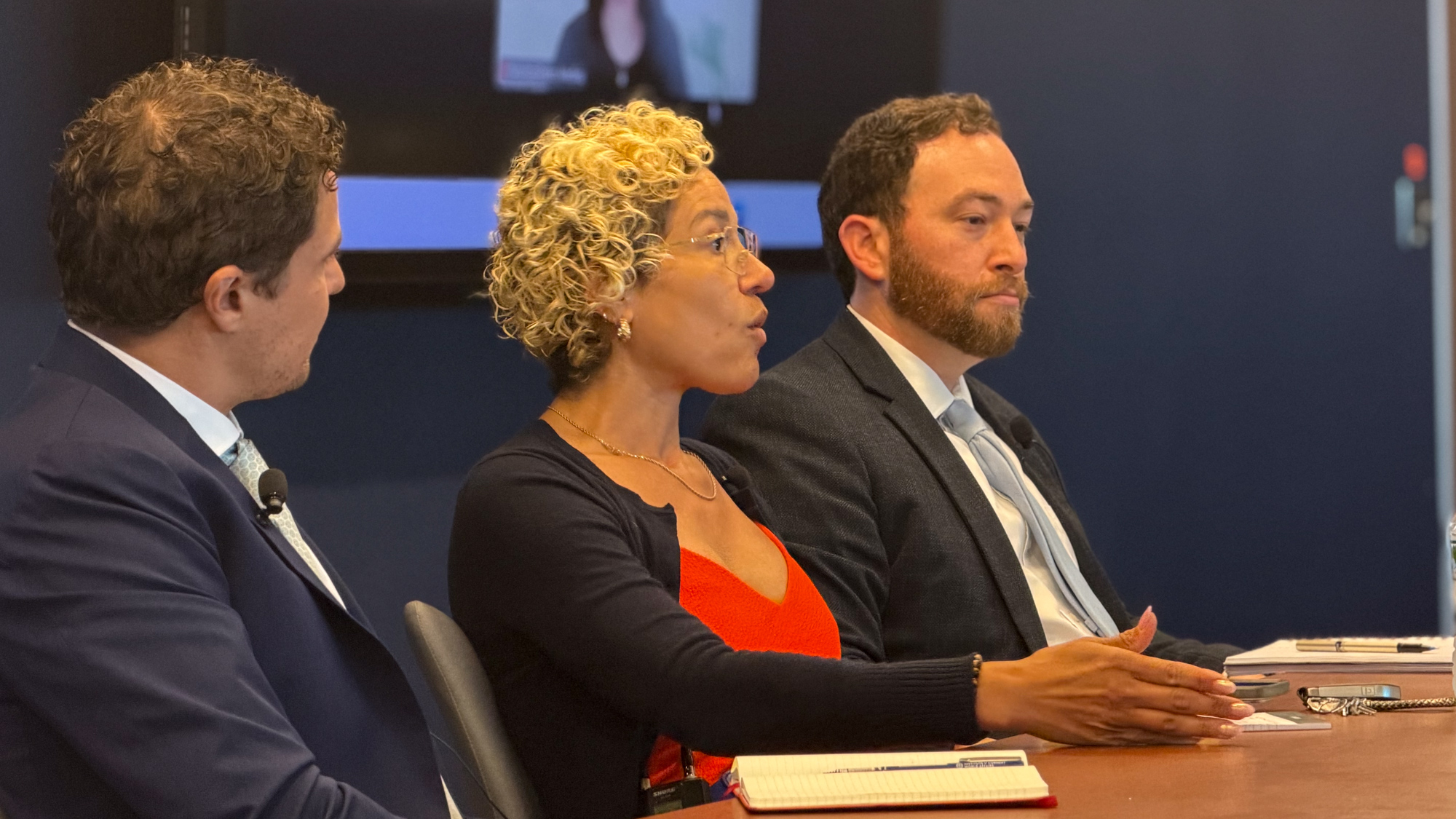
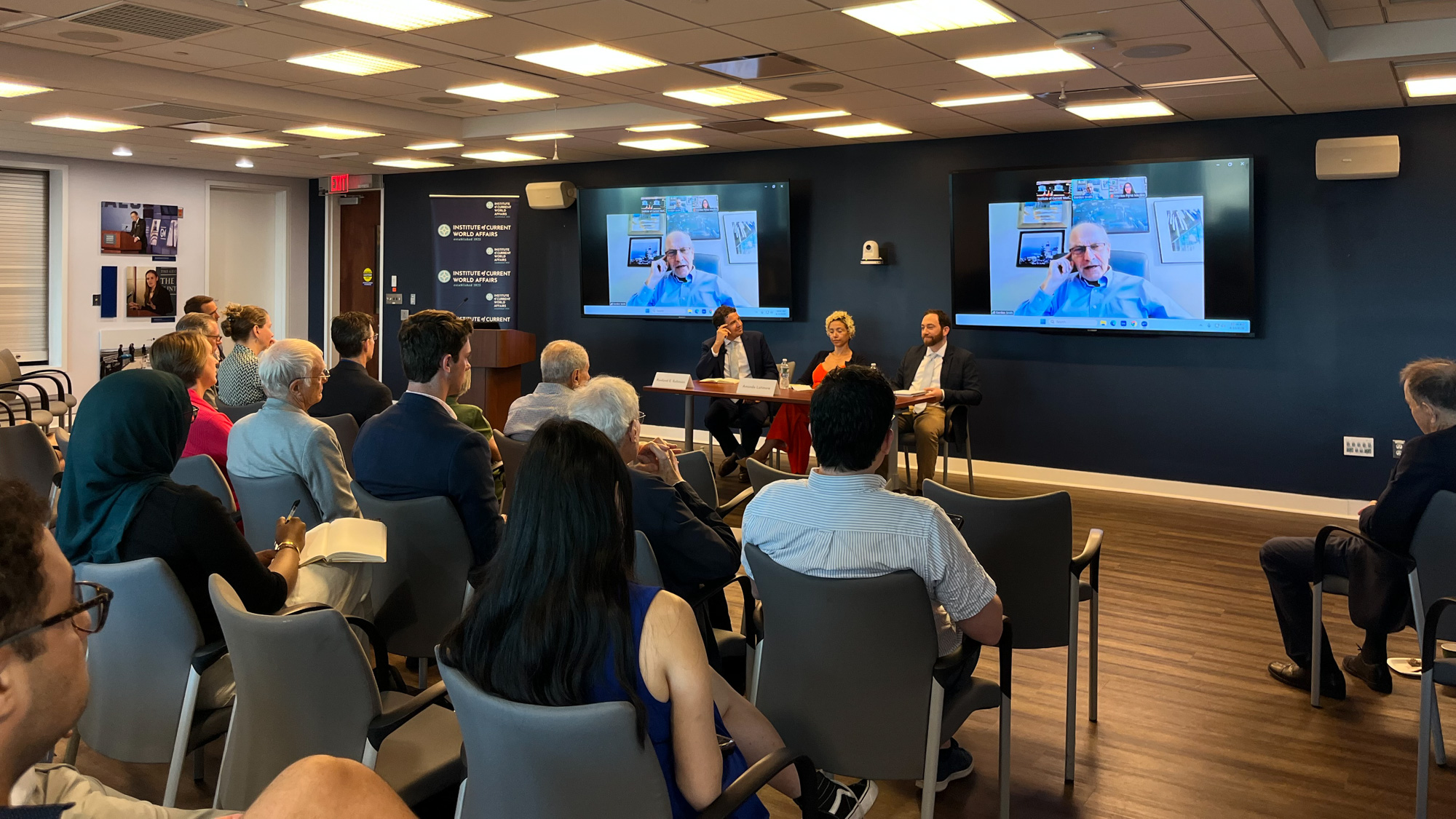
Following his talk, Rowland joined social epidemiologist Amanda Latimore, Maritza Perez Medina, director of the Office of National Affairs at the Drug Policy Alliance, and Maine’s Director of Opioid Response Gordon Smith for a discussion about the challenges and opportunities for integrative drug policy at the federal and state level. Jon Heppen, a health care policy adviser for US Senator Angus King (I-ME), moderated.
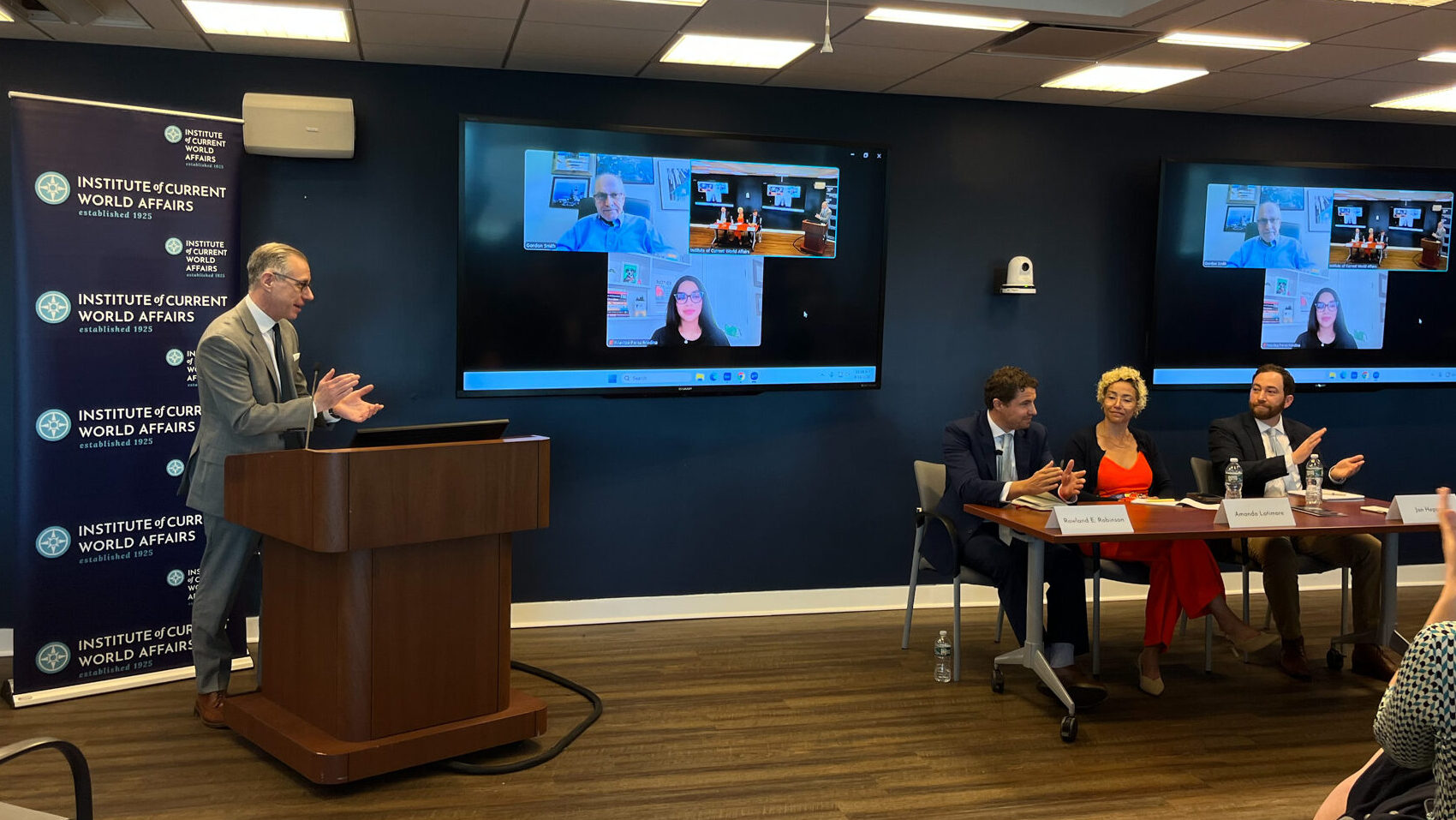
Heppen described the work the senator’s office is doing to make the US health care system more effective.
Latimore, founder and CEO of the research and technical assistance firm On the Shoulders of Giants Consulting, explained how current US policies prevent drug users from obtaining housing, making it difficult for them to find stability and get well. Homelessness also affects families tremendously, she added, all-but ensuring the transmission of addiction challenges to new generations.
Perez Medina described the recent work of the Drug Policy Alliance’s (DPA) Federal Affairs Office to end the war on drugs and ensure that drug policy is grounded in health, human rights and equity. “When you criminalize one drug, another drug will replace it,” she said.
Smith described the four pillars of Maine’s opioid response program: prevention, harm reduction, treatment and recovery support. He also cited the need to address the stigma against drug use that underlies and complicates his work.
“I agree with Rowland. I’m an optimist,” he concluded. “I believe that we can solve this.”
Read Rowland’s dispatches here.
Speaker
 Rowland Robinson spent two years investigating integrative health care approaches to problem substance use in the Netherlands, Portugal and Brazil to better understand public health policy and practices. Rowland was most recently a legislative assistant for US Senator Angus King and an opioid response project manager for the state of Maine.
Panel
 Amanda Latimore is a social epidemiologist and founder and CEO of On the Shoulders of Giants Consulting, LLC, a research and technical assistance firm advancing sustainable individual and community wellbeing. Previously, she was director of the American Institute for Research’s Center for Addiction Research and Effective Solutions (AIR CARES). She teaches at Georgetown University and Johns Hopkins Bloomberg School of Public Health.
 Maritza Perez Medina is director of the Office of National Affairs at the Drug Policy Alliance in Washington, DC, where she leads the organization’s federal legislative agenda and strategy to end the drug war. She led the national coalition that successfully pushed for the passage of the MORE Act in the US House of Representatives in December 2020 and April 2022, marking the only times in history a congressional chamber voted to deschedule marijuana. She also serves as president of the Hispanic Bar Association of the District of Columbia.
 Gordon Smith was appointed by Maine Governor Janet Mills as the state’s director of Opioid Response in January 2019. Previously, he was since 1993 executive vice president of the Maine Medical Association, where he began as general counsel in 1981. He was chairman of the American Society of State Medical Association Counsel, a nationwide group of attorneys representing medical associations, and has served on many other boards.
Moderator
 Jon Heppen is a policy adviser for health care and public health policy. He previously led policy work for US Congresswoman Cheri Bustos (D-IL-17) on the House Appropriations Labor, Health and Human Services, and Education Subcommittee. He has nearly a decade of legislative experience on Capitol Hill and in government affairs work.